


The Tilak Nagar road controversy has widened into a political confrontation after Aam Aadmi Party national convenor and former Delhi chief minister Arvind Kejriwal released a video message urging Prime Minister Narendra Modi to act against Delhi Public Works Department Minister Parvesh Verma and those allegedly responsible for poor-quality road construction.
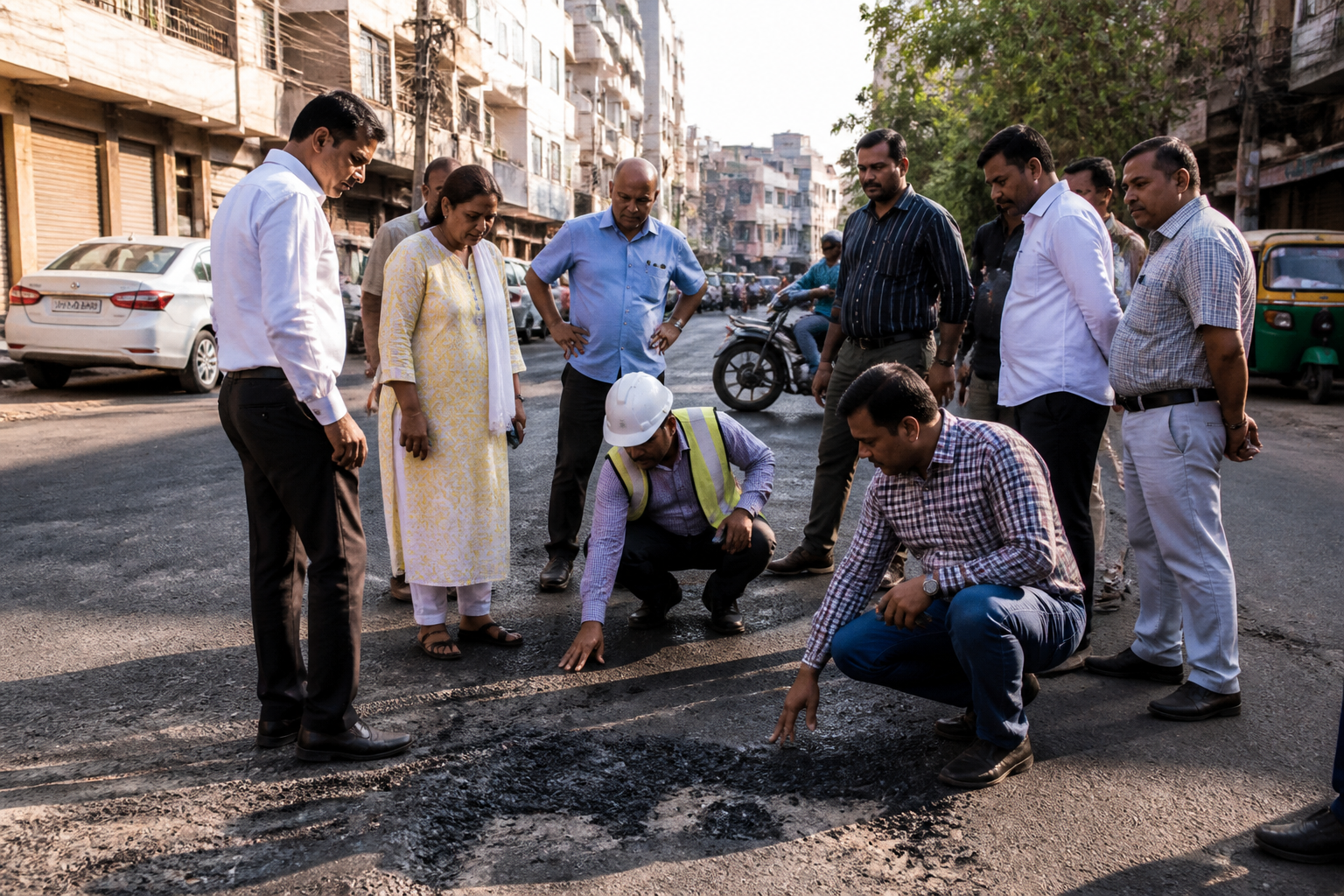
According to Jagran’s report, Kejriwal linked the dispute to a recent road inspection in Tilak Nagar, where local residents reportedly showed that the upper layer of a newly constructed road could be broken by hand. A video connected with the incident appeared to show Verma slapping a young man during the inspection. The report said Kejriwal had earlier demanded the minister’s arrest after the video emerged.
In his video message, Kejriwal said the incident exposed a wider question of accountability in Delhi’s public works system. He told the prime minister that young people would respond to direct action on alleged corruption and misconduct rather than to social-media engagement activities. His demand included action against the minister and against those allegedly involved in the road construction.
Kejriwal also alleged that the Delhi Police had been instructed from above to protect Verma. The report identifies this as Kejriwal’s allegation and says it has not been independently confirmed. No police response or statement from Verma was included in the supplied report.
The dispute centres on the quality-control chain behind urban road construction. A road’s visible surface is the final outcome of several administrative steps, including technical specifications, contractor execution, inspection, measurements and payment certification. The supplied report does not establish which agency approved the work, which contractor executed it, whether a formal quality test was conducted or whether any departmental inquiry has been ordered.
The incident has therefore moved beyond a local complaint about a damaged or weak road surface. It now involves questions over how residents can report defective public works, how elected representatives conduct site inspections and how allegations involving public officials are investigated. These questions affect the credibility of road-building programmes because citizens experience public infrastructure at street level, often before official audits or project reviews are made public.
Kejriwal’s message framed the Tilak Nagar episode as a test of the government’s relationship with Gen-Z, arguing that young people expect honesty, straightforwardness and visible action. His intervention came amid an already heated political debate over the alleged slap and the quality of the road. The report also referred to separate allegations involving a municipal employee, but those claims were not independently established in the supplied material.
The immediate next steps remain unclear. The supplied report does not record an official decision on Verma’s arrest, a police case, a technical investigation into the road, a contractor action or a public release of inspection findings. Any confirmation of those steps would determine whether the Tilak Nagar dispute results in formal accountability or remains primarily a political confrontation over a public road project.
