


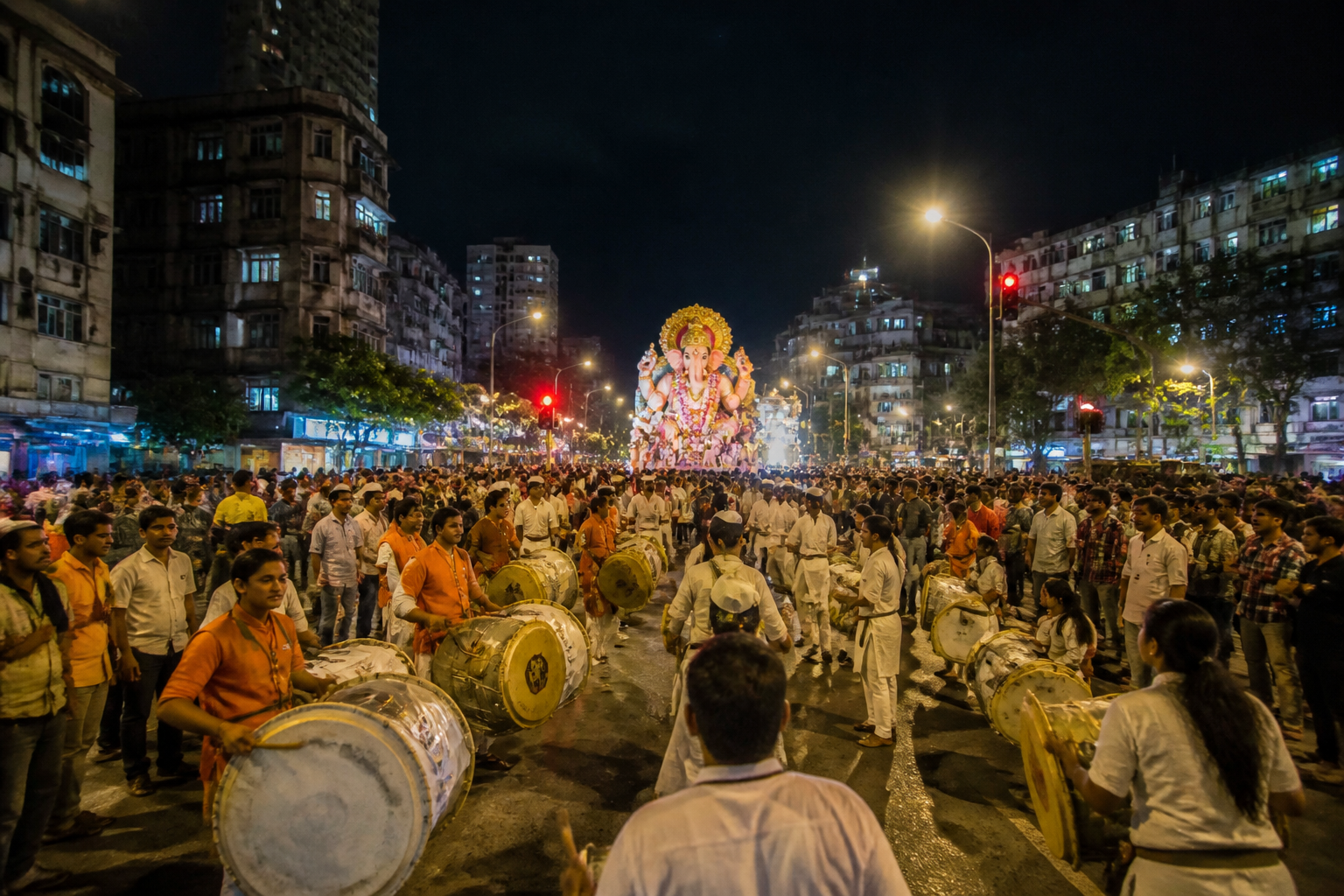
Thane noise pollution reached up to 100 decibels on some major Ganesh immersion routes during the Anant Chaturdashi processions, even as the use of DJs and large sound systems appeared to decline, according to sound measurements conducted by social workers in the city on September 25.
Measurements taken by social worker Dr Mahesh Bedekar and his colleagues showed average noise levels of 95 to 100 decibels at several locations along the immersion routes. Mulund Check Naka and Naupada recorded the highest levels, according to the report. The measurements were conducted during the processions using drums, traditional dhol-tasha groups, banjo systems and loudspeakers.
The findings point to a shift in the sources of festival noise rather than its disappearance. While DJs and large amplifiers were used less extensively, the sound generated by dhol-tasha groups and other musical systems continued to push levels above the prescribed limits, the report said.
At 9.45 pm on Ram Maruti Road, near P.N. Gadgil, the measured sound level was about 90 decibels while dhol-tasha and banjo performances were under way. At Pachpakhadi, measurements taken at 10.15 pm recorded noise levels between 80 and 85 decibels.
A further measurement at 10.30 pm near the Thane Municipal Corporation premises recorded levels between 90 and 95 decibels. Loudspeakers and dhol-tasha groups were operating in the area at the time, according to the report.
The measurements were taken across different immersion routes in Thane on Anant Chaturdashi, which fell on September 25. The exercise was carried out by Dr Bedekar and his colleagues, who have recorded sound levels during Ganesh festival arrival and immersion processions in previous years as well.
Their annual observations have repeatedly highlighted noise generated by loudspeakers, banjo systems, dhol-tasha groups and firecrackers during the festival period. This year’s readings indicate that restrictions or reduced use of DJs alone have not eliminated high sound levels along crowded procession routes.
The data also shows that noise varied significantly by location and time. Levels at Pachpakhadi were lower than those recorded near Ram Maruti Road and the municipal corporation premises, while the highest readings were reported from Mulund Check Naka and Naupada. The supplied report does not provide separate readings for those two locations.
For municipal authorities, the measurements place attention on the full sound environment of immersion processions rather than on DJs alone. The reported readings include multiple sources operating together, including traditional percussion, banjo systems and loudspeakers. The report does not state what enforcement action, if any, followed the measurements.
The latest readings were recorded during the city’s immersion processions on September 25. Further details on official responses or measures planned for subsequent festival events were not included in the supplied report.
