


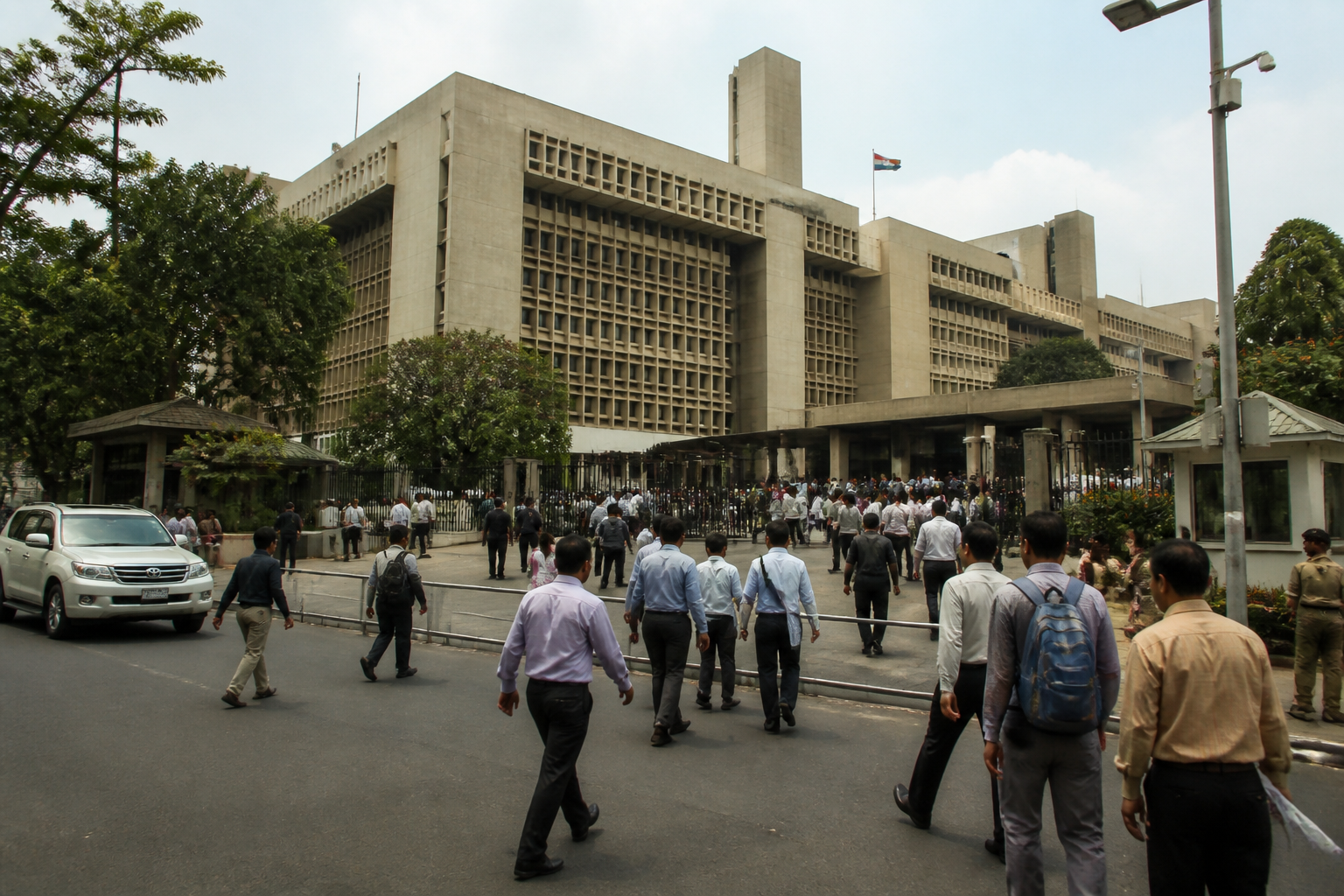
Around 150 officers and employees deputed to Maharashtra ministers were still working in ministerial offices a month after Chief Secretary Rajesh Agrawal ordered that such staff be returned to their parent departments, according to a report by Loksatta. The development has raised questions over compliance with the state’s administrative order and the use of staff outside sanctioned positions.
Agrawal issued the order on August 25 to cancel appointments made through deputation or oral instructions and send officers and employees back to their original departments. The order covered 620 officials and employees working with various ministers. According to information cited by Loksatta, nearly one-third of them were still working in ministerial offices after the deadline.
The report said most ministers had reduced the number of additional personnel attached to their offices. However, 30 extra employees were reportedly still working in the office of Deputy Chief Minister Eknath Shinde. The office has 72 sanctioned posts, of which 18 were vacant, and has sought to accommodate the additional personnel against those vacant positions, the report said.
Officials who meet the applicable policy requirements are expected to be adjusted against sanctioned vacancies, according to the report. Other employees will have to return to their parent departments. The distinction is significant because deputation arrangements made through informal or oral instructions can place staff outside the approved staffing structure of a ministerial office.
The report also identified a substantial gap between sanctioned strength and personnel actually working in the office of Health Minister Prakash Abitkar. Although 16 posts were sanctioned for that office, as many as 70 officers and employees were reportedly working there on deputation. Those employees have reportedly been sent back.
The office of Deputy Chief Minister Sunetra Pawar was reported to have only two additional employees. The differing numbers across ministerial offices indicate that the chief secretary’s order was not dealing with a uniform staffing pattern, but with individual arrangements that had developed across departments and offices.
The issue affects how Maharashtra’s ministerial offices are staffed, how sanctioned posts are used and how administrative accountability is maintained between a minister’s office and the parent department of an employee. Returning staff to their original departments may also alter the functioning of ministerial offices, while accommodating eligible employees against vacant sanctioned posts would require the arrangements to conform to the applicable policy.
The immediate next step is the scrutiny of individual cases. Employees who fit the policy framework may be adjusted against available vacancies, while those who do not qualify are expected to be sent back to their parent departments. The report did not specify a final completion date for this process or identify the total number of employees returned so far.
