


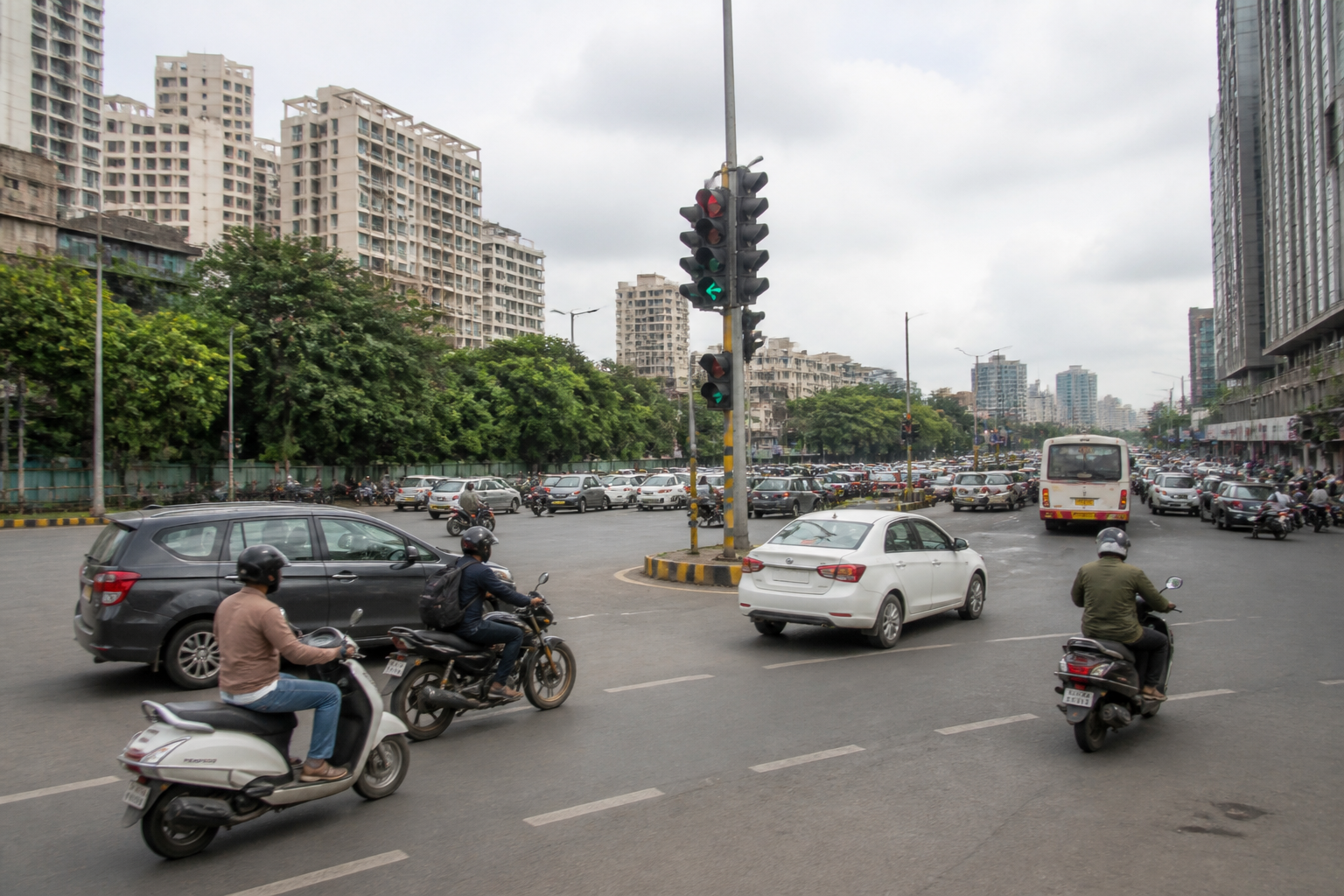
Thane’s Majiwada Junction has begun operating with an experimental traffic signal system in a move aimed at improving traffic management at one of the city’s busiest and most complex intersections. Traffic police will study public feedback, congestion levels and other operational factors before making changes to signal timings, according to the report.
The trial is expected to establish whether signal-based regulation can reduce queues at the junction and provide relief to motorists. The system has been introduced after years in which traffic police manually regulated vehicle movement at the intersection, where roads from several parts of Thane converge.
Majiwada Junction connects routes towards Ghodbunder, Kolshet, Court Naka and Thane railway station. Traffic travelling from the railway station towards Ghodbunder also passes through the junction. Vehicles moving towards Nashik, Bhiwandi and Kalyan use the intersection to reach Thane city and the Ghodbunder area. The junction also handles substantial traffic from the Vrindavan and Ritu Park areas.
Nine roads meet at Majiwada, bringing vehicles from multiple directions into a single traffic node. During peak periods, the increase in vehicle volume places significant pressure on the junction and often leads to queues at Majiwada as well as on connecting roads. The arrangement makes the intersection a major congestion point within Thane’s road network.
Before the trial began, traffic police personnel were responsible for regulating movement because the junction had not had a signal system for several years. The growing number of vehicles and the complicated layout required continuous intervention by officers, particularly when congestion developed. Police intervention was also needed to clear queues and maintain movement across the connected approaches.
The experimental system changes the method of regulation but does not yet establish how much congestion will be reduced. Traffic police will monitor conditions after activation and consider adjustments to the timings based on vehicle movement and feedback from citizens. The effectiveness of the arrangement will therefore depend on how the signal phases respond to traffic arriving from the nine connected roads.
The trial also places the junction’s operation within a wider challenge for Thane: managing movement through intersections where multiple city, suburban and intercity routes meet. For commuters, the immediate concern will be whether the new system reduces delays during busy periods without creating longer queues on one approach while clearing another.
Traffic police are expected to continue studying the junction’s performance during the experimental period. Changes to the signal timings will be made as required after reviewing congestion conditions, citizen feedback and other operational factors.
