


Telangana is preparing a statewide water conservation plan to protect drinking water supplies, strengthen drought preparedness and address potential shortages amid the El Niño threat, with Greater Hyderabad and several districts set for closer monitoring.
The proposed programme will cover lakes, tanks, canals and reservoirs across villages, towns and cities. A preliminary assessment has already been prepared, while a detailed screening exercise has commenced and is expected to intensify after Dasara. The exercise will record each water body’s storage capacity, current water availability, catchment area and pollution levels.
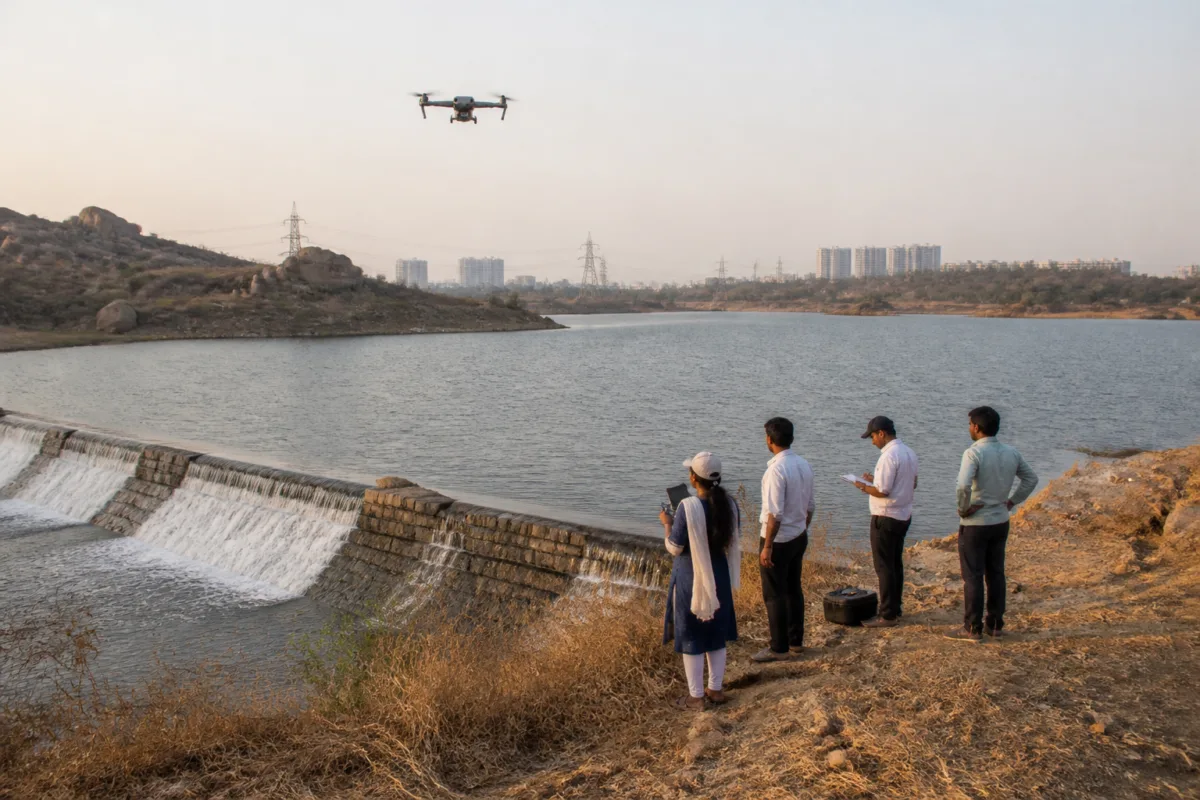
The assessment will combine satellite mapping, drone surveys and field inspections. Groundwater levels will also be examined region-wise and mandal-wise to identify vulnerable areas and develop conservation measures suited to local conditions.
Officials are examining water-management practices used in Israel, Singapore and Australia, including micro-irrigation and water-grid management during droughts. The government is also working on early-warning systems and emergency action plans for adverse weather conditions. In agriculture, the proposed response includes alternative crops and more efficient irrigation methods intended to limit losses during periods of water stress.
Greater Hyderabad, along with Yadadri-Bhongir, Nalgonda, Medak and Mahabubnagar, will receive particular attention under the plan. The focus in urban and semi-urban areas will be on reducing water consumption and improving monitoring of available supplies.
The measures under consideration include community recharge pits, restoration of check dams and a centralised monitoring system. The proposed system would track water stocks and supplies at reservoirs, municipal pumping stations and rural drinking water projects, creating a common view of water availability across different parts of the state.
The government also plans to reduce pipeline leakages and divert treated wastewater to industries and the construction sector. Reusing treated water for non-drinking purposes is intended to reduce pressure on potable supplies while improving overall water-use efficiency.
The plan remains under preparation, with the detailed screening programme expected to expand after Dasara. Its implementation will depend on the completion of water-body surveys, groundwater assessments and the development of location-specific conservation and emergency action measures.

