


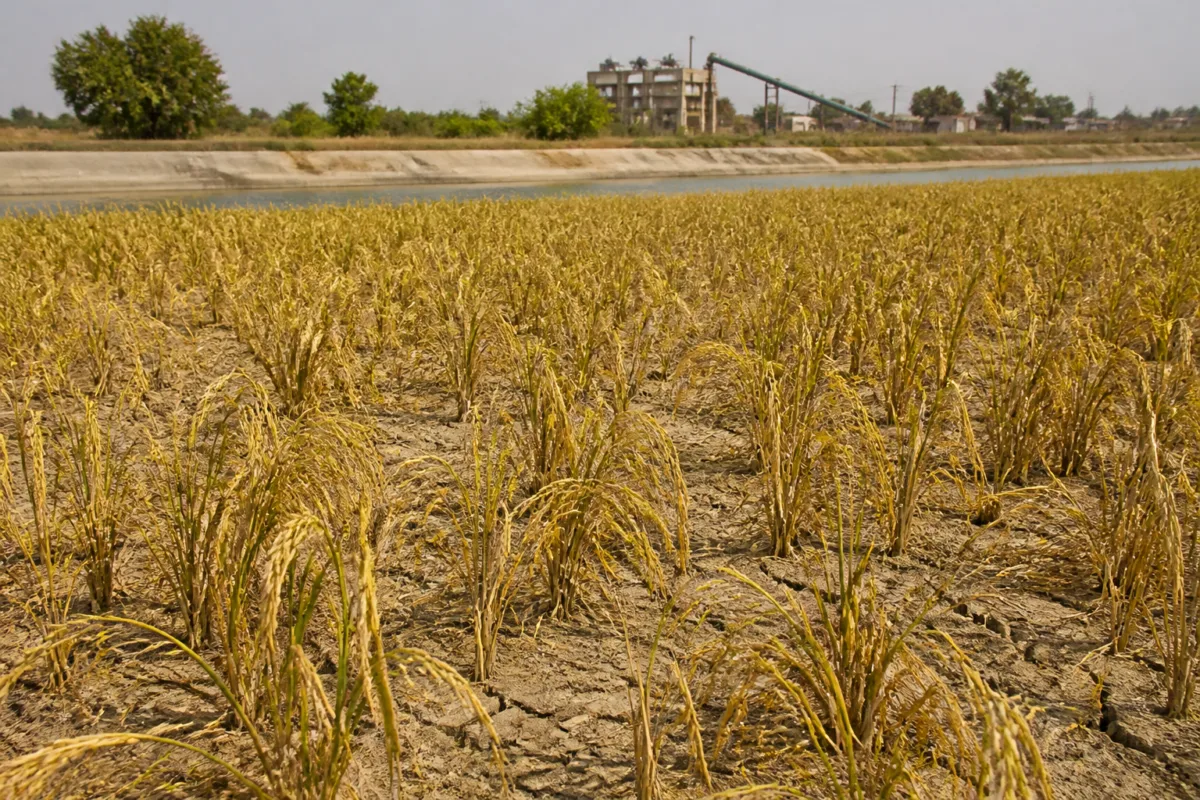
BRS leader T Harish Rao has demanded that the Telangana government operate all five Kalwakurthy lift irrigation motors around the clock, release Krishna water from Jurala for 15 days and compensate farmers whose kharif crops have failed amid drought conditions in parts of the state.
Speaking at a farmers’ meeting in Alwal village of Wanaparthy district, Rao attributed the crop losses to what he described as the state government’s failure to lift and distribute available water. His remarks followed an inspection of paddy fields in Peddamandadi mandal, where farmers reportedly showed him crops that had dried up during the grain-filling stage.
Rao said the government could still lift 30 to 40 tmcft of water from Srisailam through the Kalwakurthy system and use it to fill tanks in the region. He also called for desilting in the Palamuru-Ranga Reddy lift irrigation project and urged the authorities to move water from Narlapur reservoir to the Karivena and Vattem reservoirs.
According to Rao, the proposed transfers would support groundwater recharge and provide water for livestock and households in affected areas. He further asked the government to release Krishna water from Jurala for agriculture for 15 days, arguing that the intervention could help protect standing kharif crops.
The BRS leader cited water availability figures to support his criticism of the government. He said Srisailam received 221 tmcft this year and Jurala received 252 tmcft, arguing that the water was available but had not been lifted or distributed adequately. These figures and the wider allegations were part of Rao’s remarks, as reported by The Times of India; the report did not include a response from the Telangana government.
Rao also compared Krishna water drawal under the current administration with the period when the BRS was in power. He claimed Telangana’s share had fallen from 34% under the previous government to 28% in its first year under Congress, 27% subsequently and 25% this year. The report did not provide an independent assessment of these figures or explain the administrative and hydrological factors behind the changes.
The dispute highlights the operational importance of lift irrigation systems in a region where agriculture depends on water being pumped from river and reservoir networks into command areas. When motors, canals, reservoirs or distribution schedules do not function together, water availability at the source does not necessarily translate into irrigation at the farm level.
Rao said land in the area had produced two crops annually for eight years under the Kalwakurthy lift irrigation system, while the current kharif crop had dried up. He also sought compensation for farmers in drought-affected mandals, citing compensation measures in Andhra Pradesh and Maharashtra as precedents.
The former minister called on the Centre to send a team to assess the drought and release assistance. He criticised the Telangana government for not seeking such an assessment and alleged that Union ministers and BJP MPs from the state had not pressed for central intervention. The report did not state whether the Centre had announced an assessment or relief package.
The immediate demands before the state government are the operation of the Kalwakurthy lifts, the proposed Krishna water release, reservoir transfers, desilting work and a decision on farmer compensation. No government response or implementation timeline was included in the report.

