


Telangana’s newly introduced cancer portal has registered 35,000 cases since cancer was declared a notifiable disease on April 7, as the state expands chemotherapy, screening and prevention services beyond Hyderabad.
The figures were shared by oncologist and government adviser Dr Noori Dattatreyudu during a review of cancer-care initiatives chaired by Health Minister Damodar Rajanarsimha. The review examined services at the MNJ Institute of Oncology and Regional Cancer Centre and Nizam’s Institute of Medical Sciences (NIMS), along with the functioning of district-level chemotherapy centres.
Dr Dattatreyudu said the cancer portal and registry would strengthen disease surveillance and support earlier detection and treatment planning. The portal is part of the state’s wider effort to record cancer cases systematically after the disease was brought under mandatory notification.
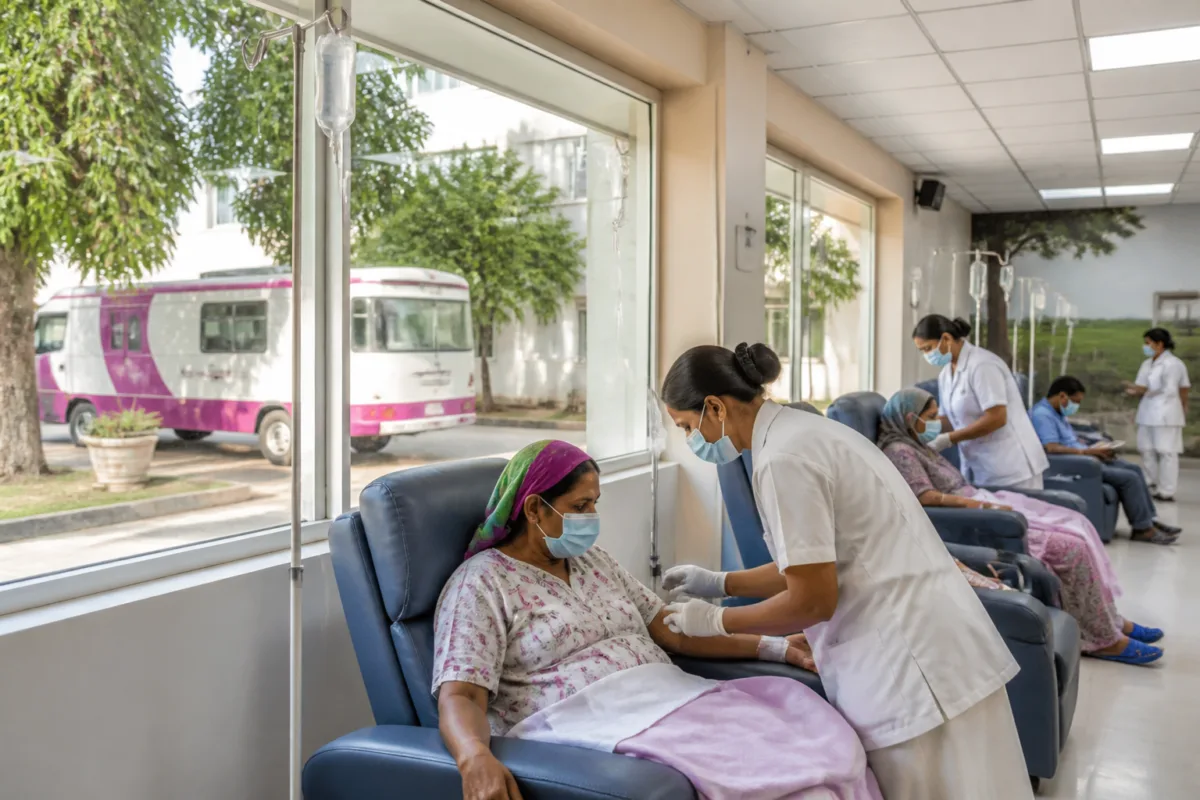
Telangana has established day-care cancer centres in all 33 districts, according to the review. These facilities are intended to allow patients to receive routine chemotherapy closer to home rather than travelling to Hyderabad for every treatment session. Officials said patients who began treatment at MNJ and NIMS were being mapped district-wise before being linked with district centres.
The shift is aimed at reducing the concentration of cancer treatment in the state capital. The health minister directed officials to increase the number of patients receiving chemotherapy at district centres and reduce the need for patients to travel to the city. Officials have also begun steps to establish regional cancer centres, although the review did not provide details on their locations, budgets or completion timelines.
Prevention and screening formed another part of the state’s programme. Dr Dattatreyudu said 2.3 lakh girls had received the human papillomavirus vaccine out of a target population of 3.4 lakh, representing 67 per cent coverage. The vaccination programme is intended to help prevent cervical cancer.
The minister also directed officials to make four additional mobile cancer screening units operational by January. The units are expected to extend screening access, particularly in areas where residents may face difficulty reaching established hospitals or district facilities. The review did not specify the routes or service areas for the additional units.
The state’s two major institutions, MNJ and NIMS, continue to provide advanced cancer services, including robotic surgery and bone marrow transplantation. Dr Dattatreyudu reviewed their treatment facilities and suggested upgrades, while officials briefed the minister on cancer services at the hospitals and the district chemotherapy network.
The government’s stated approach combines notification, registration, early detection, vaccination and decentralised treatment. The next immediate milestones are the expansion of chemotherapy at district centres and the planned operationalisation of four additional mobile screening units by January.

