


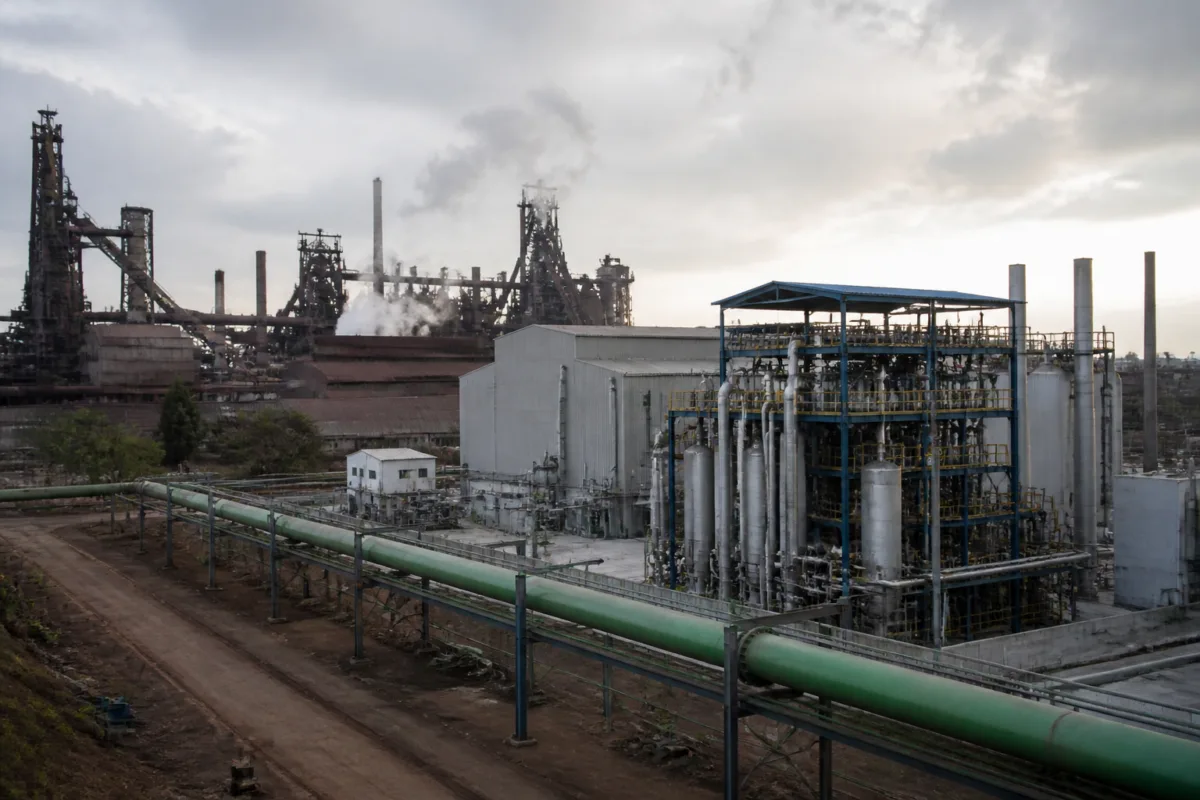
Tata Steel plans to develop a 10-tonne-per-day hydrogen facility at its Kalinganagar steel plant in Odisha, using gases generated during steel production to reduce emissions from the ironmaking process. The company has partnered with Houston-based Utility Global to conduct front-end engineering and design studies for the proposed project.
The facility would use Utility Global’s H2Gen technology to produce high-purity hydrogen from a combination of blast furnace gas and basic oxygen furnace gas. According to the companies, the process would use the residual energy contained in steel plant off-gases to generate hydrogen from water without using electricity.
Tata Steel intends to inject the hydrogen into the blast furnace, replacing part of the carbon-intensive fuel used in ironmaking. The proposed approach is designed to reduce emissions while using existing plant infrastructure rather than requiring a complete overhaul of the integrated steel facility.
The project would be Utility Global’s largest announced industrial H2Gen deployment globally and its first announced project in India. The technology also produces a separate, concentrated carbon dioxide stream, which Utility Global said could reduce the cost and complexity of carbon capture. It has previously been tested using actual blast furnace gas at a steel producer’s facility in Canada.
Subodh Pandey, Tata Steel’s vice-president for technology, R&D, new materials business and graphene, said decarbonisation technologies needed to operate at the scale and complexity of an actual steel plant. He said the collaboration with Utility Global would allow Tata Steel to pursue emissions reduction while leveraging existing infrastructure.
Utility Global chief executive Parker Meeks said the planned project would place the company alongside one of India’s major steel producers in what he described as the world’s fastest-growing steel market. He said the technology was designed to integrate with existing industrial assets and processes while supporting an economic pathway to decarbonisation.
The proposed hydrogen facility is part of Tata Steel’s wider programme to reduce emissions across its steelmaking operations. The company has set a target of achieving net-zero emissions by 2045 and has previously demonstrated coal-bed methane, hydrogen and biochar injection into blast furnaces. It also commissioned India’s first blast-furnace-gas-based carbon-capture plant at Jamshedpur in 2021.
The Kalinganagar project follows a major expansion of the Odisha plant. Tata Steel has completed Phase II of the expansion, involving an investment of around ₹27,000 crore and increasing crude steel capacity from 3 million tonnes per annum to 8 million tonnes per annum. The company has an annual crude steel capacity of 36 million tonnes globally.
The proposed hydrogen project comes as Tata Steel continues testing ways to reduce the emissions intensity of large integrated steel plants without abandoning their existing production systems. In September, the company commissioned a coke-oven-gas injection project at its Meramandali plant in Odisha, describing it as a first-of-its-kind initiative in the Indian steel industry.
The studies with Utility Global will support a final investment decision by Tata Steel’s board. If approved, the project would proceed to installation and operational stages.

