


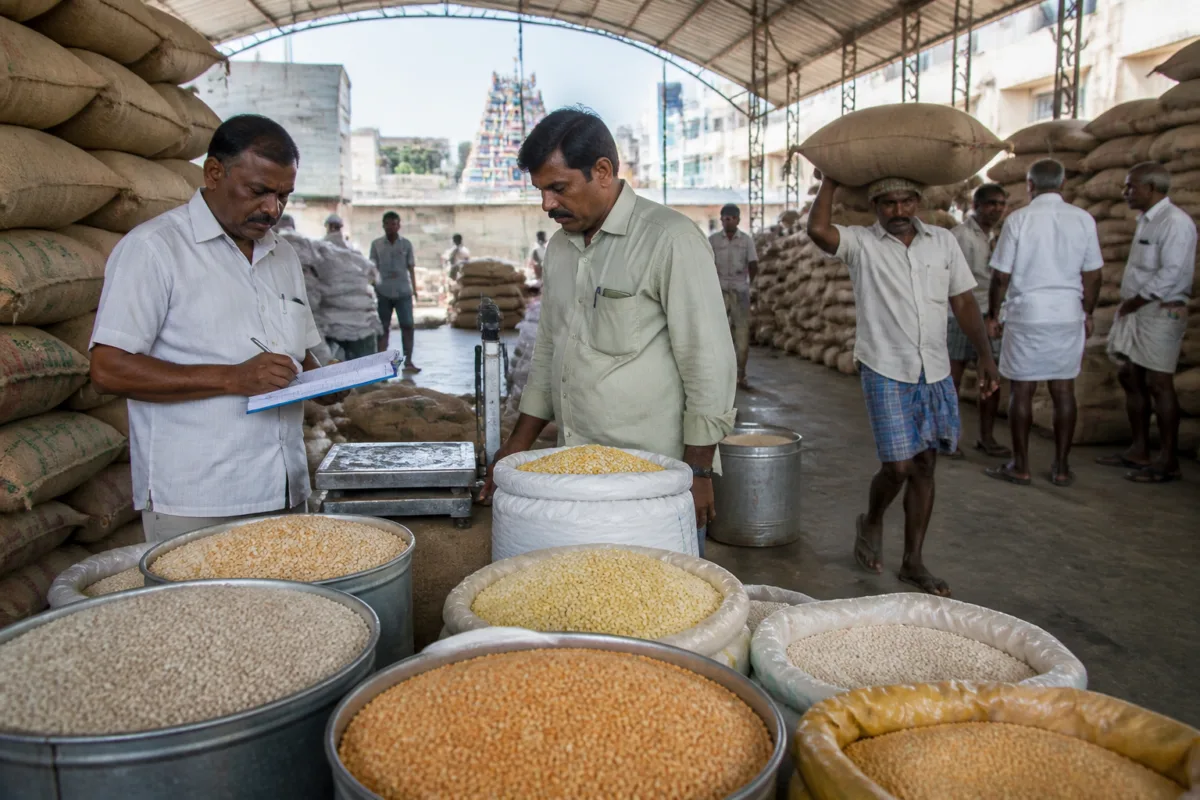
Tamil Nadu has imposed new stock limits on rice and pulses for wholesalers, retailers, mills, processors and importers, with the state government saying the restrictions are intended to prevent hoarding and control price increases. The requirements were notified in a government gazette and include mandatory online disclosure of inventories.
Under the order, rice wholesalers may hold up to 2,000 tonnes. Retailers are limited to 8 tonnes per shop, while rice mills cannot keep stocks above their production capacity for one month. Processors may hold inventory for up to 60 days.
Traders must register their stock details on the website of the Union Consumer Affairs Department and keep the information updated continuously. The online reporting requirement is intended to provide authorities with a current view of available supplies across the trading chain.
Separate limits have been set for tur dal and urad dal. Wholesalers may hold up to 200 tonnes of each pulse, while retailers may keep up to 5 tonnes each. For mills, the permitted stock is the higher of their production during the previous three months or 25% of their annual production capacity, according to the gazette details reported by Dinamalar.
Importers of rice and pulses must clear their stocks within 45 days from the date on which customs clearance is granted. This requirement places a time limit on inventory held after imports are released through customs.
Businesses holding quantities above the prescribed limits have been directed to bring their stocks down to the permitted levels by the 16th. The order therefore creates an immediate compliance deadline for traders and processing units that exceed the newly specified thresholds.
The measures place inventory disclosure alongside physical stock limits. For consumers, the rules are aimed at preventing supply from being withheld from the market during a period of price pressure. However, the supplied government-gazette report does not specify the current prices of rice or pulses, the scale of stocks held in Tamil Nadu, or the penalties that may apply for non-compliance.
The order also creates a wider administrative task for the state and market participants. Authorities will need to compare online declarations with actual stocks held by wholesalers, retailers, mills, processors and importers, while businesses will have to update their records as inventories change. The next immediate milestone is the deadline for excess stocks to be reduced to the permitted limits by the 16th.

