


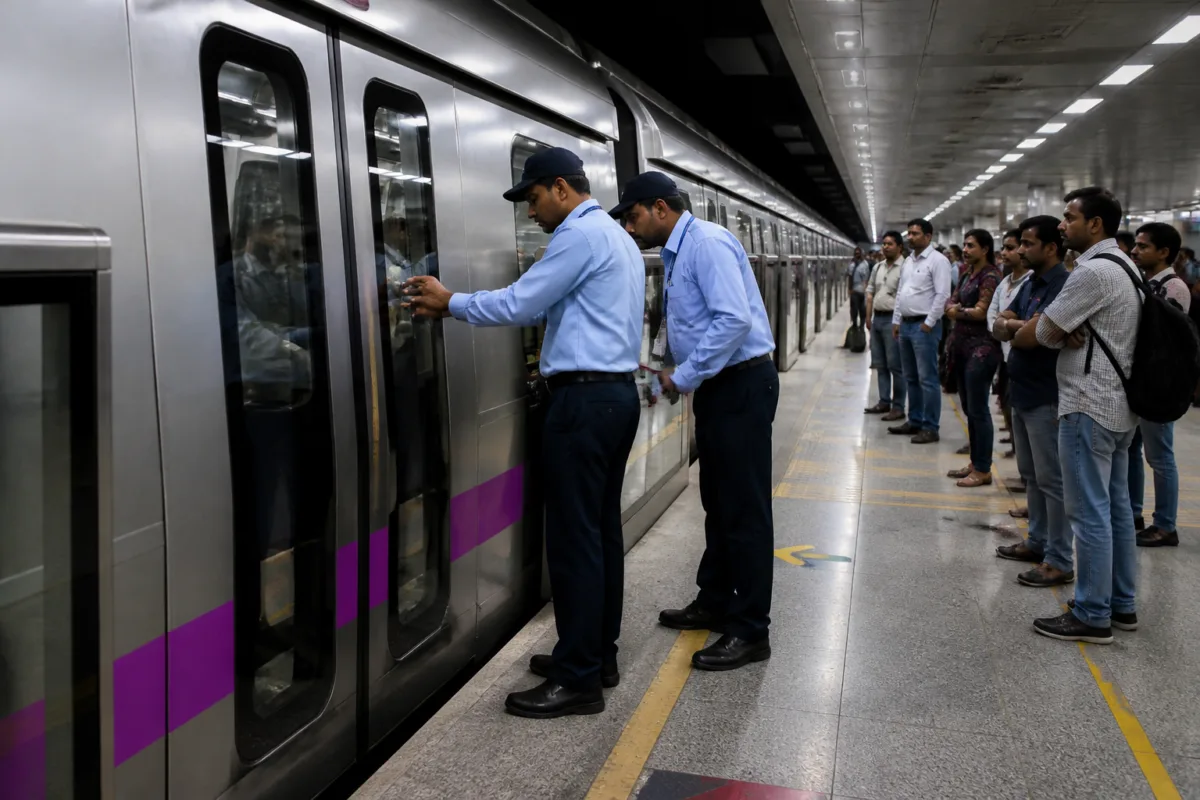
Delhi Metro has begun testing an anti-drag system in five trains to prevent passengers or belongings from being pulled along a platform after becoming trapped in closing train doors. The system is designed to detect thinner objects, including saree ends, bag straps and bottle cords, and stop the train from moving when such an obstruction is detected.
The pilot began with one train on a rail line in July last year, and the system has now been installed in four additional trains, according to a report by Jagran – New Delhi. Delhi Metro will consider extending the technology to more trains after evaluating the results of a trial lasting between 18 months and two years.
The intervention follows the death of a woman at Inderlok Metro station in December 2023. According to the report, a nylon cord attached to a water bottle became caught in the train doors as she was alighting. The train then moved, dragging her along the platform. She later died from her injuries.
Delhi Metro trains already use door sensors intended to prevent doors from closing when an object is trapped. However, the report states that the existing sensors reopen the doors only when they detect an object thicker than 15 millimetres. This leaves a potential gap for thinner materials such as clothing, narrow straps and cords, which may become caught without triggering the existing mechanism.
The anti-drag system is intended to address that gap by improving detection of thinner objects. If the system detects an obstruction during door closure, the doors will not close and the train will not proceed. The immediate safety objective is to prevent a trapped object from becoming a connection between a passenger and a moving train.
The development also highlights the operational challenge of managing risk at the interface between train doors and crowded platforms. A door sensor that prevents closure and a system that stops train movement after an object is caught serve related but different safety functions. The pilot is therefore focused not only on detection but also on whether the system works reliably within the operating conditions of Delhi Metro trains.
The rollout is being treated as a test rather than an immediate network-wide upgrade. Delhi Metro will assess the system’s performance over the planned trial period before deciding whether to install it in other trains. The report does not specify the identities of the five trains, the lines on which they operate or the cost of the pilot.
The next formal step is the completion of the 18-month-to-two-year evaluation. Its findings will determine whether the anti-drag system is extended across a larger part of the Delhi Metro fleet.

