


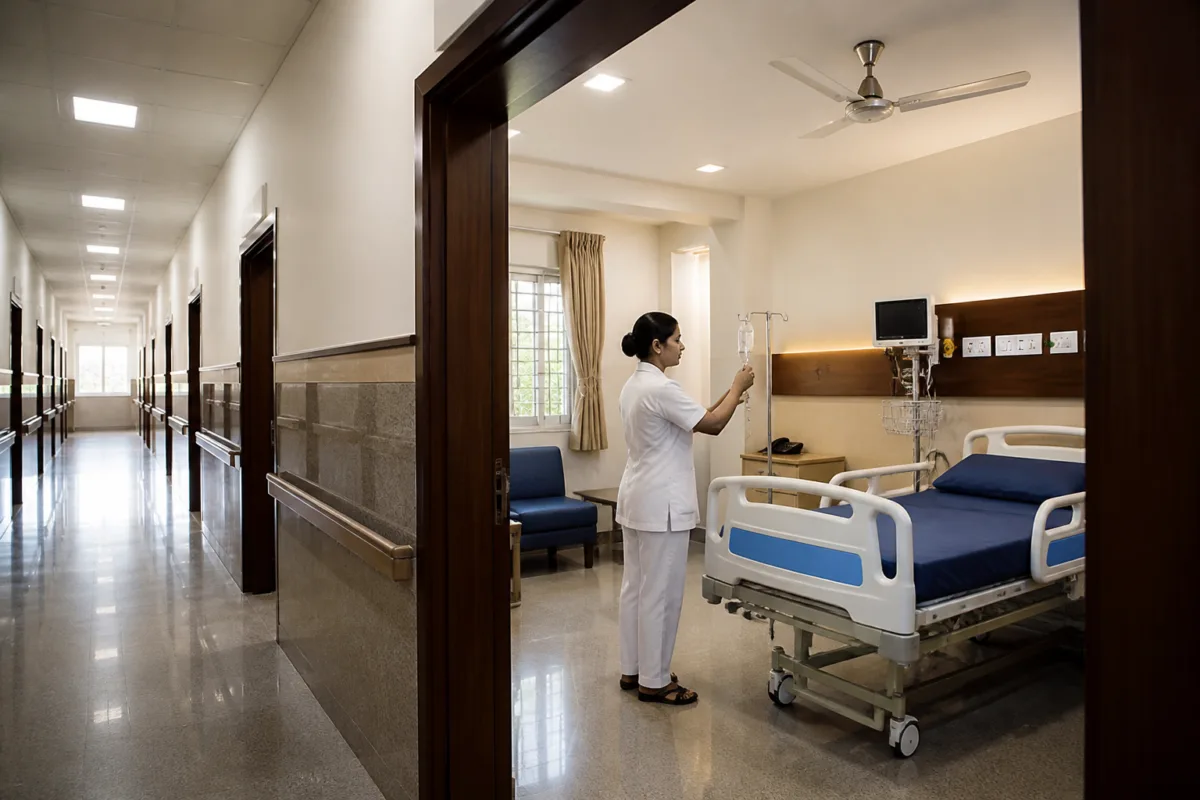
Tamil Nadu has opened paid wards in 24 government hospitals for patients without state health insurance, offering treatment at rates linked to government-approved insurance packages and creating a lower-cost alternative to private hospital care.
The move allows patients who are not covered by the Chief Minister’s Comprehensive Health Insurance Scheme (CMCHIS) or the New Health Insurance Scheme (NHIS) for government employees and pensioners to use designated pay wards. The policy is also intended to improve occupancy in facilities that currently have vacancy rates of 30% to 50%, according to officials.
Dr S Uma, director of the Tamil Nadu Health System Project, said most patients currently admitted to the wards are covered by CMCHIS or NHIS. The department has now defined protocols for admitting patients who do not have access to either scheme. “Most patients admitted there are those with state health insurance or government employees’ health insurance. We have now defined the protocols to admit patients without these schemes,” she said.
An October 7 letter issued by the project permits the wards to accommodate patients covered by applicable insurance schemes and eligible new health insurance scheme beneficiaries, alongside patients paying directly for treatment. Hospitals have been instructed to apply treatment and surgery charges set out in a September 2021 government order and the relevant CMCHIS package rates.
Patients choosing the pay wards will have to pay for the entire treatment package, Uma said. The arrangement is therefore different from paying only for a private room while receiving free treatment. At Omandurar Multi Speciality Hospital, director Dr V V Kannan said nearly half the pay ward rooms were vacant, including rooms with facilities that could support step-down intensive care.
The affordability gap between public and private hospitals remains substantial. Data from the National Statistical Office’s 80th round, conducted between January and December 2025, showed that families in Tamil Nadu spent an average of Rs 69,914 out of pocket for a delivery in a private hospital, compared with Rs 1,412 in a government hospital. For hospitalisations excluding childbirth, the average out-of-pocket spending was Rs 74,168 in private hospitals and Rs 1,357 in government hospitals.
Officials and doctors said a lack of information at hospital reception desks has meant that patients are not routinely offered a clear choice between general wards and pay wards. Kannan said some patients asked whether they could pay only the room rent while receiving free treatment, indicating that the terms of the service remain poorly understood.
Revenue from the pay wards must be deposited in a separate account maintained by the head of the institution. It will first be used for operating expenses such as staffing, consumables, utilities, housekeeping and maintenance. Any surplus may be used for hospital development, equipment and medicines, subject to prescribed financial procedures.
Deans have recommended that the state consider accepting private and corporate health insurance as well. A former medical college dean said expanding the service would require investment not only in clinical care but also in patient-facing services such as patient relations staff, food choices and assistance beyond bedside treatment. The immediate implementation challenge is to communicate the eligibility and payment rules clearly while ensuring that the new wards improve public hospital utilisation without disrupting general services.

