


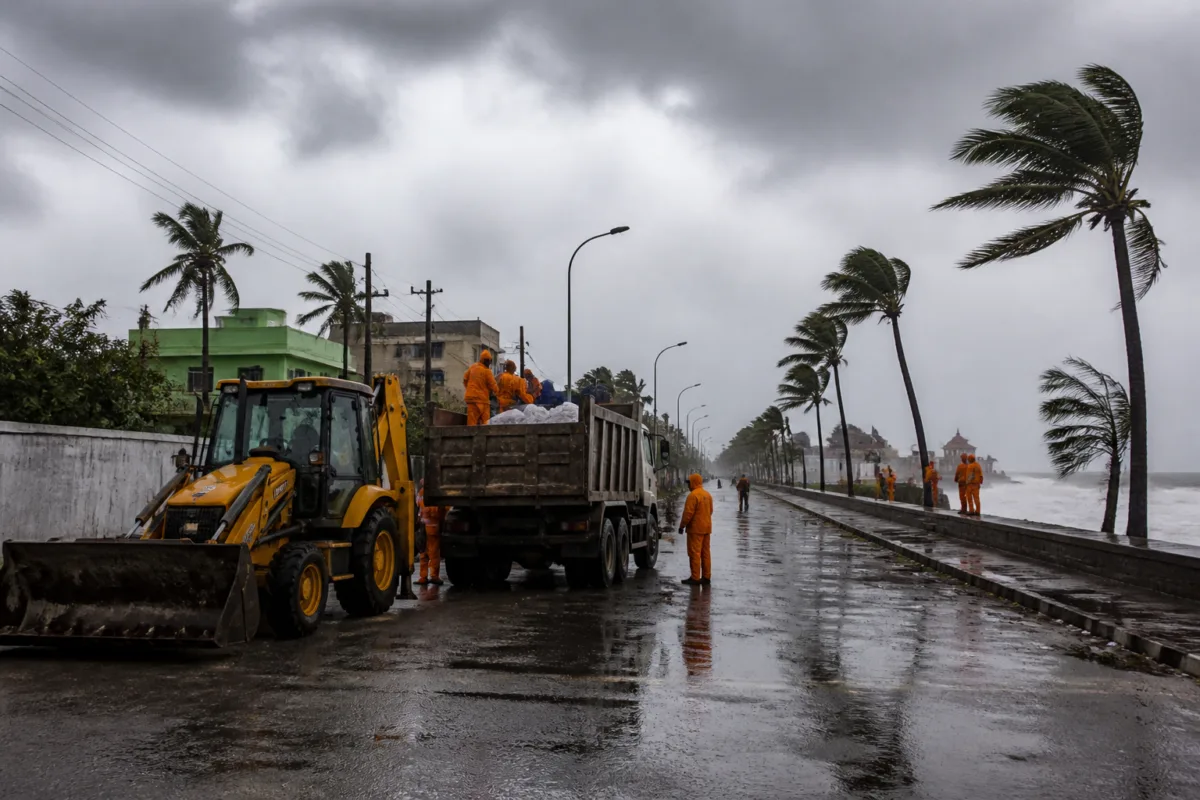
Chennai has mobilised one battalion of the National Disaster Response Force (NDRF) and placed vulnerable coastal areas on alert as strong winds and rainfall are expected in the wake of Cyclone Murasu, Greater Chennai Corporation commissioner G S Sameeran said on Monday.
The commissioner advised residents to remain indoors during the cyclone and warned them against going outdoors to take photographs or videos. He also cautioned people against approaching the sea because of rough conditions along the coast.
The NDRF battalion comprises 18 teams, each with 30 personnel. The teams have been equipped with life jackets, underwater diving equipment and medical supplies to carry out rescue operations if required, according to the corporation.
Tiruvottiyur and Manali, identified as vulnerable coastal areas, have been placed on alert. The locations are among the parts of northern Chennai that could require faster emergency response if strong winds, rainfall or sea conditions affect local roads and settlements.
The Greater Chennai Corporation has also deployed field workers and emergency equipment in preparation for possible incidents. JCB machines, tipper trucks and tree-pruning machines have been kept ready to respond to fallen trees, blocked roads and other emergencies linked to severe weather.
Sameeran referred to a recent sea surge on Ennore High Road while discussing possible traffic restrictions. Traffic police have been alerted to implement diversions on the stretch if wind speeds increase. The arrangement could affect movement along an important northern coastal road, although no diversion was reported as having been implemented at the time of the announcement.
The city administration has prepared 220 relief centres with food supplies. These centres are intended to accommodate residents if evacuation becomes necessary. Their readiness indicates that the municipal response is being organised around both rescue operations and temporary shelter for people in areas considered vulnerable.
The measures place the corporation’s emergency response across several operational areas: rescue teams for water-related incidents, heavy equipment for clearing obstructions, traffic management for exposed road stretches and relief centres for potential evacuation. The administration’s immediate public guidance remains for residents to stay indoors and avoid the shoreline while cyclone-related conditions develop.
Further action will depend on wind and rainfall conditions, including whether traffic diversions or evacuations become necessary. The NDRF teams, corporation field workers, traffic police and relief centres have been kept ready for emergencies as the cyclone affects the coast.

