


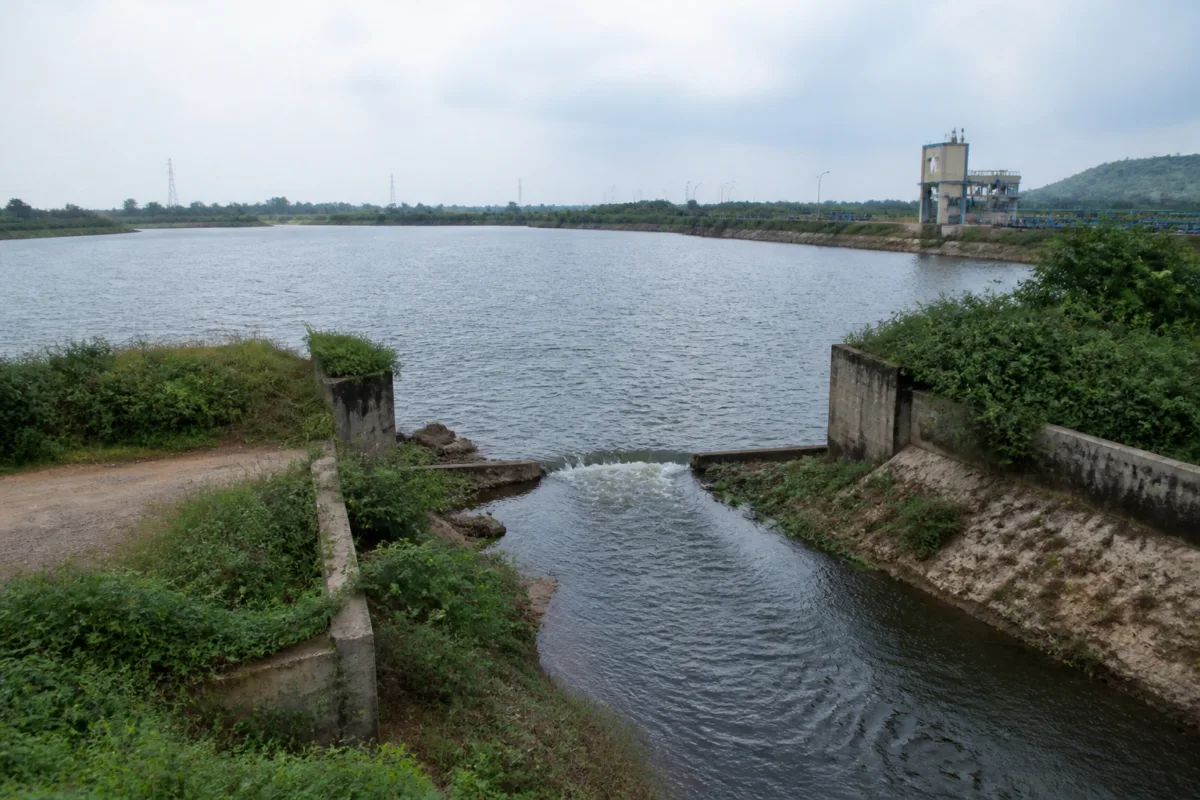
Chennai’s dispute over sewage contamination in Chembarambakkam Lake has exposed a fragmented drainage-control system in which several agencies operate channels around the city’s main water source. The Chennai Metropolitan Water Supply and Sewerage Board (Metro Water) has told the National Green Tribunal’s Southern Bench that responsibility should be fixed only after the ownership and function of each drainage channel are established.
Metro Water filed the status report in the last week of October in a suo motu case concerning sewage contamination of the lake. The report followed an earlier direction involving the Tamil Nadu Pollution Control Board, which had informed the tribunal that Metro Water was asked to plug unauthorised stormwater drains. The NGT subsequently directed Metro Water and the Water Resources Department (WRD) to file reports.
In its submission, Metro Water argued that closing a hydraulic outlet without a detailed assessment could divert stormwater and sewage into adjoining low-lying areas. The board said the more sustainable approach would be to stop pollution at its upstream sources rather than simply block downstream channels. That, it added, would require coordination with the WRD and other departments.
The board said it would take corrective action wherever an unauthorised discharge was identified. However, it maintained that responsibility could be assigned to Metro Water only after the source of the discharge was established. The report listed several drainage systems around Chembarambakkam Lake that are not under its operational control.
These include open feeder channels, the Krishna Water Link Canal and surplus courses under the WRD. The board also referred to industrial drains maintained by the State Industries Promotion Corporation of Tamil Nadu and sullage drains belonging to local bodies. The range of agencies and channel types shows why a single instruction to close drains may not resolve the pollution pathway without a mapped assessment of how water moves through the system.
The issue is significant because Chembarambakkam is also a source for Chennai’s drinking-water supply. Metro Water said water drawn from the lake undergoes multi-barrier treatment at its 530 million litres per day water treatment plant. Citing test reports, it said the treated water meets drinking-water specifications and is monitored before distribution.
The status report therefore places two separate responsibilities before the tribunal: identifying and stopping unauthorised pollution entering the lake, and ensuring that interventions do not worsen flooding or sewage diversion in nearby low-lying areas. It also underlines the need to distinguish between stormwater channels, surplus courses, industrial drains and sullage drains before assigning operational responsibility.
The NGT proceedings provide a formal setting for resolving that institutional overlap. Based on the report, the immediate challenge is not only whether an outlet should be blocked, but which agency controls it, what flows through it and where the pollution originates. Those facts will determine whether corrective action protects the lake without creating new drainage risks for surrounding areas.

