


Tamil Nadu has appointed 12 coordination officers to intensify dengue prevention across the state, where more than 16,000 people have reportedly been affected and up to nine deaths have been recorded, according to a report by Dinamalar citing the Director of Public Health, Somasundaram.
The dengue situation has been reported as particularly serious in Chennai, Coimbatore, Erode, Tiruppur, Salem and Krishnagiri districts. The state government is responding through mosquito-control operations, larval-source reduction and medical camps in areas reporting fever cases.
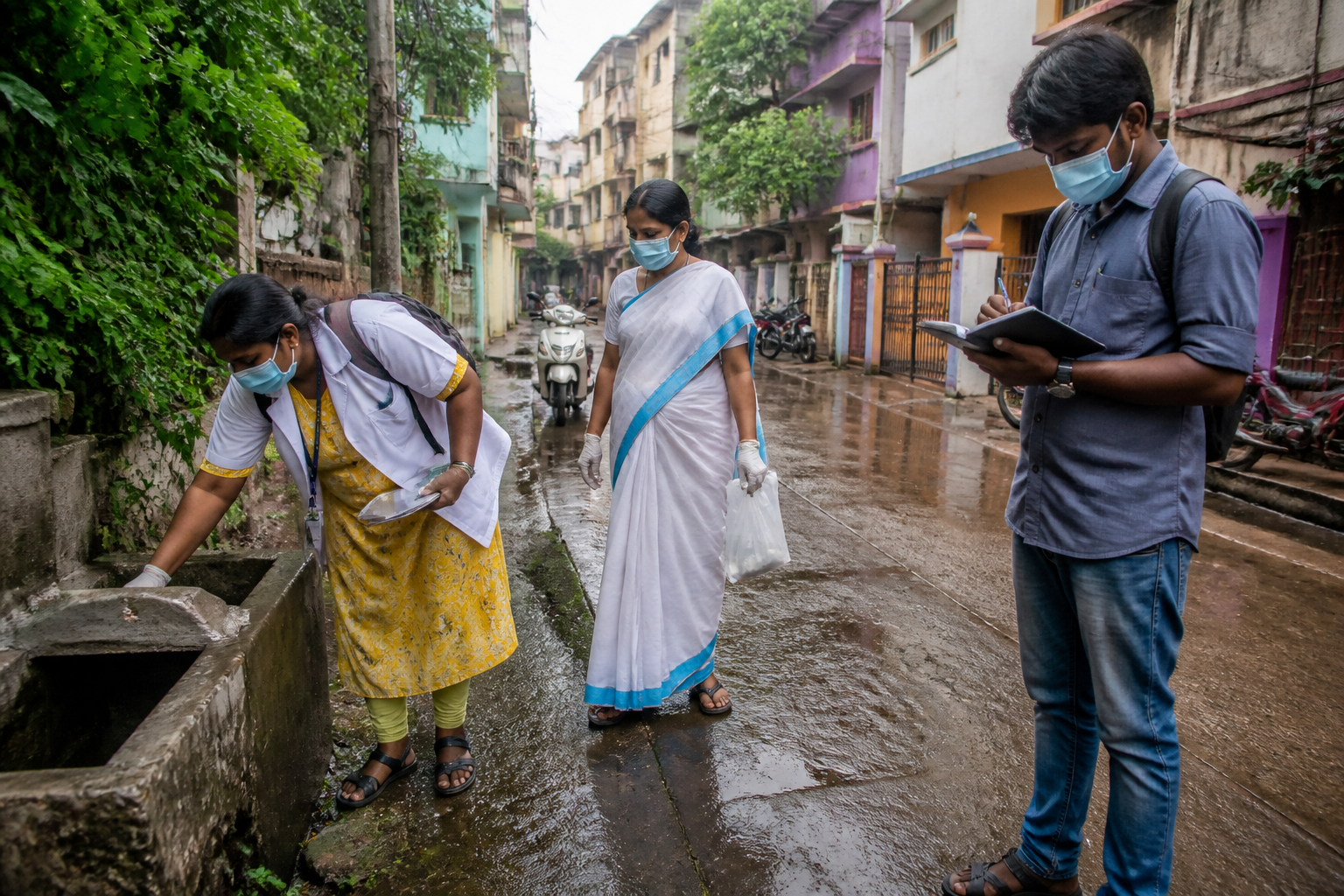
Somasundaram said 25,158 personnel have been deployed to identify and eliminate both Aedes mosquitoes, which transmit dengue, and their breeding sites. The operations include locating mosquito larvae and removing conditions that allow them to multiply, alongside wider vector-control work.
Medical camps are also being conducted in affected areas as part of the response. Dinamalar reported that more than 16,000 people have been affected so far and that the death toll has reached up to nine, although the report did not provide a district-wise case or mortality breakdown.
The 12 officers have been drawn from the Directorate of Public Health and Preventive Medicine, including additional directors, joint directors and deputy directors. They will be responsible for monitoring prevention work across 45 health districts.
Each coordinator will oversee an average of three or four health districts and work with local bodies and medical department officials. This structure places the state’s dengue response across two linked administrative functions: public-health surveillance and neighbourhood-level civic operations, including mosquito breeding-site control.
The coordination arrangement is intended to strengthen oversight of field work rather than create a separate health-district structure. Officers will monitor prevention measures, coordinate with local administrations and support the conduct of medical camps in areas where fever cases are being reported.
The response highlights the operational challenge of controlling dengue in urban and semi-urban areas, where the effectiveness of state health measures depends partly on routine local action. Eliminating breeding sites requires field teams to identify stagnant water and other conditions that enable Aedes mosquitoes to reproduce, while medical teams must simultaneously detect and manage suspected cases.
The state’s reported deployment of 25,158 workers is therefore being combined with a supervisory network covering all 45 health districts. The immediate focus, according to the public-health director’s statement cited by Dinamalar, is intensified prevention activity in districts with higher reported impact and closer coordination between local bodies and health officials.
The 12 coordinators will continue overseeing dengue-prevention work across their assigned health districts, including mosquito-control operations and medical camps in affected areas.
