


Tamil Nadu’s reservoirs are holding only 75.7 thousand million cubic feet (TMC) of water despite rainfall from the northeast monsoon, with just three of the state’s 90 dams reported to be full, according to a report by Dinamalar.
The report said rainfall has been recorded over the past few days in districts along the Western Ghats, while northern districts have also begun receiving widespread showers. However, the increase in reservoir levels has remained limited.
The total storage across the 90 dams stands at 75.7 TMC, equivalent to 33.7% of their combined capacity. Forty-three dams have water levels below 25% of capacity, while 24 dams have less than half their capacity in storage, the report said.
Water resources officials attributed the low storage levels to the prolonged hot and dry conditions that preceded the current rainfall. The report cited an official associated with the Dams Safety Organisation and the Water Resources Department as saying that reduced southwest monsoon rainfall, attributed in the report to the El Niño climate pattern, had lowered storage in several reservoirs.
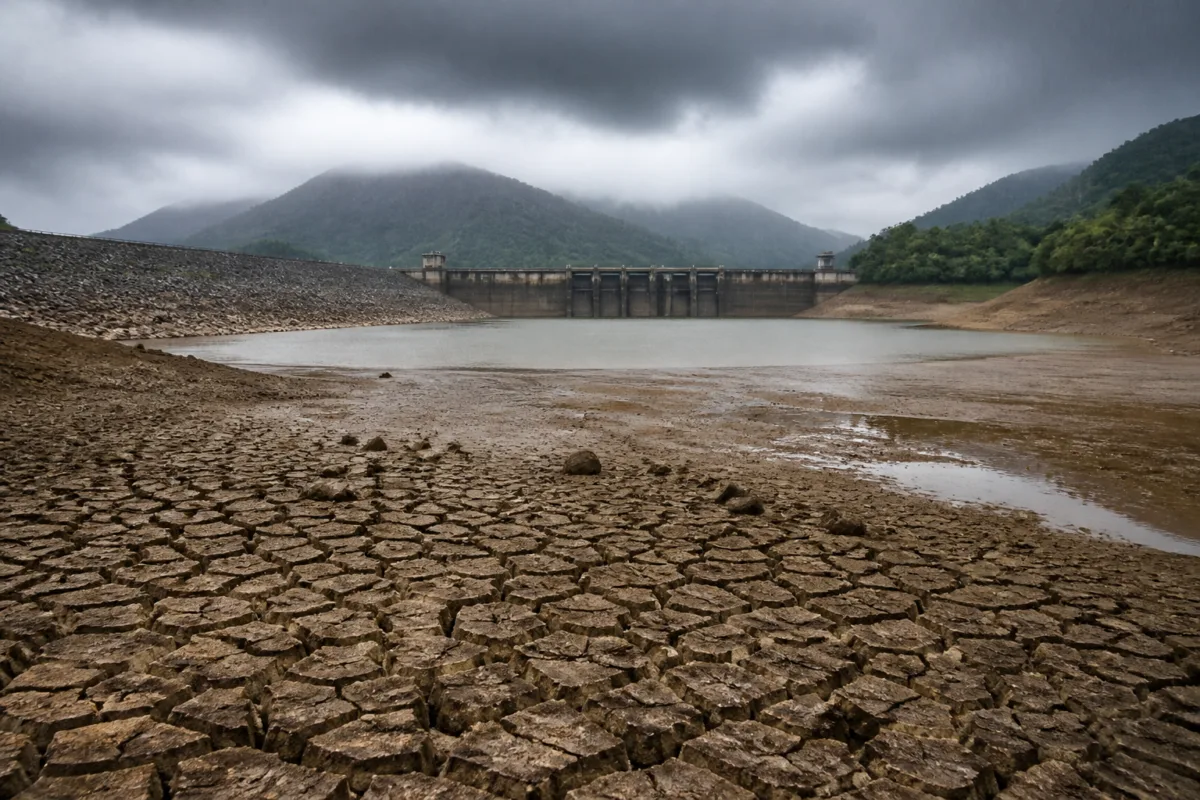
According to the official, the intense heat caused the exposed silted surfaces at the bottom of some reservoirs to develop cracks. Rainwater is now being absorbed quickly by these dry areas, limiting the immediate rise in water levels. The official said the ground beneath the reservoirs would need to regain moisture before storage levels could increase substantially, requiring continuous rainfall.
The pattern is uneven across the state. The Gundar reservoir in Tenkasi, the Mambazhatthuraiyar reservoir in Kanniyakumari, the Sothuparai reservoir in Theni, the Sastha Kovil and Kullur Sandhai reservoirs in Virudhunagar, and the Vardhamanathi reservoir in Dindigul were reported to have storage above 95% of capacity. The Palakkad Thunakadavu and Parambikulam reservoirs maintained by the Water Resources Department’s Coimbatore region were also reported to have more than 95% storage.
The figures indicate that rainfall alone has not yet translated into uniform reservoir recovery. While some smaller or better-served reservoirs have reached high storage levels, the overall position remains dependent on sustained rainfall and the response of dry reservoir beds. The report did not provide a district-wise comparison of inflows, outflows or projected water availability.
The Water Resources Department’s assessment, as cited by Dinamalar, is that storage levels will rise only if rainfall continues long enough to saturate the exposed ground beneath the reservoirs. No further operational measures or revised reservoir-release schedules were cited in the report.

