


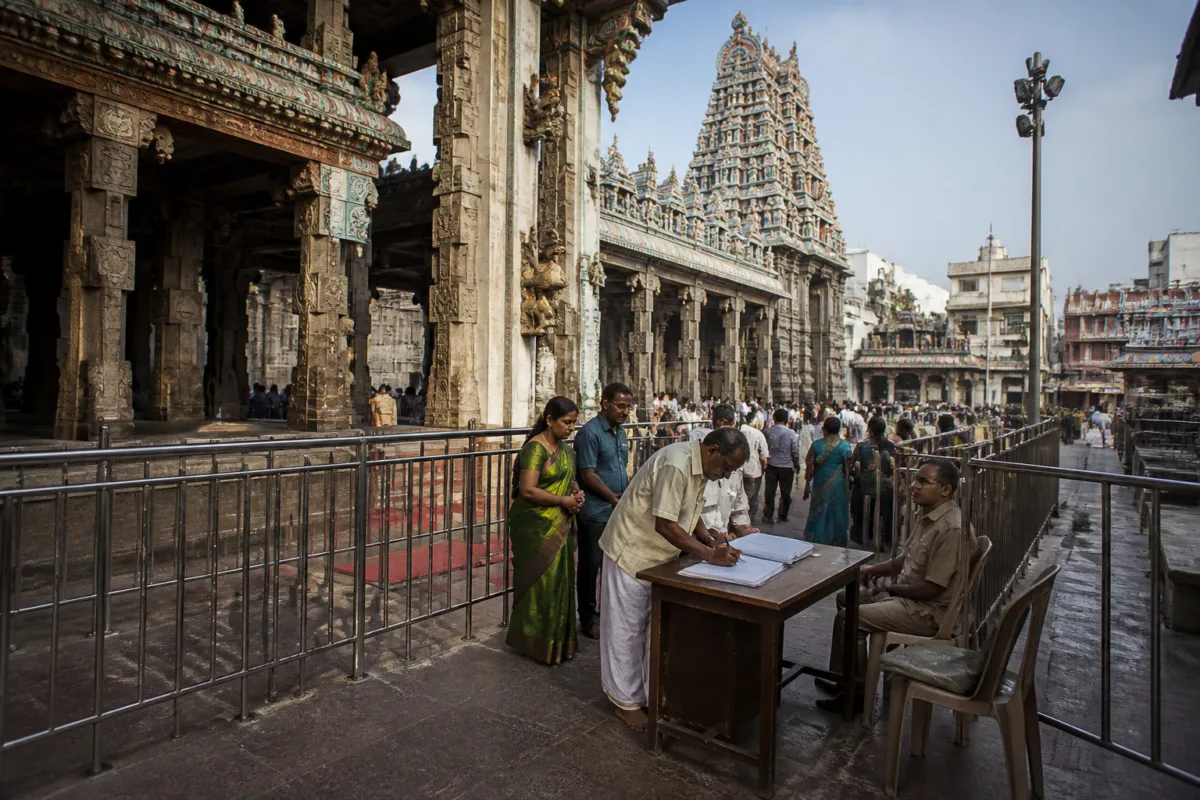
The Madurai Bench of the Madras High Court has disposed of a public interest litigation seeking restrictions on the entry of people of other faiths into temples, after the Tamil Nadu government said that existing rules were already being followed and would continue to be implemented.
The petition was filed by Madurai resident Thangam Venkatesh, who sought directions to the Hindu Religious and Charitable Endowments Department to prevent people who do not follow Hinduism, or those displaying symbols associated with other religions, from entering temples. The petitioner alleged that some visitors entered temples displaying religious identities and claimed to have faith in the presiding deity before signing the visitor register.
The petition also sought an inquiry into alleged violations of laws and rules governing entry into temples. It asked the authorities to take action against visitors who did not comply with the applicable regulations and to enforce the rules strictly.
A Division Bench comprising Justices G.R. Swaminathan and P. Mugunthan heard the matter. Advocate Kishore appeared for the petitioner. The government was represented by Additional Advocate General Balasubramanian.
During the hearing, the judges referred to an incident at the Tiruvannamalai temple involving a person wearing a skullcap while displaying a religious identity. The Bench said that such conduct was not acceptable. The judges also referred to Tamil Nadu Chief Minister Vijay’s visit to the Madurai Meenakshi Amman Temple, noting that he had followed the prescribed procedure, signed the register and worn kumkum.
The observations placed the dispute within the administrative framework governing temple visits rather than creating a new restriction through the case. The government told the court that the rules were already being followed in the matter and assured the Bench that their implementation would continue.
The court recorded the government’s submission and closed the proceedings. The report does not indicate that the Bench issued a fresh statewide directive or modified the existing temple-entry regulations.
The case highlights the role of the Hindu Religious and Charitable Endowments Department and temple administrations in applying entry procedures at major religious institutions. Such procedures can include visitor registration and requirements linked to conduct within temple premises, although the specific rules applicable across individual temples were not detailed in the proceedings as reported.
With the government’s assurance recorded, responsibility for continuing enforcement remains with the relevant department and temple authorities. No further hearing or implementation deadline was specified in the report.

