


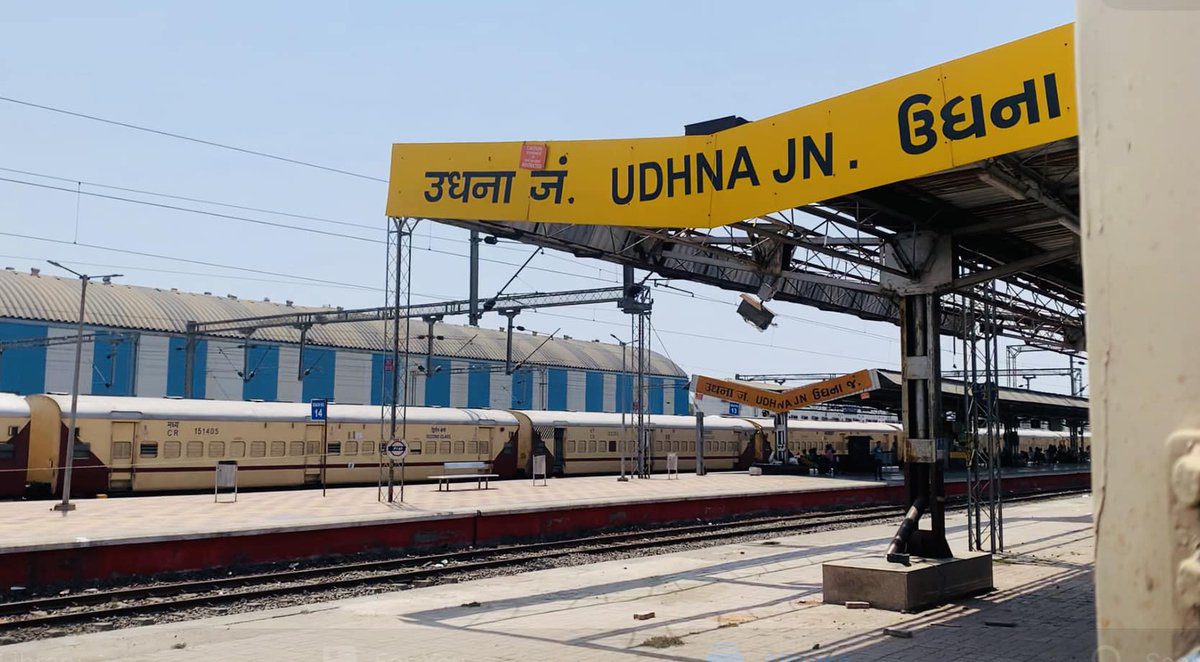
A sharp surge in passenger movement at Udhna Railway Station has brought attention to shifting labour patterns in Surat, where seasonal factors and an industrial slowdown are prompting large numbers of migrant workers to temporarily leave the city. The spike in departures highlights how closely urban economies are tied to workforce mobility in major manufacturing hubs. Transport officials report unusually high footfall at the station, with trains operating at near capacity as workers return to their hometowns during the summer period.
The Surat Udhna station rush reflects a combination of scheduled factory downtime, school holidays, and reduced industrial activity, which typically lowers short-term employment demand. Urban economists note that such cyclical migration is common in cities dependent on sectors like textiles and small-scale manufacturing. However, the scale of the current movement has raised concerns about the resilience of local economic systems. The Surat Udhna station rush illustrates how fluctuations in industrial output can quickly translate into large-scale population shifts. For urban infrastructure, these surges pose logistical challenges. Railway stations and associated transit systems must accommodate sudden increases in passenger volume, often stretching capacity and affecting service quality. Experts suggest that better forecasting and coordination between industries and transport authorities could help manage such peaks more efficiently. The situation also sheds light on the precarious nature of migrant employment. Many workers operate in informal or semi-formal sectors, where income stability is closely tied to production cycles. During periods of slowdown, returning home becomes a practical choice, reinforcing the transient nature of the workforce in cities like Surat. From a planning perspective, the Surat Udhna station rush underscores the need for more adaptive urban systems. Cities must be able to respond to dynamic population changes without compromising service delivery. This includes flexible transport planning, temporary infrastructure support, and improved communication systems to guide commuters. There are also broader economic implications. Large-scale workforce departures, even if temporary, can affect productivity and supply chains. For businesses, managing labour availability becomes a recurring challenge, particularly during seasonal fluctuations. Environmental considerations are less direct but still relevant. Concentrated travel demand increases energy use and emissions within short timeframes, while fluctuating population levels can impact urban resource consumption patterns. Experts argue that strengthening social and economic security for migrant workers could help stabilise such patterns.
Access to affordable housing, healthcare, and consistent employment opportunities may reduce the need for frequent movement, contributing to more stable urban ecosystems. As Surat continues to grow as an industrial centre, the recurring Surat Udhna station rush highlights a structural aspect of its development model one where mobility, employment, and infrastructure remain deeply interconnected. Addressing these challenges will require coordinated planning that balances economic efficiency with social stability.
ALSO READ – Surat Railway Station Crowds Signal Labour Movement Shift
Surat Udhna Station Rush Reflects Seasonal Migration Trends
