


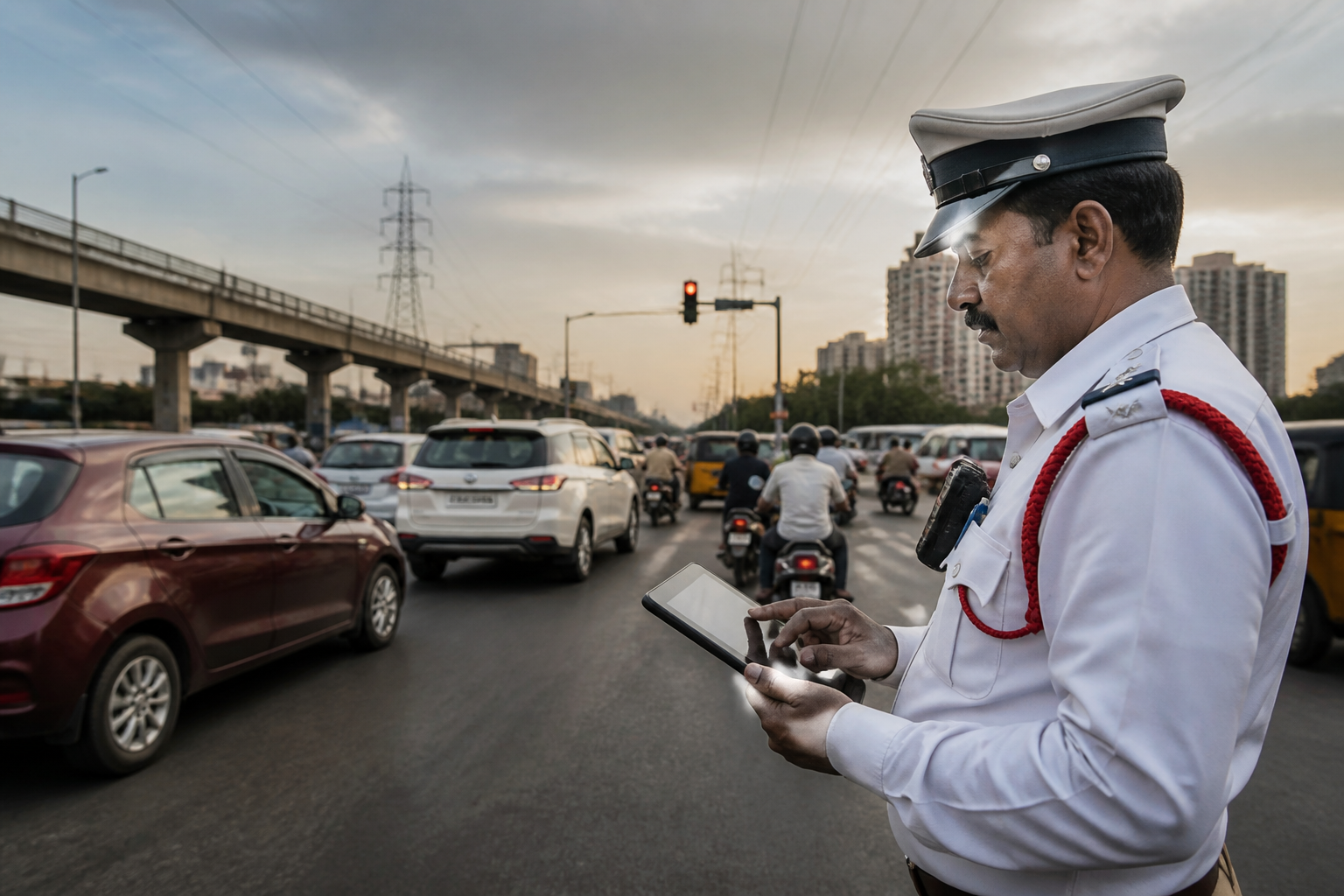
The Supreme Court has suggested linking unpaid traffic e-challans to electricity bills as one possible way to recover nearly Rs 20,000 crore in outstanding traffic fines across India, while also considering restrictions on vehicle ownership transfers and checks through the national transport database.
The proposal was made by a bench of Justices J B Pardiwala and K V Viswanathan while hearing a plea concerning the recovery of traffic fines. The court was informed that states and Union Territories issue a large number of electronic challans, but only a portion of the penalties are ultimately recovered.
According to the information placed before the bench, total e-challan dues were around Rs 45,000 crore. Approximately Rs 25,000 crore had been recovered, leaving nearly Rs 20,000 crore unpaid. The figures underline the gap between automated traffic enforcement and the administrative systems required to collect penalties after a violation is recorded.
The court’s suggested electricity-bill mechanism would create a link between traffic enforcement and an existing household utility-payment system. The report does not indicate that such a system has been approved or implemented. The suggestion remains part of the court’s consideration of stronger recovery measures.
The bench also proposed flagging vehicles with unpaid challans on the Parivahan portal. Such a flag could make outstanding penalties visible during vehicle-related transactions and could support restrictions on ownership transfers until dues are addressed. The court further discussed random checks as another possible method of improving compliance.
The proposals point to the institutional challenge created by e-challans: issuing a fine can be digitised, but recovery depends on coordination among traffic police, transport departments, vehicle-registration systems and other public agencies. Any mechanism that links traffic dues to electricity accounts would involve an additional administrative connection between mobility enforcement and utility billing.
For vehicle owners, the measures could make unpaid challans relevant beyond traffic-police interactions or vehicle-sale procedures. However, the supplied report does not establish the legal form, implementation timeline or safeguards that would apply if any of the suggestions were adopted. It also does not state whether the court has directed states or Union Territories to begin using electricity bills for recovery.
The Supreme Court’s hearing is therefore focused on improving collection of existing traffic penalties, with the next steps dependent on the proceedings and any formal directions issued by the bench. The court’s consideration of Parivahan flags, ownership-transfer restrictions, random checks and electricity-bill links places recovery systems at the centre of the national e-challan enforcement debate.
