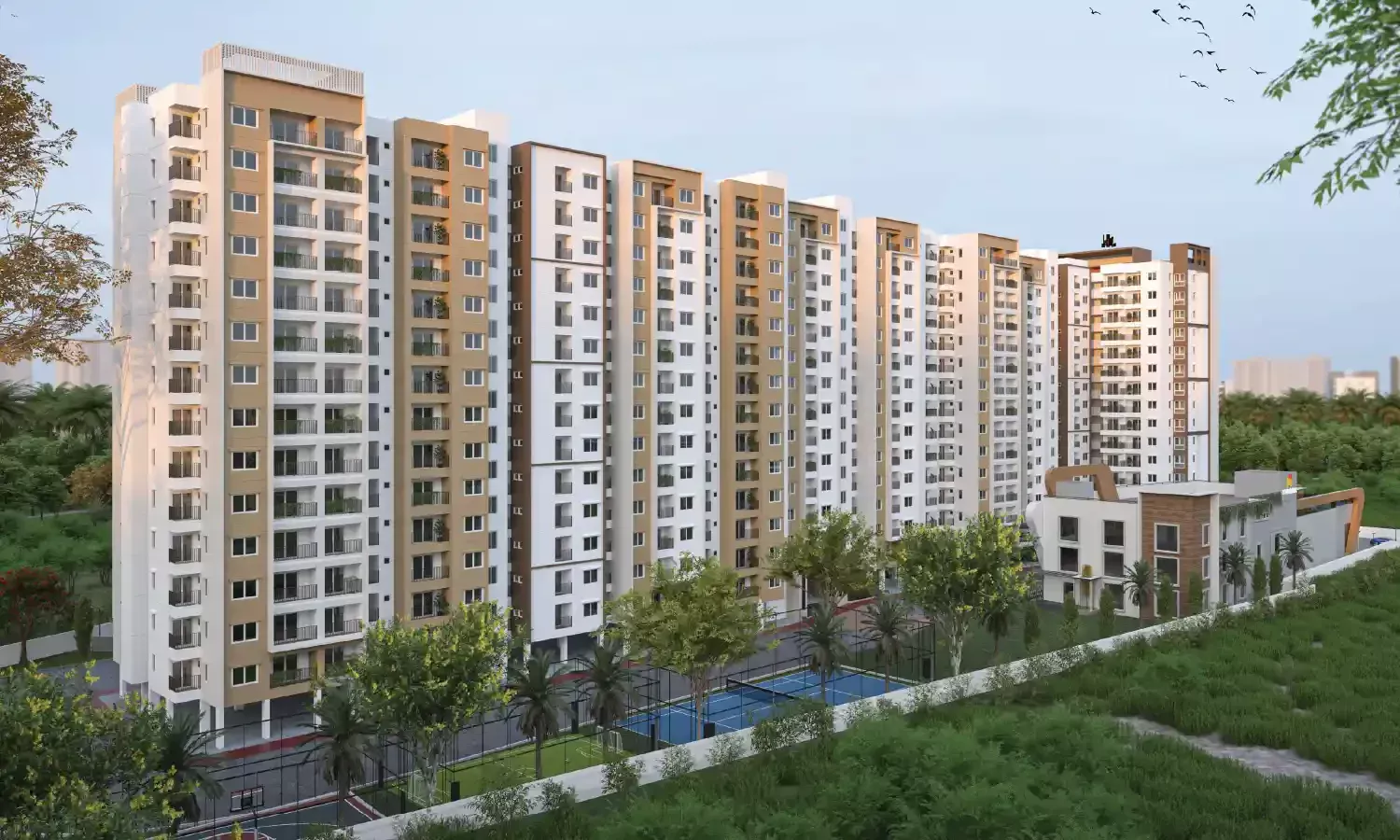
A mid-sized southern developer is preparing for a significant capital infusion that could accelerate housing supply across key urban corridors, at a time when affordability pressures and rapid urbanisation continue to shape India’s residential markets. Sowparnika Projects is understood to be in advanced discussions to secure nearly ₹500 crore in equity funding, aimed at expanding its footprint across southern cities and emerging urban clusters.
The proposed Sowparnika Projects funding is expected to support the development of roughly 5.5 million square feet over the next two years, with a geographic focus spanning Bengaluru, Kerala, and Tamil Nadu. Industry observers note that the company is also evaluating peripheral zones around Hyderabad and Visakhapatnam regions increasingly linked to infrastructure upgrades and decentralised economic growth.This expansion reflects a broader shift in housing demand patterns. Urban planners point out that mid-income housing, particularly in the ₹75 lakh to ₹1.5 crore range, is witnessing sustained traction due to demographic shifts, including younger households entering the property market. However, the segment remains highly sensitive to interest rate fluctuations and job market stability, raising questions about long-term resilience.
Financially, the developer is attempting to scale rapidly. It has already raised substantial debt from a mix of institutional lenders and non-banking financiers, and the current equity round is intended to complement that leverage. While the company has articulated ambitious revenue targets aiming to nearly double turnover within two financial years analysts caution that historical performance inconsistencies could complicate investor confidence and execution timelines.The Sowparnika Projects funding also underscores the intensifying competition within southern India’s real estate landscape. Larger, established developers continue to dominate premium segments, often commanding higher prices due to brand strength and integrated amenities. In contrast, mid-tier firms rely on competitive pricing and faster delivery cycles to attract first-time buyers. This positioning, while effective in the short term, can pose challenges in resale value and long-term asset appreciation. From a city-building perspective, the expansion raises important considerations. Increased housing supply in peripheral and Tier-2 locations can support more balanced urban growth, potentially easing pressure on core city infrastructure. Yet, urban development experts emphasise that such expansion must be aligned with public transport access, water security, and climate-resilient planning to avoid replicating patterns of sprawl and resource strain.
The southern region remains a focal point for real estate investment, driven by technology-led employment hubs and ongoing infrastructure projects. However, the pace of development now being proposed places execution risk firmly in focus. Delivering large-scale projects across multiple states within tight timelines requires not only capital but also robust governance, regulatory compliance, and sustainable construction practices. As funding discussions near closure, the coming months will test whether this growth strategy can balance speed with stability. For cities, the outcome will shape not just housing availability, but also how equitably and sustainably new urban spaces are created.