


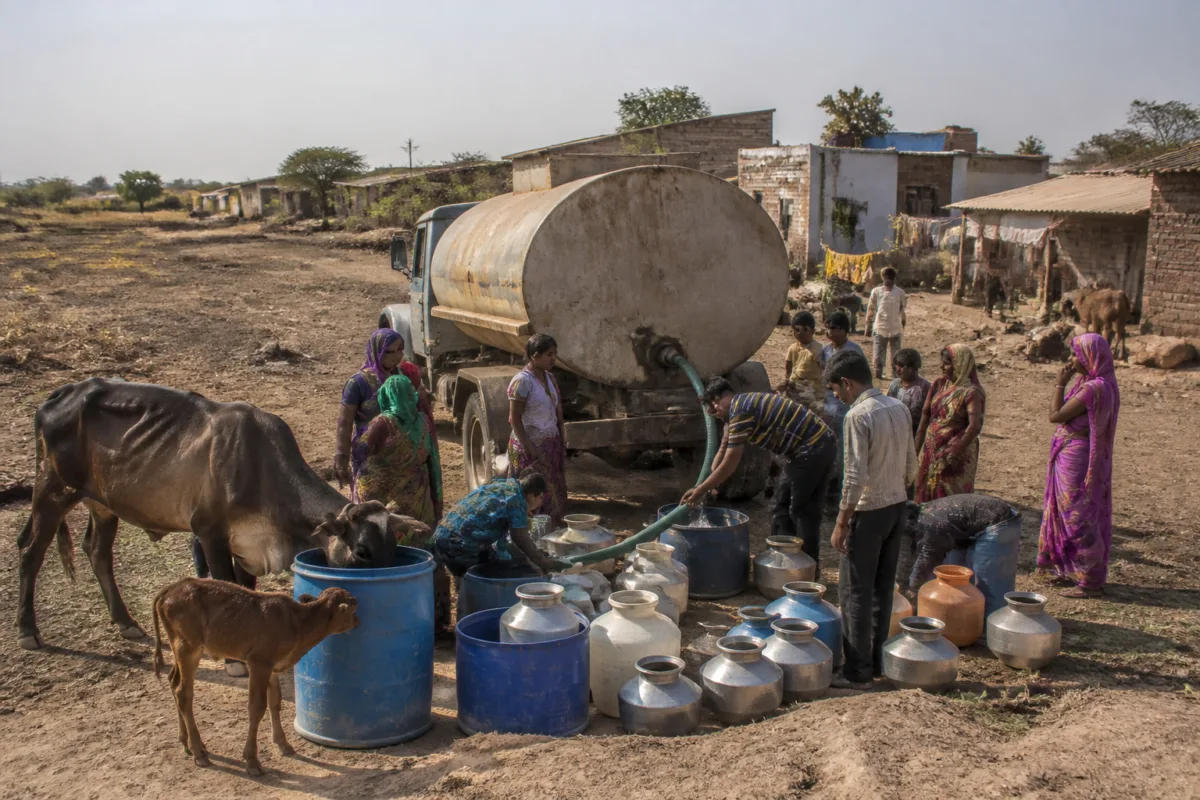
Solapur district’s water scarcity has intensified, with 178 tankers supplying water to 165 villages and 853 hamlets serving 337,043 residents and 98,959 livestock, according to the district Zilla Parishad’s water-supply department. The administration has also taken control of 70 water sources to maintain supplies in affected areas.
The figures were provided by V. D. Rathod, executive engineer in the Zilla Parishad water-supply department. Of the 70 water sources acquired for scarcity management, 44 are wells and 26 are borewells.
The tanker operation covers almost all of the district’s scarcity-affected talukas. Mangalwedha has the largest deployment, with 45 tankers supplying 42 villages. Sangola follows with 39 tankers serving 28 villages, while Madha has 19 tankers covering 15 villages.
In North Solapur, 16 tankers are supplying nine villages. Akkalkot has 13 tankers serving 18 villages, while Karmala has 10 tankers for 13 villages. Malshiras is being supplied by 11 tankers across 11 villages, and South Solapur has 10 tankers serving seven villages.
Mohol has 11 tankers supplying seven villages, while Barshi has four tankers serving 15 villages. The figures show that tanker requirements vary significantly between talukas, depending on the number of affected settlements and the availability of local water sources.
Pandharpur is currently the only taluka in the district where no tanker has been deployed. The district administration said regular and organised tanker water supply was continuing in the other scarcity-affected areas.
The scale of the operation places water distribution at the centre of local administration during the scarcity period. The response involves not only transporting water to villages and hamlets, but also identifying and acquiring wells and borewells that can be used to supplement tanker supplies.
The figures released by the Zilla Parishad also highlight the unequal effect of water scarcity across Solapur. Mangalwedha and Sangola account for the largest tanker deployments, while several other talukas require smaller but continuing operations. The supply network is serving both households and livestock, making the emergency relevant to rural livelihoods as well as drinking-water access.
The administration’s current response is therefore based on two parallel measures: tanker distribution to settlements facing shortages and the acquisition of local sources for additional supply. No further timeline for ending tanker operations or details on future rainfall and replenishment measures were provided in the report.

