


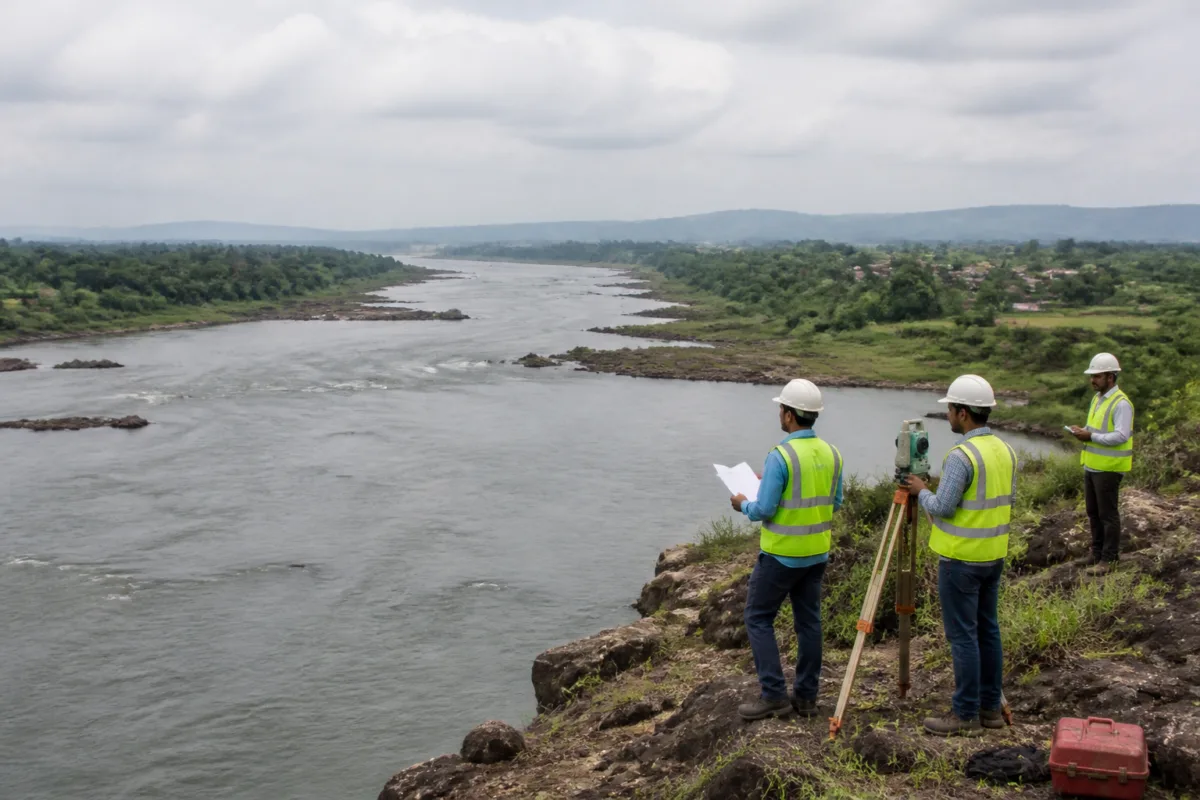
Telangana’s plan to harness more Pranahita river water has gained fresh momentum after Maharashtra chief minister Devendra Fadnavis agreed to reconsider a proposal to increase the height of the planned Tummidihatti barrage from 148 metres to 152 metres. Fadnavis also proposed a joint committee of officials from both states to examine the project’s feasibility and its impact on land and farmers.
The proposal was discussed during a meeting between Fadnavis and Telangana chief minister A Revanth Reddy in Mumbai on Monday. Telangana renewed its demand for a 152-metre barrage, arguing that the 148-metre height agreed under the original 2016 arrangement would not be sufficient to meet the region’s irrigation requirements.
According to the Telangana chief minister’s office, the proposed committee will be headed by the principal secretaries of the irrigation departments of Maharashtra and Telangana. It will examine the proposed barrage height, water availability, the extent of submergence, the agricultural land likely to be affected and compensation requirements before a final decision is taken.
Fadnavis said Maharashtra was open to reconsidering Telangana’s request, while stressing that technical, environmental and administrative processes would have to be completed. He also indicated that Maharashtra would conduct an independent study covering the suitability of the construction site, the submergence expected at different height levels and the amount of land that could be affected.
If Telangana raises objections to the findings, officials from both states will jointly review the estimates and hold further consultations, according to the report. Fadnavis was quoted as saying that Maharashtra would have no hesitation in supporting Telangana’s water requirements in the larger national interest if the project did not adversely affect Maharashtra or its people.
Revanth Reddy and Telangana irrigation minister N Uttam Kumar Reddy presented the state’s case for the higher barrage. Uttam Kumar Reddy said rising energy costs, environmental concerns, climate change and the need for long-term operational sustainability made gravity-based water conveyance important. He described the 152-metre height as the most viable option for meeting the region’s future water requirements.
Telangana also informed Maharashtra that it was willing to compensate farmers affected by submergence in accordance with the state’s land acquisition and compensation policies. The Telangana government has argued that the earlier 148-metre agreement limited its ability to fully utilise its share of Pranahita river water.
The proposed joint assessment now becomes the next formal step in the inter-state discussions. A final decision on the barrage height will depend on the studies covering water availability, site suitability, submergence, affected agricultural land and compensation.

