


The Shalboni land case has moved beyond a dispute over individual plots and into a wider question about how government land allotted for refugee cultivation was allegedly converted into a network of occupation, forged transactions and financial transfers. A report by Anandabazar – West Bengal, citing the Criminal Investigation Department’s chargesheet, says investigators have alleged that land in West Bengal’s Paschim Medinipur district was taken over and sold through documents containing potentially fictitious sellers and addresses.
The chargesheet, filed on September 2, reportedly names former MLA Sujoy Hazra as an accused. It also refers to Sumit Roy, described in the report as an aide to Abhishek Banerjee, but does not name him as an accused in the chargesheet. Roy was later arrested after the Supreme Court protection available to him was cancelled, according to the report. He is currently in CID custody, it says.
The central urban and land-governance issue is not simply whether particular payments were made. It is how land held or controlled by the state, and originally allotted for a defined public purpose, could allegedly enter private transactions despite the existence of official records, local cultivation and identifiable beneficiaries. The available report does not establish the final legal position on ownership or guilt. It records the investigating agency’s allegations and the evidence it says it has collected.
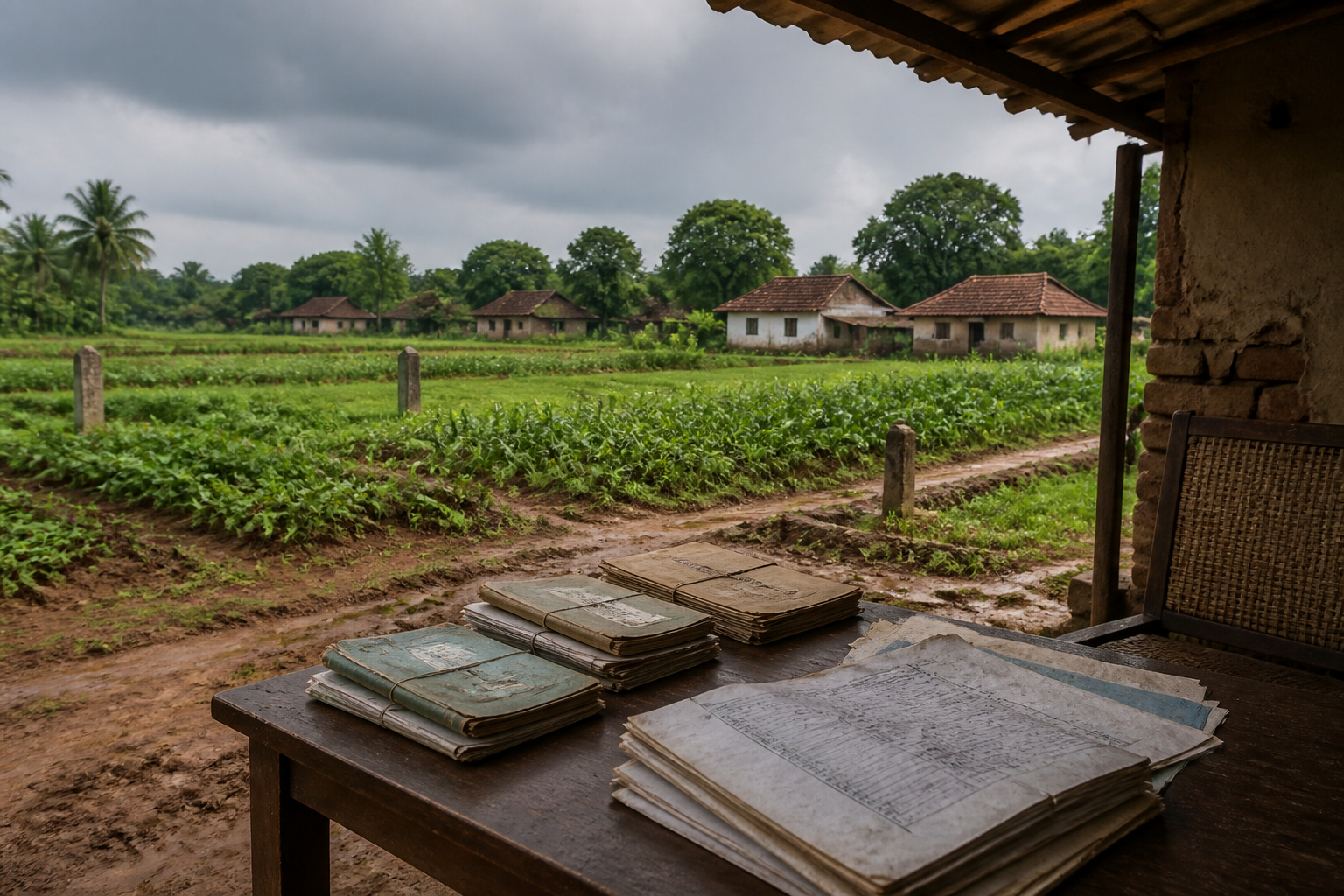
According to the chargesheet as reported, the land was government land allotted to refugees for cultivation. Investigators allegedly found that Hazra, Anitesh Paira and their associates took control of the plots. Local residents had reportedly cultivated the land for a long period before being forcibly removed after 2021. The report does not provide the total area involved, the number of affected families or the precise legal status of each parcel, leaving important questions about the scale of the alleged dispossession unanswered.
The alleged mechanism appears to have involved several layers. The CID reportedly told the court that land was occupied and then sold through transactions in which the listed sellers were often not found at their stated addresses. Local residents also reportedly failed to recognise many of them. On that basis, investigators suspect that fictitious names and addresses were used in sale deeds. If established in court, such a process would point to failures at multiple points in the land administration chain: identity verification, deed registration, title scrutiny and oversight of restricted or government-controlled land.
The chargesheet reportedly lists 20 witnesses. They include local residents and businesspeople, two former security personnel associated with Abhishek Banerjee and two drivers. The CID is said to have relied particularly on statements from the two former bodyguards to allege that Roy was a key figure in the wider network. Two alleged intermediaries, Debashis Dey and Subrata Hazra, reportedly told investigators that they sent money to Roy. Residents of Syedpur village are also said to have described financial dealings between Hazra and Roy, while stating that they had been afraid to speak earlier.
These statements remain allegations recorded during an investigation. The source report does not include the full witness statements, the chargesheet itself, cross-examination or any judicial finding confirming the claims. It also does not provide responses from Hazra, Roy, Paira or the other named individuals. That distinction is significant because a chargesheet sets out the prosecution’s case; it is not a final determination of criminal liability.
The financial trail is one of the most consequential elements in the report. The CID reportedly found that Rs 7 crore was deposited into an account held by Roy at a public-sector bank between 2018 and 2021. According to the report, Roy could not explain the source of the money during questioning. The reported figure alone does not prove that the funds came from land transactions. Its evidentiary significance will depend on the account records, the timing and pattern of deposits, the identity of depositors, linked accounts and the prosecution’s ability to connect the money to specific land deals.
The report says Hazra allegedly sent a substantial portion of the proceeds from land fraud to Roy’s office. It also says investigators found financial transactions involving Roy and local people. The account trail, witness statements and land documents therefore appear to form the three main strands of the reported case: who controlled the land, how it was documented and where the money moved. The available material does not state whether the CID has established a transaction-by-transaction connection between the alleged sales and the deposits.
The institutional question is particularly important because government land allotted for refugee cultivation is not the same as ordinary private property. Such land can carry restrictions on transfer, use and occupancy. Any lawful change in status would ordinarily require a documented administrative process. The report does not specify the allotment conditions, the responsible department, the land records involved or whether any permissions were issued. Without those details, it is not possible to determine from the supplied material whether the alleged fraud relied mainly on forged documents, illegal occupation, misuse of official records, coercion or a combination of these methods.
The case also exposes the distance between paper ownership and physical control. The report says local people cultivated the land for years but were allegedly removed after 2021, while sale deeds later identified sellers who could not be located or recognised. In land disputes, this gap can be decisive. A register may show one person, a deed may name another and the person actually cultivating the plot may have no effective access to either the record or the legal process. The supplied report does not say whether affected cultivators have received notices, compensation or restoration of possession.
The reported timeline adds another layer. The alleged deposits into Roy’s account occurred between 2018 and 2021. The report places the forced removal of local cultivators after 2021, while the chargesheet was filed on September 2. This sequence suggests that the investigation is examining a process that may have developed over several years rather than a single transaction. However, the available account does not establish when the land was first occupied, when individual deeds were executed or when authorities first received complaints.
The role of the court has also shaped the investigation. The report says the Supreme Court had granted Roy protection, but the protection was cancelled after the state alleged that he was not cooperating with the investigation. The court then heard both sides before cancelling the protection, after which the CID arrested him at Abhishek Banerjee’s Kalighat residence. The report says Roy repeatedly avoided questions about financial transactions. These are procedural developments, not findings that prove the underlying land allegations.
What the evidence currently confirms is narrower than the political and public claims that may surround the case. There is a reported CID chargesheet, 20 listed witnesses, an alleged Rs 7 crore bank deposit pattern, disputed seller identities in land documents and arrests linked to the investigation. What remains uncertain is the chain connecting each accused person to each parcel, the legal status of the land, the authenticity of the deeds, the source of the money and the extent of harm to refugee cultivators.
For land administration, the case underscores the importance of records that can be checked against conditions on the ground. A system that records ownership but does not reliably track cultivation, possession, identity and transfers can leave public-purpose land vulnerable to conversion. The supplied material does not establish that such a systemic failure occurred across West Bengal, but it does show why the investigation’s documentary trail matters beyond the named individuals.
The next stage will depend on the court’s assessment of the chargesheet, witness accounts, bank records and land documents. Until those materials are tested through the legal process, the allegations should remain described as allegations. The key developments to monitor are the prosecution’s evidence connecting the financial transactions to specific land sales, the response of the accused, the status of the affected plots and any judicial findings on the ownership and transfer of the land.
