


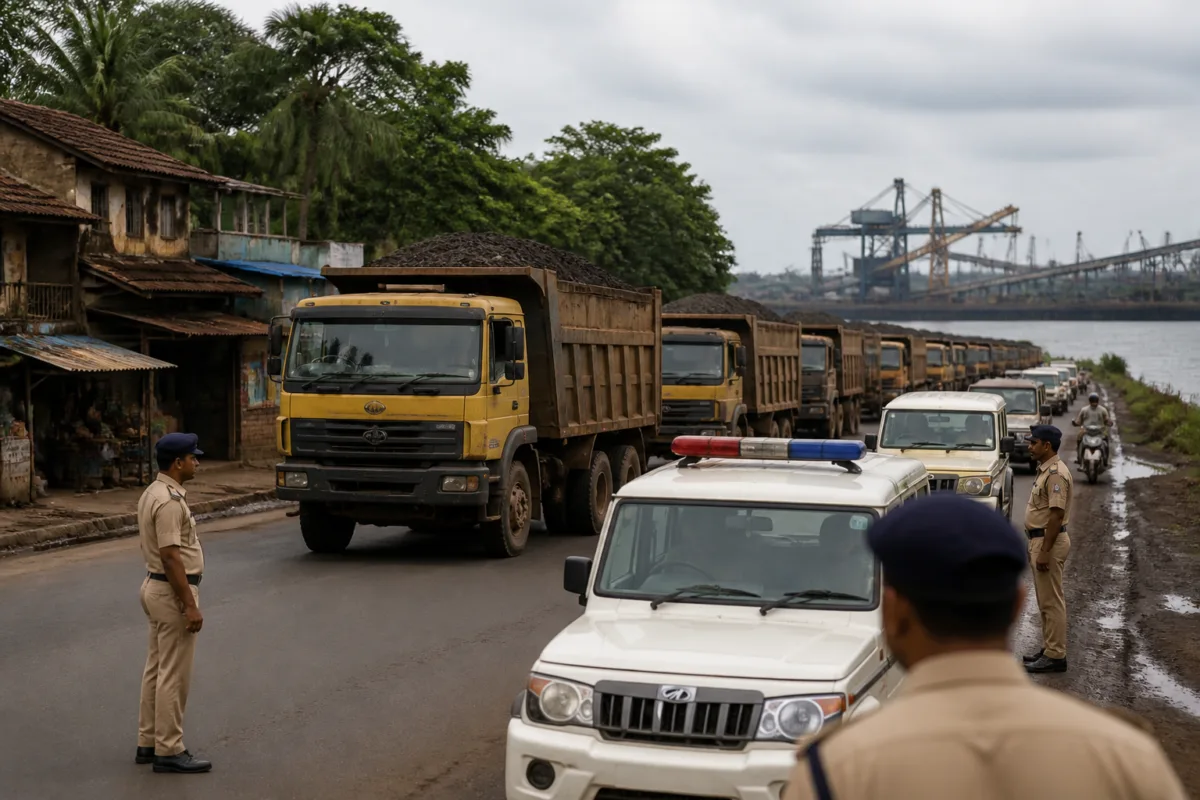
Mining transport in Sanvordem, Goa, remained stalled on Saturday after local truck drivers protested the allocation of trips to vehicles from outside the village, forcing police to escort loaded trucks that had been stranded on the route to nearby jetties for unloading.
The escorted trucks reached the jetties under heavy security and the movement passed peacefully, but no fresh loading or transportation took place. Police personnel were deployed along the route to prevent any untoward incident as the dispute over the engagement of outside trucks and the distribution of transport trips continued.
The disruption began on Thursday, shortly after mining transportation in Sanvordem resumed following a prolonged halt. Local drivers stopped a mining firm’s ore transportation, objecting to its decision to use trucks owned by people from outside the village. They told officials that transportation would not restart unless local vehicles were given priority.
DySP Nilesh Rane led a police team that attempted to persuade the protesters to disperse, but the drivers refused. A meeting convened on Friday by the Sanguem deputy collector also failed to resolve the dispute. The disagreement has therefore moved from a question of trip allocation to an immediate operational issue involving stranded ore, freight movement and police deployment.
The agitation follows demands raised earlier in the week by mining dependents in the Sanvordem-Kalay belt. They sought priority for local truck owners and the re-employment of mine workers who had been retrenched before mining dump transportation resumed. The group had met the sarpanchs of Sanvordem and Kalay, who assured them of their support, according to the report.
Local truck owners said mining activity had remained shut for around 15 years, leaving them without business. Their stated concern is that the use of outside trucks would reduce the number of trips available to local operators and cut their earnings. The dispute highlights the dependence of the local transport economy on the restart of mining-linked freight activity, while also showing how the allocation of contracts and trips can quickly become a public-order issue.
For now, the police escort has enabled only the movement and unloading of trucks that were already carrying ore. It has not restored regular mining transportation. The deadlock remains unresolved, with the next operational step dependent on an agreement between the mining firm, local truck owners, protesting mining dependents and the district administration.

