


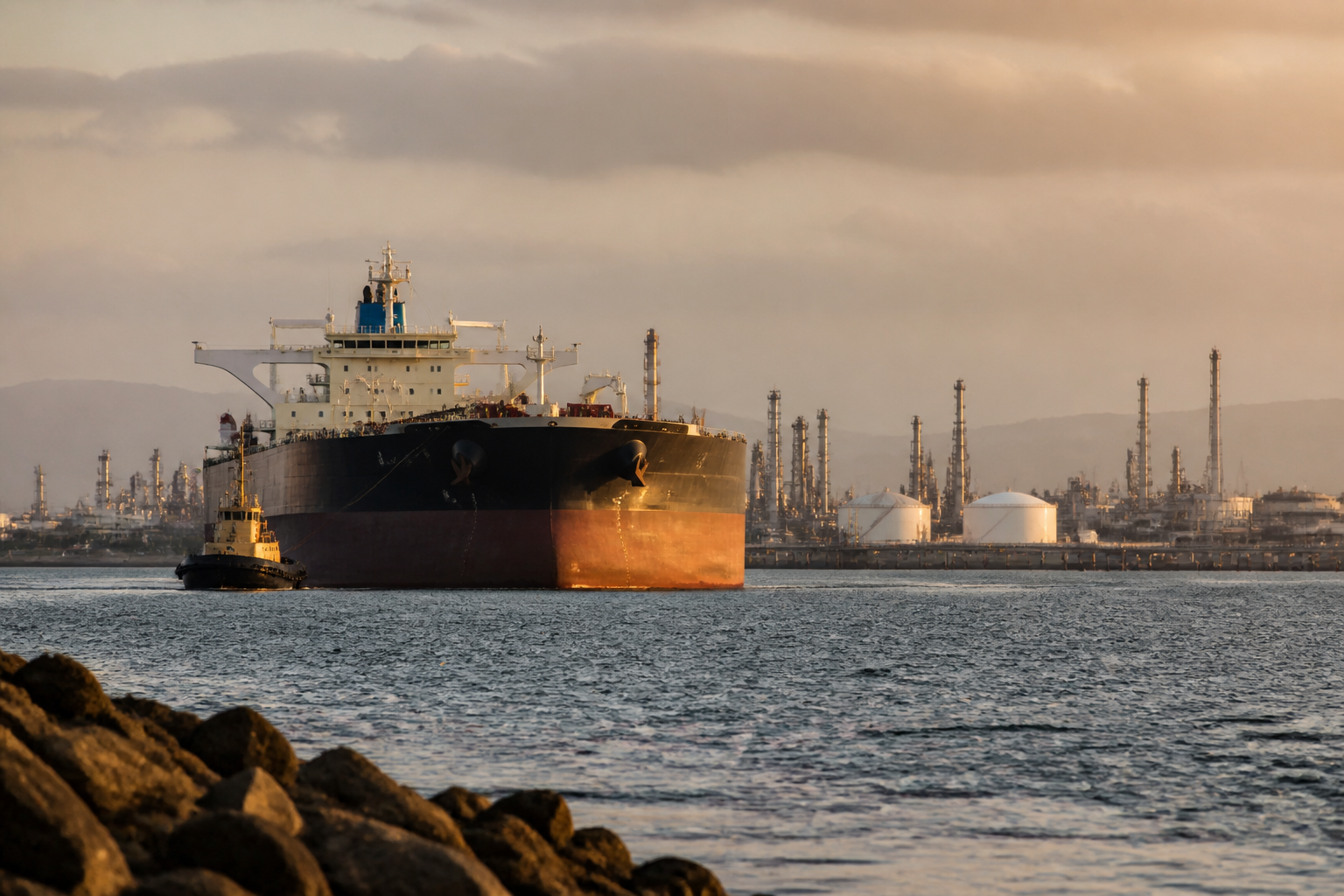
The US House of Representatives’ approval of a bill allowing tariffs of up to 100% on countries buying Russian crude has placed India’s energy strategy and export access to the American market under fresh pressure. The immediate question is not whether India can find oil elsewhere, but how much economic and geopolitical leverage Washington can exercise over a country whose Russian supplies have become central to its energy security.
The Lindsey O. Graham Sanctioning Russia and Iran Act of 2026 was approved by the House by 262 votes to 159. The legislation, which must still go to President Donald Trump for his signature, is aimed at Russia’s energy and defence sectors and the “shadow fleet” of tankers used to circumvent existing sanctions. It also expands sanctions on Iran and gives the US President the power to impose tariffs of up to 100% on countries that buy Russian crude in significant quantities.
That wording matters. The bill does not itself impose a 100% tariff on India. It creates the authority to do so, while the decision on the rate, product coverage and implementation timetable remains with the US administration. The distinction separates a legislative threat from an operational trade measure, but the new authority could still affect how Indian refiners, exporters and policymakers assess the future cost of Russian oil.
India’s exposure has grown sharply since the Russia-Ukraine war changed the global oil trade. Before 2022, Russian crude formed a negligible part of India’s imports. European sanctions and the resulting availability of Russian oil at deep discounts changed that calculation. Russia became India’s largest crude supplier, with its share rising to more than 30% of total crude supplies by the end of 2025.
According to data cited from the Global Trade Research Initiative, Russia accounted for 30.3% of India’s crude oil imports in FY2026. The supplies were valued at $40.8 billion out of total crude imports worth $134.7 billion. The report also says Russian supplies accounted for more than half of India’s imported oil in July 2026, as disruptions in the Middle East altered the availability and cost of alternative sources.
The July comparison illustrates the concentration. The United Arab Emirates accounted for 10.8% of India’s imports, Saudi Arabia for 9.6%, Venezuela for 6.3%, Brazil for 5.5%, Oman for 5.3% and the United States for 2.9%. Russia alone supplied more crude than those six countries combined, according to the figures cited by the report.
This is why the issue cannot be reduced to a dispute over one supplier. Crude oil is a foundational input for transport, manufacturing, power generation and household consumption. A sharp change in procurement costs can travel through the economy even when the immediate policy is directed at refiners or importers. For India, the availability of discounted Russian crude has also provided a hedge against supply disruptions in other producing regions.
The present dependence has deepened as Middle East supplies have come under pressure. The report says the Strait of Hormuz remains blocked and that attacks by the Houthis on a key Saudi pipeline have affected alternative supplies. India’s procurement is spread across more than 40 countries, but Russia and Middle Eastern producers remain the mainstays of its oil security strategy. Diversification therefore exists, but it does not mean that every supplier can quickly replace the volumes, price and logistical reliability offered by another.
The legislation’s potential impact on India operates through two separate channels. The first is the oil market. If tariffs or sanctions make Russian crude more expensive or difficult to ship, insure or pay for, Indian refiners could face higher procurement costs and more complex supply arrangements. The second is trade. A punitive tariff on Indian exports to the US could reduce the competitiveness of Indian goods in an important market, although the eventual effect would depend on the rate, the products covered and the implementation schedule.
Ajay Srivastava, founder of GTRI, described the bill as a pressure mechanism that could affect both Indian exporters and American consumers. He said India buys Russian oil to secure affordable energy for its population and argued that the purchases have helped stabilise global supplies and prices. He also said the actual effect on Indian exports could be assessed only after the US announces the tariff rate, product coverage and timetable.
The uncertainty is amplified by the difference between India and China in the US calculation. China buys more Russian crude than India, according to the report, but GTRI’s Srivastava believes Washington may apply greater pressure on New Delhi because of the possibility of retaliation from Beijing. That assessment is an expert view, not an announced US policy, but it highlights how the proposed tariff authority could become part of a wider negotiating strategy rather than a uniform sanction applied equally to all major buyers.
India has already experienced changing levels of US tariff pressure. The report says Indian exports faced 50% US tariffs for several months last year, before the rate was reduced to 18% earlier this year and then stood at 10% following the US Supreme Court’s decision to strike down reciprocal tariffs. India’s export basket has diversified and free trade agreements have opened additional markets, but the US remains an important trading partner. Any new tariff would therefore have consequences even if it did not affect every sector equally.
The record of the past year also suggests why tariffs alone may not immediately end Indian purchases of Russian crude. India did not stop buying Russian oil after facing punitive tariffs last year. Purchases fell significantly in the first two months of 2026 after the US administration sanctioned Russian oil companies Lukoil and Rosneft, according to the report. The distinction was practical: sanctions created problems that tariffs did not, making transactions more difficult across shipping, insurance and payment arrangements.
That episode offers an important institutional lesson. A tariff is a price signal applied to trade with a country. Sanctions can alter whether a transaction can be completed at all. For refiners operating in an international market, the second problem may be more disruptive than the first. If Russian crude remains commercially attractive and can be transported, insured and paid for, a tariff threat may not produce the same result as restrictions that directly disable those supporting systems.
The evidence cited by the report also shows that India’s oil strategy has responded to market conditions rather than to one external demand alone. Russian purchases declined after sanctions were introduced, but increased again when the US-Iran conflict disrupted global oil markets. The United States reportedly waived sanctions on Russian crude to help stabilise global prices, and Russian purchases reached an all-time high in July even after the waiver expired.
Sumit Ritolia, lead analyst for modelling and refining at Kpler, told The Times of India that Russian crude had become India’s best hedge against global supply disruptions. He said Indian refiners were unlikely to immediately abandon Russian supplies unless sanctions caused major problems for shipping, insurance or payment arrangements. In his assessment, easing Middle East bottlenecks would make it easier for India to reduce its dependence on Russian crude.
This points to a policy landscape shaped by three institutions and interests: the US administration deciding how to use the new tariff authority, Indian policymakers balancing energy costs against export access, and refiners responding to commercial and logistical conditions. The bill gives Washington a new instrument, but it does not remove the constraints created by global oil demand, regional conflict and the limited speed at which supply chains can be reconfigured.
For India, the central policy challenge is therefore not simply choosing between Russian oil and American pressure. It is managing the trade-off between affordable and reliable energy on one side, and exposure to foreign trade measures on the other. The report does not establish that India will stop buying Russian crude, nor does it establish that the US will impose the maximum tariff. What it confirms is that Russian oil has moved from being a marginal source to a central component of India’s energy system.
The developments to monitor are specific: whether President Trump signs the bill, whether the administration announces tariffs or sanctions against India, which products and sectors are covered, and whether shipping, insurance or payment restrictions follow. Until those details emerge, the legislation represents a significant escalation in potential US leverage, but not yet a confirmed 100% tariff on Indian trade or a confirmed end to India’s Russian crude purchases.
