


RPG Life Sciences’ decision to spend ₹215 crore on two API acquisitions in five weeks is more than a rapid expansion of its pharmaceutical portfolio. It is an attempt to assemble manufacturing capacity, products, customers and regulatory access into a larger merchant API business, while using existing industrial infrastructure more intensively.
The company has more than ₹500 crore available for further acquisitions, according to Managing Director Ashok Nair, and is evaluating assets that can add differentiated chemistry, regulatory credentials and export capabilities. The stated strategy is selective rather than volume-driven: future transactions will depend on strategic fit, valuation, integration readiness and returns.
That distinction matters because the acquisitions are not being presented simply as capacity purchases. RPG Life Sciences is seeking businesses that can contribute several elements at once. These include manufacturing plants, product portfolios, customer relationships, regulatory approvals and the ability to serve markets outside India. The approach reflects the complexity of building an API platform in which physical capacity alone does not determine commercial value.
The first transaction was the acquisition of Actis Generics for ₹80 crore on July 29. The second, agreed last week through RPG Active Pharma, involved the API and intermediates business of Raghava Life Sciences for up to ₹135 crore. RPG Active Pharma is a wholly owned subsidiary of RPG Life Sciences. Together, the transactions have changed the scale of the subsidiary’s operations.
According to Nair, manufacturing capacity has increased from 110 kilolitres to 505 kilolitres. The product portfolio has expanded from 14 products to 45, while the customer base has grown from 123 to more than 250. Employee strength has increased from 217 to over 500, and the research and development pipeline has expanded from 12 products to 28.
These figures show the immediate effect of the acquisitions: the company has added assets and capabilities faster than it could have done through organic expansion alone. But they also indicate the integration task ahead. A larger plant network must be matched with product development, customer acquisition, regulatory compliance and sufficient utilisation if the expanded capacity is to produce the intended returns.
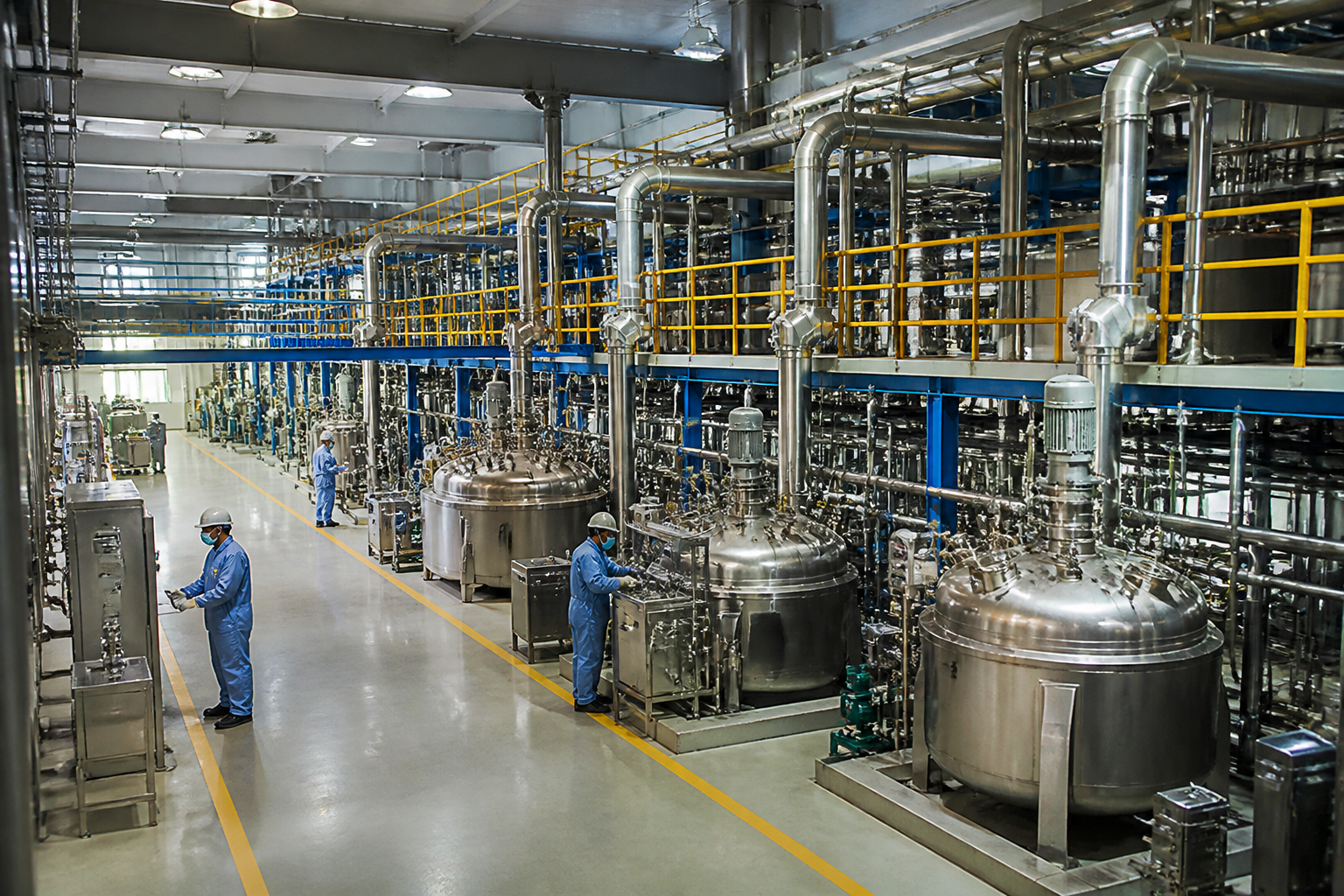
Raghava’s facility near Hyderabad is central to that equation. The plant adds about 300 kilolitres of installed capacity and is approved under EU-GMP and WHO-GMP standards. The business also has regulatory credentials that include a Certificate of Suitability to the European Pharmacopoeia, EU Written Confirmation and Korea Drug Master File approvals.
The importance of these approvals lies in their connection to market access. An API manufacturer does not compete only on the volume it can produce. Its ability to supply regulated markets also depends on the quality systems, documentation and regulatory permissions associated with its products and facilities. By acquiring a business with these credentials, RPG is adding access and qualification alongside physical infrastructure.
The company’s interest in US Food and Drug Administration-approved manufacturing capability is part of its longer-term strategy, but Nair said approval alone would not justify an acquisition. He identified chemistry, the product basket, customers, utilisation potential and economics as necessary considerations. This suggests that RPG is evaluating assets as operating businesses rather than as regulatory certificates attached to plants.
The Raghava acquisition also illustrates the value RPG sees in underutilised infrastructure. Actis and Raghava together generated about ₹70 crore in FY26 revenue, according to the report. Raghava’s 300-kilolitre facility is substantially underutilised, and Nair said the existing infrastructure could support around ₹200 crore in annual revenue at fuller utilisation without significant incremental capital expenditure.
That potential is not the same as realised revenue. It depends on the company finding new customers, expanding geographically and integrating Raghava with Actis and RPG’s existing API operations. The gap between installed capacity and commercial utilisation is therefore one of the most important facts in the strategy. The acquisitions have expanded the platform, but the next phase requires converting available capacity into sustained orders.
RPG’s stated business model also separates the API subsidiary from a narrow captive-supply role. RPG Active Pharma is being developed primarily as an independent merchant API and advanced-intermediates business, rather than mainly as a supplier to RPG Life Sciences’ formulations operations. Third-party customers, exports and selected contract development and manufacturing organisation opportunities are expected to form the larger growth opportunity.
This structure gives the subsidiary a wider potential customer base, but it also exposes the business to the demands of competing in external markets. Merchant API operations must develop and retain customers beyond the parent company, maintain regulatory standards across markets and align product development with demand. The supplied report does not establish how quickly these changes will occur, but it makes clear that the strategy depends on external commercial growth rather than internal consumption alone.
The global backdrop described by RPG is the effort by drugmakers to diversify pharmaceutical supply chains and reduce excessive dependence on China. That trend creates an opportunity for Indian manufacturers with suitable capacity, regulatory access and export capability. Yet the company’s acquisition criteria indicate that diversification is not an automatic market advantage. Facilities must still offer the right chemistry, products, customers, utilisation prospects and economics.
RPG’s planned use of capital reflects this multi-part model. The company remains debt-free and expects to deploy funds towards further acquisitions, manufacturing expansion, product development and regulatory access. With more than ₹500 crore available, it has financial capacity to continue building the platform, although the company has not set a predetermined number of transactions.
The absence of a fixed acquisition count places emphasis on integration quality. The two recent deals have already expanded capacity nearly fivefold, from 110 kilolitres to 505 kilolitres. They have also more than tripled the product portfolio and increased the customer base to over 250. Managing these assets as one operating business will require alignment between plants, products, research and development, employees, customers and regulatory systems.
The Hyderabad facility provides a specific test of that alignment. Its existing infrastructure offers room to raise output without significant new capital expenditure, but fuller utilisation requires commercial execution. New customers and geographic expansion must be matched with the plant’s approved capabilities and the broader portfolio created through the acquisitions.
The evidence therefore points to a strategy built around consolidation and utilisation rather than capacity addition alone. RPG is using acquisitions to obtain a combination of industrial assets and market permissions, then aiming to expand their output through integration. The approach could allow the company to scale faster than a purely organic programme, but its stated success measures will ultimately depend on revenue growth, utilisation and returns from the enlarged platform.
For the wider pharmaceutical manufacturing system, the transactions highlight how API capacity is being assembled through a mix of facilities, regulatory credentials, product chemistry and customer networks. The central question is not whether RPG can add more kilolitres. It is whether the company can turn a fragmented set of acquired capabilities into a coherent export-oriented business. The supplied information confirms the scale of the platform and the capital available for its next phase; it does not yet establish the results of integration or the pace at which the projected capacity can be monetised.
The next developments to monitor are RPG’s further acquisition decisions, the integration of Actis and Raghava with its existing API operations, utilisation of the Hyderabad facility, expansion of third-party and export customers, and progress in product development and regulatory access.
