


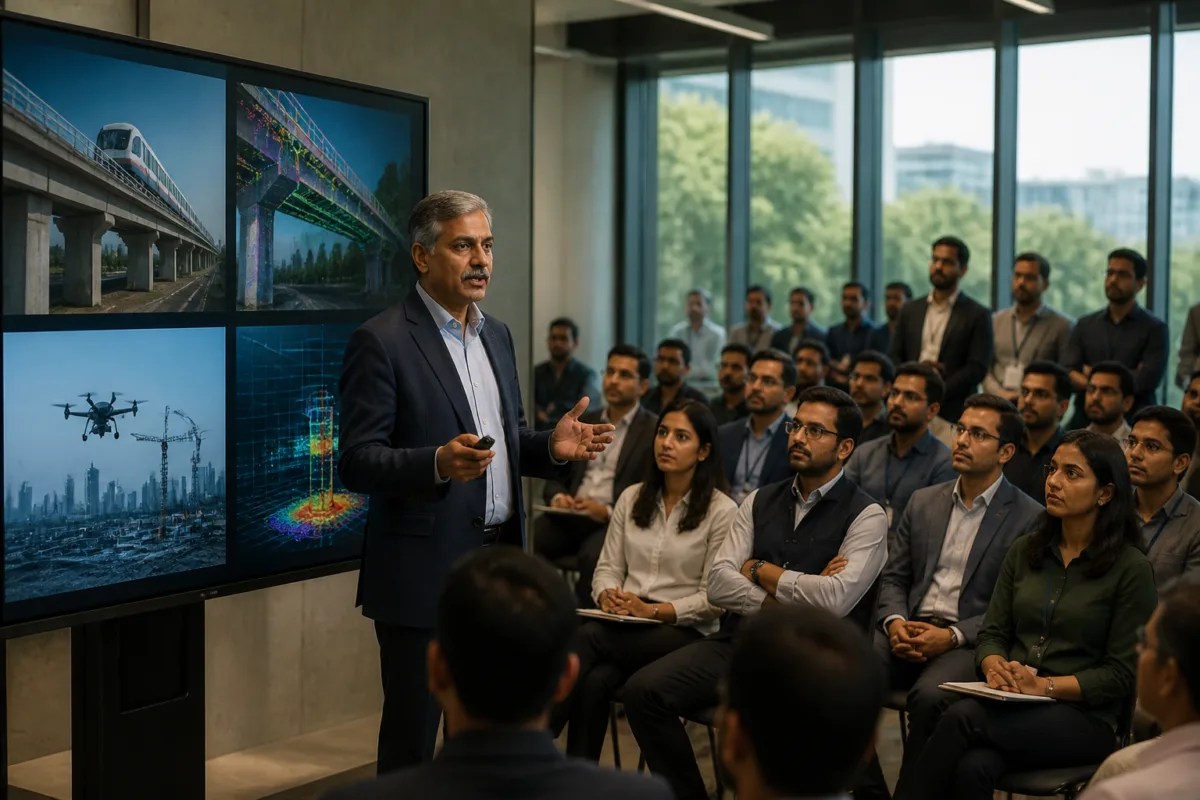
Rodic Consultants has proposed a ₹200 crore fund to support artificial intelligence-led solutions for India’s infrastructure sector, with the company committing ₹100 crore and seeking to mobilise the remaining ₹100 crore from external investors.
The proposed Rodic AI Infrastructure Innovation Fund is intended to identify and support startups working on technologies including AI, computer vision, drones, sensors and robotics. Rodic announced the initiative ahead of its Rodic InfraAI Conclave 2027, scheduled for January 22, 2027.
According to the company, the second half of the proposed corpus is expected to come through co-investments from venture capital firms, angel funds, individual investors and ultra-high-net-worth individuals. The announcement does not confirm that these co-investments have already been secured.
Rodic said selected startups could receive more than financial support. They may be given access to live infrastructure projects, engineering expertise, project data and opportunities to work with public- and private-sector stakeholders. The stated objective is to help innovators test their products in operational settings and move beyond pilot projects towards commercial deployment.
The company said its 26 years of experience in infrastructure engineering and project execution would help it identify applications relevant to highways, bridges, tunnels, railways, metros, urban infrastructure, water, hydropower and mining. Potential use cases identified in the announcement include project planning, formulation, execution, monitoring and management.
Raj Kumar, chairman and managing director of Rodic Consultants, said infrastructure development is increasingly focused on how projects are designed, delivered, operated and maintained. He said innovators require access to real infrastructure problems, project sites, engineering expertise, data and potential users in addition to capital.
Kumar said Rodic’s ₹100 crore commitment was intended to bring these elements together so that technologies could be tested against real-world infrastructure challenges and developed for deployment at scale. He also linked the proposed initiative to safety, resilience and sustainability outcomes, although the announcement did not specify projects, performance benchmarks or implementation timelines.
The proposed fund reflects a wider challenge in applying emerging technology to infrastructure. Startups may develop tools in laboratory or demonstration environments, but infrastructure owners and contractors need solutions that can operate across complex sites, established procurement systems and long project cycles. Access to live projects could help test whether such tools can deliver measurable improvements beyond demonstrations.
At the same time, the announcement leaves several operational questions open. It does not identify the fund’s investment vehicle, selection process, disbursement schedule, target number of startups or criteria for measuring results. It also does not specify which infrastructure projects could host trials or how data access and responsibilities among project stakeholders would be managed.
Rodic said the January conclave would bring together policymakers, government representatives, infrastructure companies, technology firms, investors, startups and researchers. The event is expected to focus on emerging applications of AI and on collaborations intended to accelerate adoption across India’s infrastructure sector.
Until the proposed external capital is mobilised and investments or field trials are announced, the initiative remains a funding proposal and industry platform rather than an operational programme. Its significance will depend on whether it can connect startups with validated infrastructure needs and support technologies through testing, procurement and eventual scale-up.

