


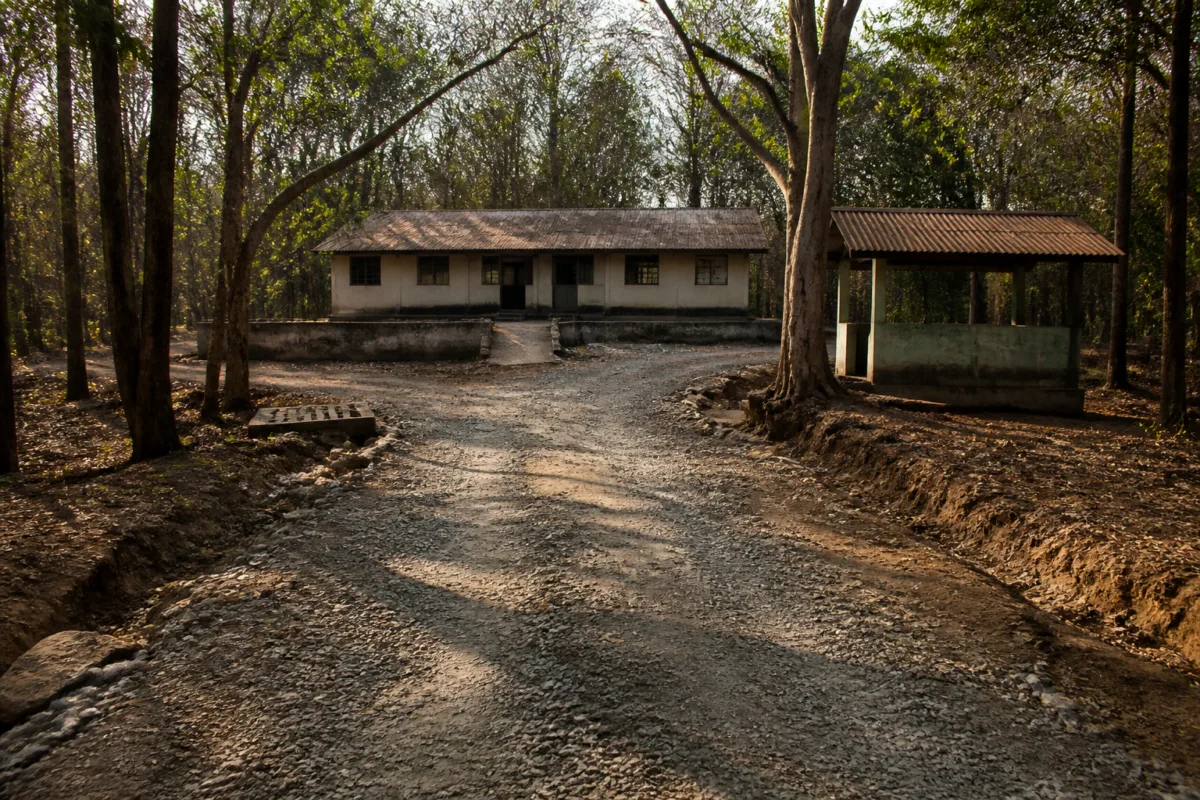
An inquiry into 47 works carried out by the Allapalli forest division in Gadchiroli during the 2023-24 and 2024-25 financial years has reported the use of substandard materials, differences between approved estimates and executed work, errors in measurement books and other administrative irregularities, according to a Loksatta report.
The works were undertaken under the district annual plan and the Tribal Sub-Plan. They included forest rest houses, office buildings, internal roads, protection huts, watchtowers, pipelines and other construction projects.
The inquiry committee, constituted after complaints and protests by complainant Shankar Dholne, was chaired by Additional Collector Sanjay Aswale. It submitted its final report on 17 June 2026. The district collector approved the report on 26 June and directed further action, the report said.
The committee recommended departmental action against Gaurav Ganvir, who was the forest-range officer at the time. However, Loksatta reported that no action had been taken on the inquiry report by the time of publication. The report also questioned why the engineers responsible for technical assessments and the contractors who executed the works had not been held responsible.
Among the findings cited in the inquiry were the use of inferior plywood instead of teak wood specified in approved estimates. Cracks were found in some protection huts. A road near a forest rest house had reportedly deteriorated after inadequate compaction, with aggregate becoming loose and the surface breaking up. The report also identified differences in the size and spacing of iron angles used in a watchtower.
The committee found that physical measurements did not match entries in the measurement books. In some cases, records did not include the dates on which work began or was completed. Such documentation is important because measurement books are used to record executed quantities and support payment and completion assessments in public works.
The original complaint alleged that all the works existed only on paper. The committee, however, recorded that the works were physically present at the sites. The inquiry therefore focused on execution quality, conformity with sanctioned specifications, measurement records and administrative procedure rather than establishing that the projects were entirely fictitious.
The findings place attention on oversight across the full public-works chain. The reported defects involve materials, construction methods, technical design details and record-keeping, while the reported recommendation for departmental action is limited to the then forest-range officer. The reported status of action against other officials and contractors remains an unresolved issue in the account.
The case also shows why physical completion alone does not establish that a public asset meets the approved standard. Roads, buildings, watchtowers and pipelines can exist at a site while still differing from sanctioned specifications or suffering from inadequate construction quality. Further administrative action, if taken, would determine how responsibility is assigned and whether defective work requires rectification.

