


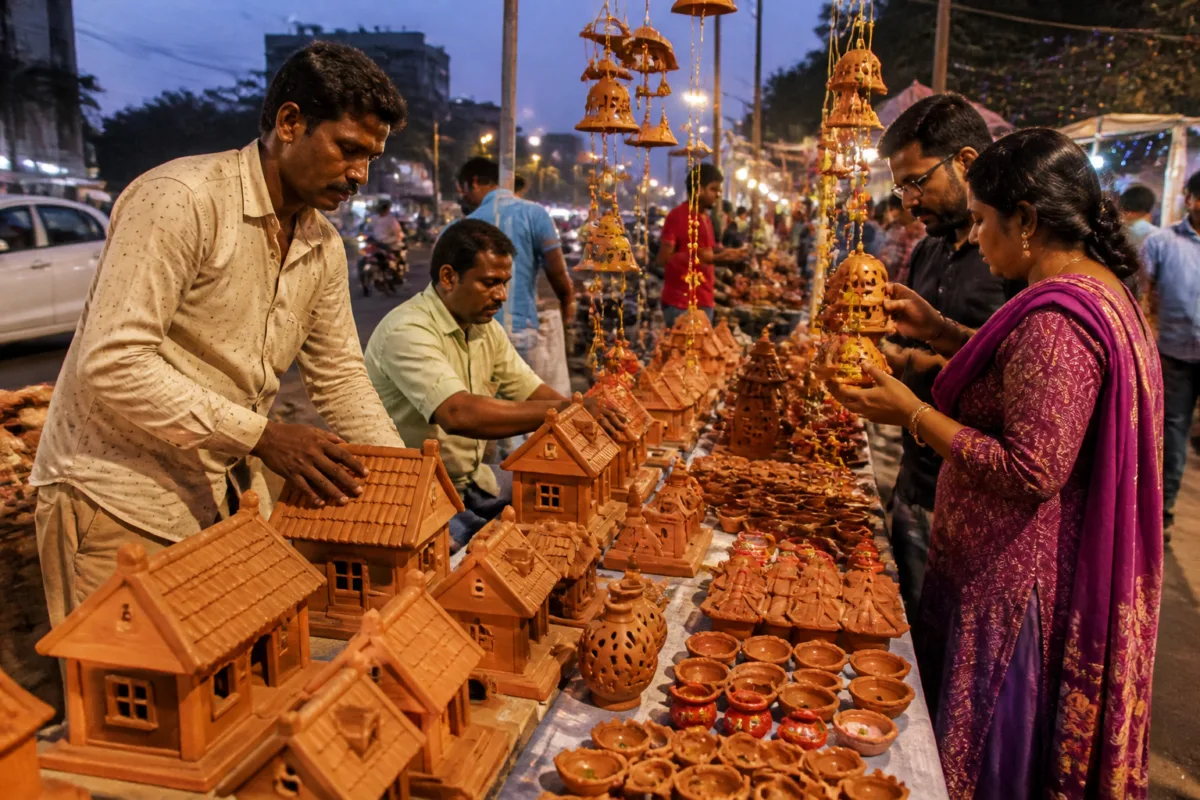
Ranchi’s gharonda market is giving terracotta potters from Bokaro a growing seasonal livelihood as families increasingly buy ready-made clay houses instead of making them at home before Diwali.
Artisans from Marrah village in Chandankiyari block of Bokaro district are travelling to nearby cities during the festival season and setting up temporary roadside stalls. Their displays in Ranchi include terracotta gharondas priced between Rs 300 and Rs 450, along with clay lanterns, hanging doorbells, customised diya sets and other decorative products.
The shift reflects a change in how the tradition is practised in urban households. Gharondas were traditionally made by children and families in courtyards using mud, imagination and shared effort. Artisans say busy urban lifestyles have reduced the time and inclination available for families to make the miniature houses themselves, creating demand for finished products in local markets.
“Earlier, children and families would make these little houses together at home. Now, people hardly have the time or inclination to do it themselves. They find it easier to buy a finished gharonda from the market and take it home,” said Anand Kumar, one of 10 artisans from Marrah village who travel to cities during Diwali.
The group sells different designs and sizes, ranging from traditional miniature homes to more ornate versions intended for modern interiors. Simanto, another artisan, said customers look for both conventional gharondas and decorative products such as customised diya sets.
Each artisan sells at least 10 items a day, taking the group’s combined daily sales to around 100 pieces. Across the festive season, the artisans estimate that they sell between 1,000 and 1,500 terracotta products. For potters from the village, the seasonal city trade provides important income during Diwali.
The products also compete with miniature houses and decorations made from materials such as thermocol and wood. Anand said buyers continue to value clay products because they associate soil with religious significance and prefer terracotta decorations for the festival.
For customers, the ready-made gharonda combines convenience with a connection to an older household tradition. “We used to make and decorate these houses during Diwali. Now, buying one is easier, but the tradition still brings back those memories,” said customer Deepa Agarwal.
The roadside stalls will continue to serve as the artisans’ main urban market during the Diwali season, with buyers choosing from the range of terracotta houses, lamps and decorative products brought from Marrah village.

