


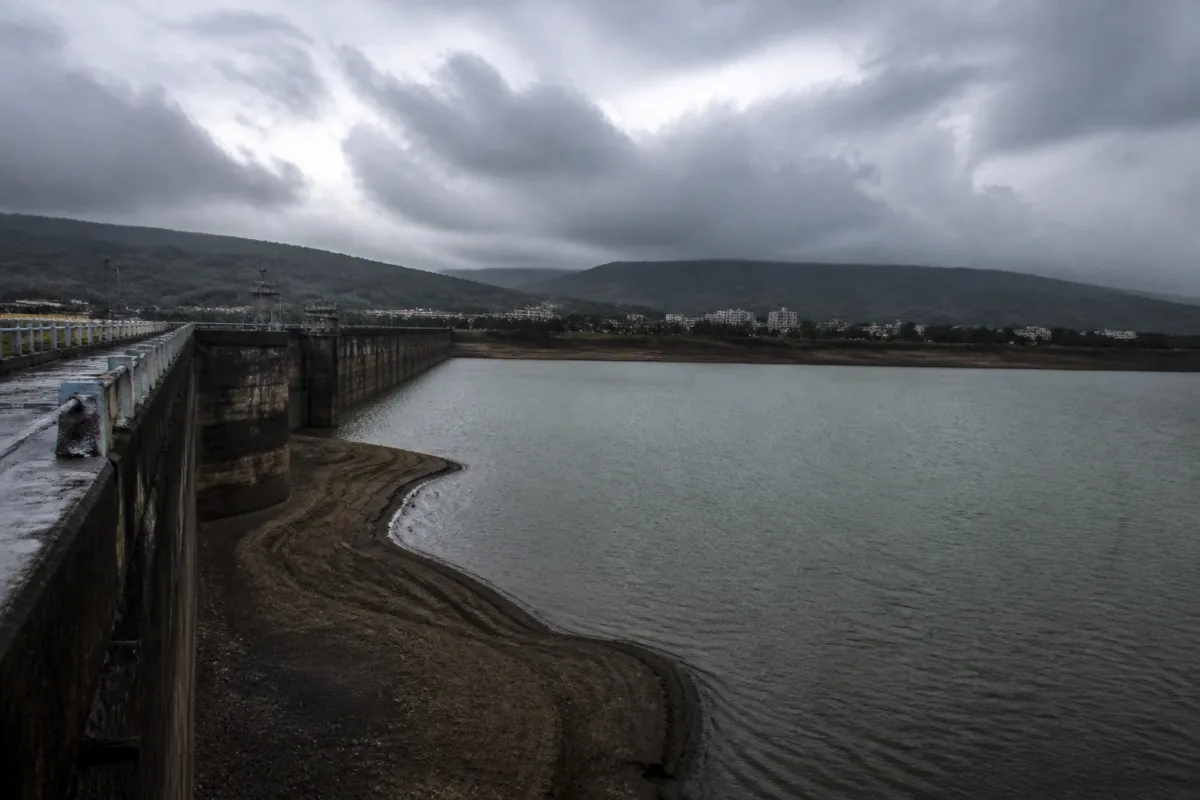
Pune’s Khadakwasla dam water storage has declined to 23.47 TMC, or 80.52% of capacity, even as heavy rain has lashed areas below the dam, because the main catchment areas have received little or no rainfall. The four-dam system supplies drinking water and irrigation water to around one crore people in Pune city and district.
The storage recorded at 5 pm on Monday was about 4.93 TMC lower than the level recorded during the same period last year, according to a report by Pudhari. The fall has continued as water is being released for agricultural and drinking-water requirements while fresh inflows into the reservoirs remain limited.
Heavy rain was reported from Monday morning in areas below the Khadakwasla dam, including Khadakwasla, Nanded, Dhayari, Kirkatwadi and the Sinhagad Road area. Several roads were waterlogged and streams and drains were reported to be in spate. However, the rainfall pattern did not extend into the catchment areas of the upstream reservoirs.
The Khadakwasla dam wall recorded 12 millimetres of rain, but the catchment areas of the Temghar, Varasgaon and Panshet dams received less than one millimetre, the report said. The contrast has left areas close to the dam experiencing intense rain without generating a corresponding rise in reservoir storage.
“Although the area below the dam has received heavy rain since last week, rainfall in the dam catchment areas has been sporadic, so the reservoir storage has not increased,” Vires Raut, branch engineer at Khadakwasla dam, was quoted as saying.
Water is currently being released from the upstream reservoirs into Khadakwasla dam. Panshet and Varasgaon are each releasing 600 cusecs, while Temghar is releasing 260 cusecs. The water level in Khadakwasla depends on these releases, and the outflow is also contributing to a decline in storage in the three upstream dams.
The four reservoirs had reached full capacity after strong rainfall in July and August. The subsequent pause in rainfall, followed by unseasonal rain that largely bypassed the catchment areas, has changed the storage position. Rain falling in the urbanised areas below the dam can produce local flooding and waterlogging, but it does not replenish the reservoirs unless the catchment zones also receive substantial rainfall.
For Pune, the immediate issue is the gap between visible rainfall in the city and the water available in its reservoir system. The current figures show that local downpours alone have not reversed the decline in storage, while releases for drinking water and farming continue. The water level and inflows will remain dependent on rainfall in the catchment areas of Panshet, Varasgaon, Temghar and Khadakwasla.

