


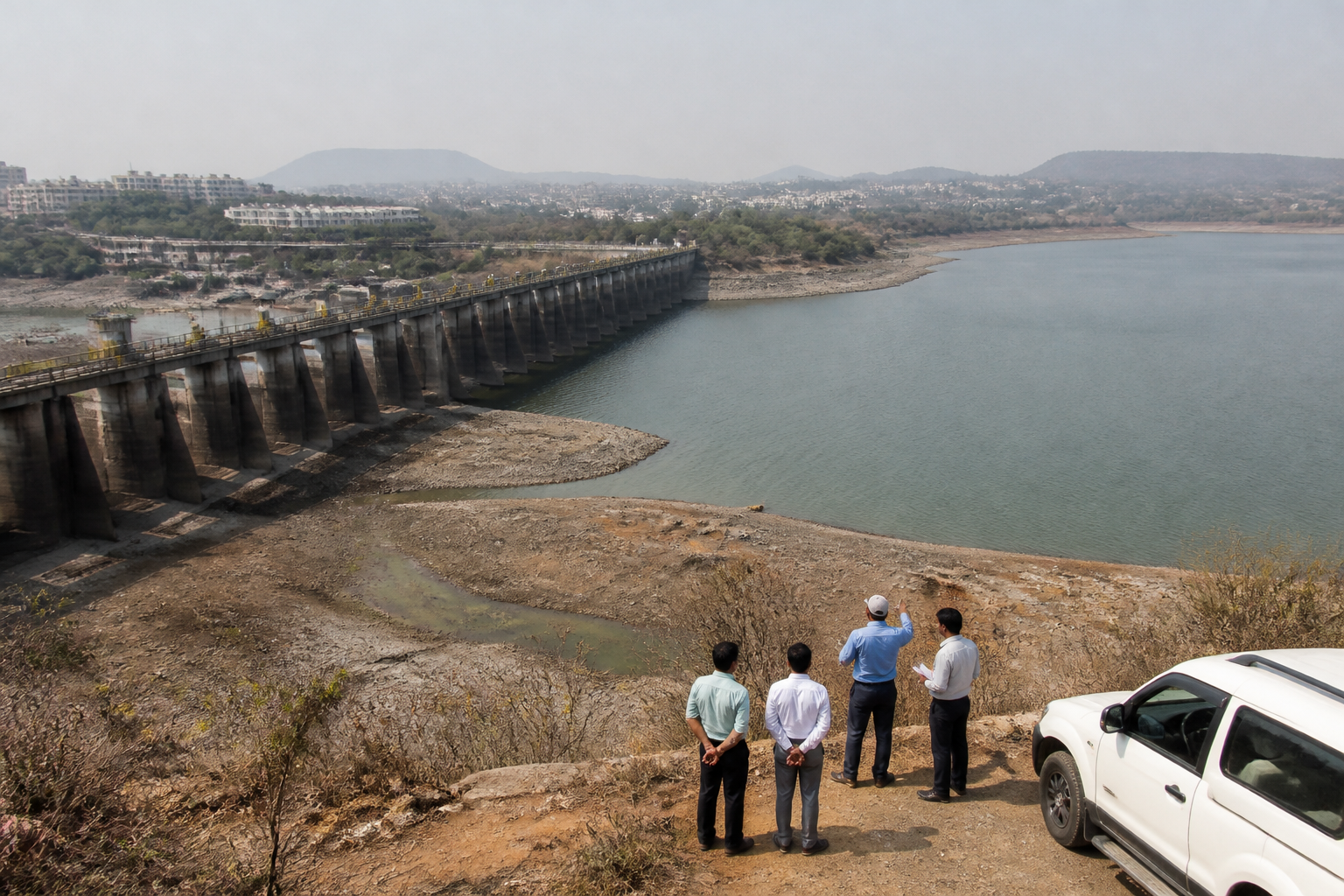
Pune district administration has ordered a 20 per cent water cut from the Khadakwasla dam complex, citing reduced monsoon rainfall and forecasts of intensifying El Niño conditions that could delay the next monsoon. The reduction will apply uniformly to the Pune Municipal Corporation, irrigation departments and other local authorities, District Collector Jitendra Dudi said on Friday.
The Pimpri Chinchwad Municipal Corporation will continue with its existing 10 per cent cut on water supplied from Pavna dam, where storage stood at 95 per cent, according to the administration. The district’s decision is intended to preserve available reserves through the summer months and protect drinking-water supply if rainfall remains deficient.
Dudi said usable water levels in the Khadakwasla reservoir currently stood at 82 per cent, below the level typically expected at this point in the year. Local dams generally reach 100 per cent capacity by October 15, he said. The lower storage has prompted the administration to plan water use against the possibility of inadequate rainfall in the following year.
“Therefore, water management needs to be done in such a way that if there is no rain till August 31 next year, we should still have sufficient water,” Dudi said, citing India Meteorological Department forecasts. In a separate statement on long-term planning, he said the district administration was working to ensure adequate supply even if the rainfall deficit continued until August 31, 2027.
The administration said drinking water would receive priority, followed by agriculture and other requirements. Dudi urged municipal corporations to conserve water so that reserves remain available during April, May and June, when demand and supply pressures are expected to intensify.
The district will also deploy flying squads to check the illegal use and misuse of potable water. The enforcement teams are intended to prevent unauthorised consumption as the administration manages supplies across municipal, irrigation and other users.
The water restrictions come as the administration assesses crop damage across the district. About 80 per cent of the assessment had been completed, Dudi said, with the remaining work expected to be finalised by Sunday. Joint teams from the Revenue, Rural Development and Agriculture departments have been conducting assessments in every taluka for the past 15 days.
Ambegaon and Junnar, which were recently declared drought-affected, had completed between 60 per cent and 70 per cent of their assessments, according to the district administration. After the assessments are completed, the administration plans to submit a request for financial assistance to the government and aims to ensure that farmers receive aid before Diwali.
Dudi said the administration’s immediate focus was to address drought conditions while managing water reserves in the district’s dams. The next steps include completing crop-loss assessments, seeking government assistance and enforcing restrictions on potable-water use as municipal bodies implement the 20 per cent reduction from the Khadakwasla system.

