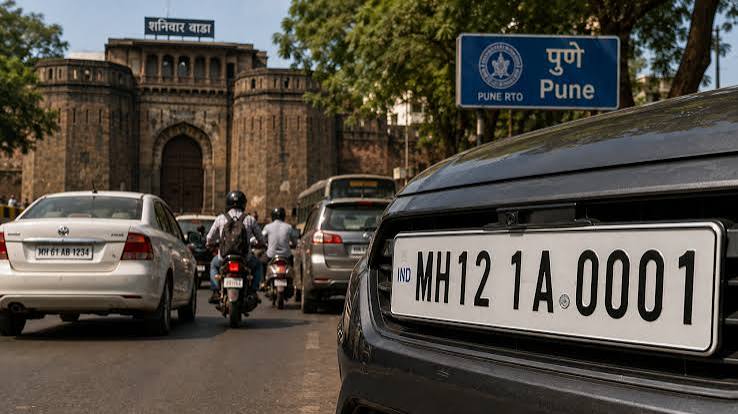
Pune Vehicle Numbers Get Fresh Registration Series
Pune is set to continue using the MH-12 vehicle registration code, with authorities introducing an additional series as existing registration numbers approach saturation. The move avoids an immediate change to the city’s familiar registration identity while accommodating continued growth in vehicle ownership. It also highlights the pressure that rising private mobility is placing on Pune’s transport system.
The new MH-12 1A series will provide additional registration numbers under the existing Pune code. The administrative decision is significant because vehicle registration is closely tied to the city’s expanding mobility footprint, particularly as population growth, suburban development and rising household incomes continue to increase demand for personal vehicles. For motorists, the change is largely administrative. Existing registrations remain valid, while newly registered vehicles will receive numbers from the additional series once the applicable sequence is introduced. The move therefore expands the numbering capacity without requiring residents to adapt to a completely different regional transport code. However, the development also offers a broader indicator of Pune’s mobility trajectory. The city and its surrounding urban region have experienced sustained expansion, with residential and employment centres spreading beyond the traditional core. This has increased travel distances and, in many areas, strengthened dependence on two-wheelers and cars where public transport connectivity or frequency remains inadequate.
Urban transport experts say registration growth should not be viewed only as a licensing issue. A larger vehicle base creates additional demands on road space, parking, junction management and emissions control. The consequences are particularly visible in dense commercial corridors, where limited carriageway capacity and roadside parking can reduce traffic movement even when major road projects are under way. The timing is also relevant to Pune’s efforts to build a more sustainable transport system. The city is expanding its mass-transit network while public bus services remain central to everyday mobility. If vehicle ownership continues to rise faster than the availability of reliable public transport, road capacity alone may struggle to keep pace with demand.
The additional MH-12 registration series provides short-term administrative capacity, but it does not address the underlying mobility challenge. For planners, the more important measure will be whether future growth can be absorbed through a balanced mix of buses, metro services, walking, cycling and shared mobility rather than through ever-increasing private vehicle use. As Pune’s urban footprint expands, registration data can serve as one useful signal of changing travel patterns. The immediate task is to ensure that growing mobility demand is matched by infrastructure that remains efficient, accessible and less dependent on carbon-intensive private transport.