


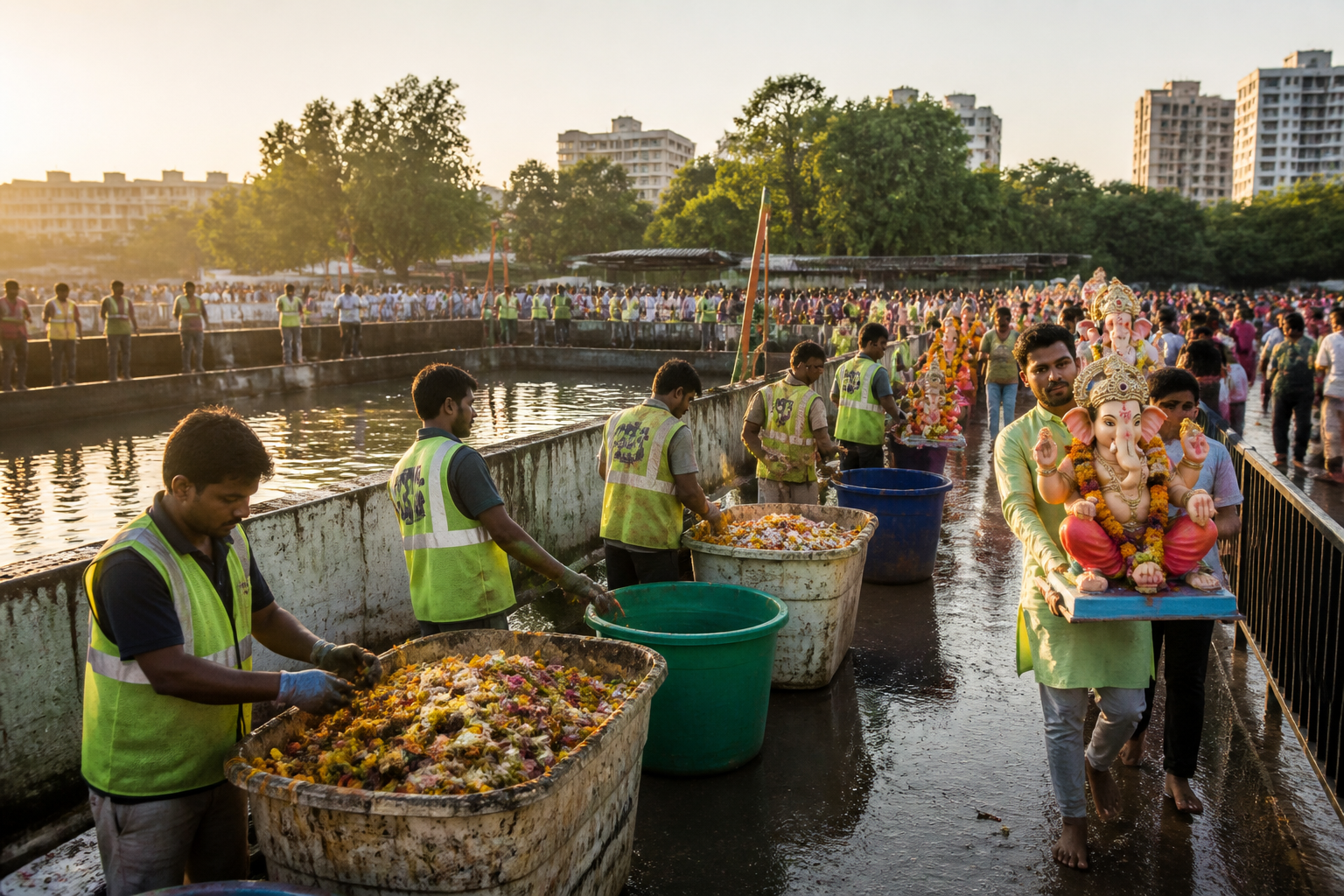
Pune recorded 6,77,057 eco-friendly Ganesh idol immersions during the 12-day festival period from September 14 to 25, 2026, while the municipal corporation collected 7,15,059 kilograms of nirmalya, or floral and other ceremonial waste, according to figures reported by Loksatta – Pune.
The numbers reflect the scale of the Pune Municipal Corporation’s arrangements to shift immersions away from rivers, lakes and other natural water bodies. Residents used immersion ponds, metal tanks and idol collection centres provided across the city as part of the civic body’s effort to reduce pollution during the festival.
The PMC’s Solid Waste Management Department organised the system through all 15 regional offices. The facilities included 38 ghats, 58 constructed immersion ponds, 812 metal tanks and 224 idol collection centres. The civic body also established 45 centres for the collection of idols made from shadu clay and for shadu clay collection.
The municipal arrangements were intended to provide residents with alternatives to immersing idols directly in rivers and lakes. The PMC had appealed to citizens to use the designated facilities and avoid immersions in natural water sources. The reported participation indicates that the city’s festival waste and immersion management system handled a substantial volume across multiple types of facilities.
Nirmalya collection was a separate operational requirement. At 7,15,059 kilograms, the collected material represented a significant stream of organic and ceremonial waste generated during the festival. Its collection at designated points reduced the likelihood of flowers, decorations and related material entering water bodies or accumulating around public immersion sites.
The distribution of facilities across regional offices was central to the civic response. Instead of relying on a single location, Pune used a network of ghats, permanent or constructed ponds, temporary metal tanks and collection centres. This decentralised arrangement enabled residents in different parts of the city to access municipal services during the immersion period.
The figures also show the administrative scale involved in managing a major public festival in a large city. The PMC had to coordinate site preparation, idol handling, nirmalya collection and public communication across hundreds of locations. The reported figures do not provide a comparison with previous years or detail the subsequent treatment of collected idols and nirmalya.
The municipal facilities were made available during the festival period ending September 25. The reported totals provide the PMC’s account of the city’s eco-friendly immersion and nirmalya collection operations for the 2026 Ganesh festival.
