Pune Public Transport Struggles With Peak Hour Demand
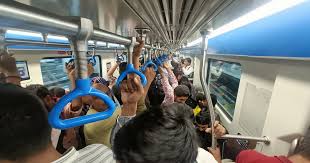
Pune’s public bus network is facing renewed scrutiny over passenger safety as overcrowding continues on busy routes, even after a recent fatal incident involving a passenger falling from a moving bus. Observations at major stops including Deccan, Swargate and Katraj point to a wider capacity problem: when demand exceeds available seating and standing space, commuters can be pushed towards unsafe boarding and travel conditions.
The immediate concern is the risk created when passengers travel near open doors or on steps during peak periods. Such behaviour is unsafe, but it also points to a system under pressure. When buses arrive infrequently and are already full, commuters with work, education and other daily commitments may have limited practical alternatives. The issue is particularly relevant to Pune’s expanding urban footprint. Employment centres, educational institutions and residential areas have spread well beyond the traditional city core. Public transport must therefore respond not only to population growth but also to changing travel patterns between Pune and Pimpri-Chinchwad. Passenger capacity is only one part of the problem. Route frequency, bus availability, depot scheduling and peak-hour demand all influence whether commuters can board safely. A bus that reaches a crowded stop only after a long gap can quickly become overloaded, even when the same route may have spare capacity at other times.
The transport operator has instructed drivers and conductors to ensure bus doors remain fully closed before vehicles move. Contractors and depot managers have also been directed to enforce the measure. While such operational controls are important, they cannot by themselves resolve overcrowding. Recent data shared by the public transport operator also highlights the safety challenge. In 2025-26, its buses were involved in 43 accidents, resulting in 25 deaths and 24 serious injuries. Between April and August 2026, 23 accidents were reported, with 11 fatalities and 10 serious injuries. The figures underline why safety needs to be assessed alongside service capacity. Urban transport specialists say the response should combine enforcement with better service planning. Passenger counts at different times of day, route-level demand analysis and targeted deployment of additional buses can help identify where capacity is falling short. Better-designed bus stops and safer boarding areas can further reduce conflicts between pedestrians, buses and other road users.
The stakes extend beyond individual journeys. Reliable and safe buses give residents a viable alternative to private vehicles, helping reduce congestion, fuel use and transport-related emissions. For a growing city, expanding public transport capacity is therefore both a safety requirement and an important part of sustainable urban mobility. The next test for Pune will be whether the current safety measures lead to measurable improvements in daily operations. Closing bus doors is essential, but a genuinely people-first system must also ensure commuters have enough buses to travel without having to choose between reaching their destination and travelling safely.