


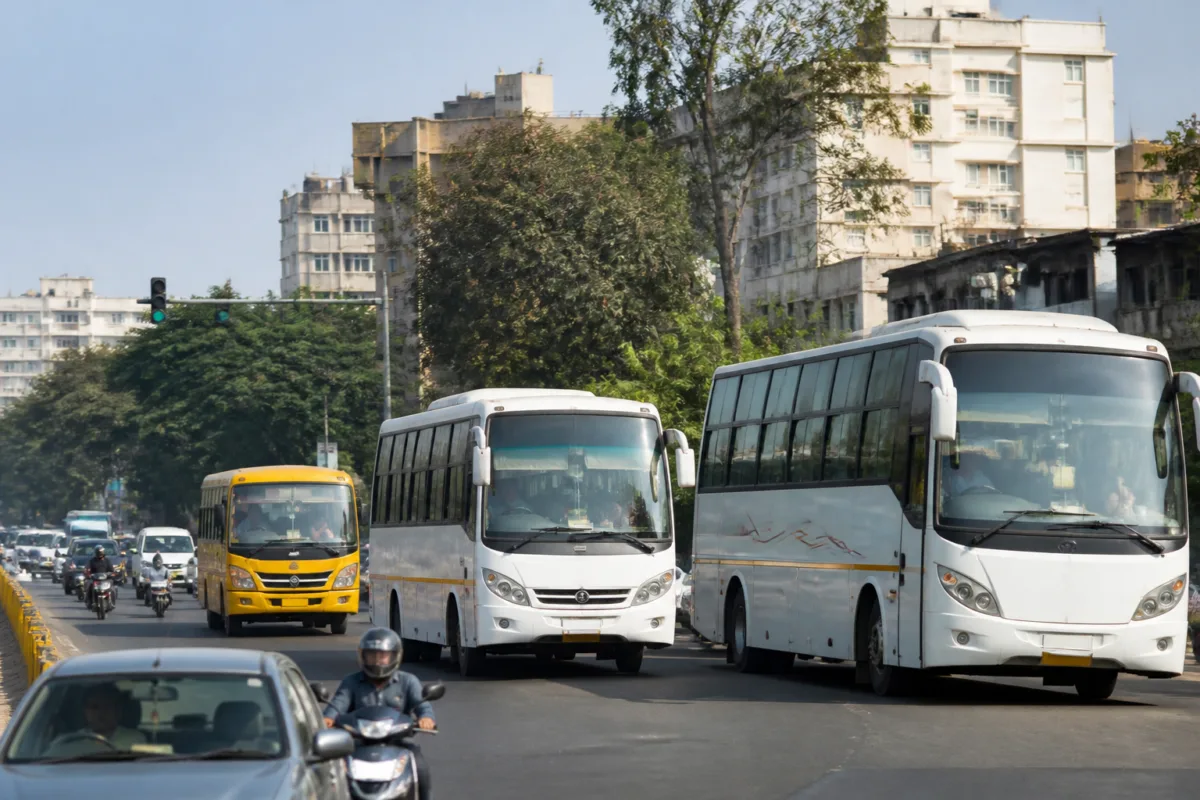
Pune private bus fares are set to rise by 20–25% after the Pune Bus and Car Owners Association announced higher rates for private, tourist, school and staff buses, citing increases in vehicle prices, fuel, maintenance, tolls, taxes and regulatory expenses. The revised charges will primarily apply to buses with seating capacities ranging from 13 to 49 passengers.
Association president Rajan Junawane announced the decision at a press conference at Patrakar Bhavan. He said bus transport rates had remained unchanged for five years even as operating expenses increased substantially.
“Bus transport rates have not been increased over the past five years. During this period, however, there has been a substantial rise in vehicle prices and expenditure on tyres, spare parts, maintenance and repairs, drivers’ salaries and allowances, insurance, fuel, and compliance with various government regulations and technical requirements,” Junawane said.
The association said its members operate buses for private functions, educational excursions, weddings, religious pilgrimages and staff transport. Its services also include school buses carrying students and buses hired by companies in Pune and surrounding areas. The organisation has approximately 1,400 members, according to Junawane.
The increase is expected to affect schools, colleges, companies and other organisations that regularly hire buses for student and employee transportation. School bus fares are expected to increase by the next academic year, according to the association.
The revised per-kilometre rates vary according to seating capacity. The rate for a 17-seater bus will increase from Rs 23 to Rs 27, while the rate for a 20-seater will rise from Rs 25 to Rs 30. For 32-seater buses, the rate will increase from Rs 33 to Rs 38, and for 35-seater buses it will rise from Rs 36 to Rs 42.
The rate for a 40-seater bus will increase from Rs 41 to Rs 45. For 45-seater and 49-seater buses, the rate will rise from Rs 45 to Rs 55 per kilometre.
Association secretary Tushar Jagtap said the cost of vehicles and essential spare parts had increased considerably. He said the prices of minibuses, Tempo Travellers and other buses had doubled, while tyre prices had risen by 50% and oil prices by 70–80%. AdBlue, spare parts and batteries had added to operators’ expenses, he said.
Jagtap also cited higher drivers’ salaries and allowances, Regional Transport Office vehicle inspection and fitness certification charges, insurance premiums and government e-challan fines. He said the increase was necessary to sustain transport businesses and protect the livelihoods linked to them.
The association said the revised rates were required to maintain the availability of passenger transport services amid rising operating costs. The new charges will apply across the categories of buses covered by the association’s announcement.

