


The Pune murder investigation that led police from a rooftop CCTV camera to a suspect vehicle and, eventually, to an arrest shows how urban evidence is often assembled across disconnected systems. In this case, the decisive clues did not come from the marshy waste-depot site where a woman’s body was found, but from a camera about 500 metres away, vehicle movements recorded at multiple locations, mobile-phone analysis and forensic evidence.
Police said the body of 29-year-old Afreen Salim Pathan was found in the waste-depot area at Keshav Nagar, within the limits of Mundhwa police station. The incident was reported to have occurred between 9.17 pm on 5 May 2026 and 12.45 am on 6 May. Her sister filed a complaint alleging that Afreen had been strangled. Police later arrested 44-year-old Gorkhanath Deorao Shinde on 9 May, saying that questioning established his involvement in the crime.
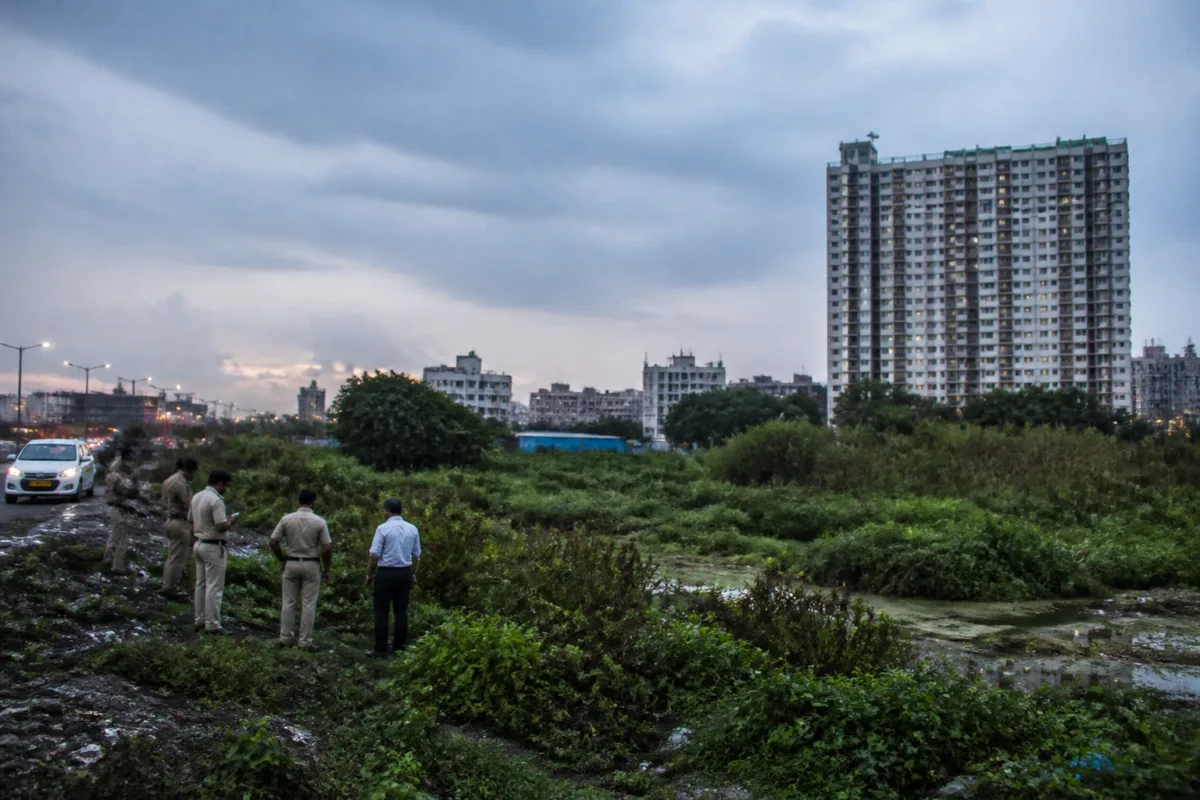
The case is significant for Pune’s urban infrastructure because the first usable lead emerged outside the immediate crime scene. The Keshav Nagar waste-depot area was described as spanning 40 to 50 acres and being marshy, overgrown and largely deserted. Such a landscape made a conventional site investigation difficult, particularly because investigators initially had no firm evidence to establish the identity of the deceased or identify the person responsible.
A CCTV camera on the terrace of a 20-storey building, located roughly 500 metres from the scene, provided the first direction. According to the report, investigators from the robbery and vehicle-theft squad examined footage from the site and surrounding areas. The vehicle was traced through its make, a cab logo and a radium sticker visible in the recordings. Footage from the Reliance Mall area in Kharadi reportedly showed the woman entering a vehicle.
This sequence illustrates an important feature of surveillance-led investigations: the useful image may not be the clearest image of the crime itself. Instead, investigators may have to reconstruct movement before and after an incident by joining footage from cameras installed for unrelated purposes. A residential terrace camera, commercial-area recording and footage around an information-technology park became parts of the same evidentiary chain.
Police said they checked approximately 1,500 cabs in and around the E-Von IT Park area. The vehicle search was not based only on a registration number, according to the report. Investigators compared movement patterns across footage and used the visible make, logo and radium sticker to narrow the field. This indicates the labour-intensive nature of urban CCTV analysis, where cameras may capture partial views and identifying details rather than a complete, immediately searchable record.
The investigation then moved from visual evidence to technical analysis. Information linked to the suspected vehicle and the relevant person’s mobile phone was examined, police said. That analysis led investigators to Shinde. The police account also refers to forensic evidence, although the supplied report does not specify what material was examined, which laboratory processed it or how it was presented in the case record.
That limitation matters. The arrest is an investigative development, not a conviction. The report attributes the allegation of involvement to the police and does not provide details of a chargesheet, court proceedings or the accused person’s defence. Any account of the case must therefore distinguish between what police say the investigation established and what has been legally determined by a court.
### A difficult landscape and a distributed evidence system
The Keshav Nagar site sits at the centre of the case, but the investigation described by police depended on a much wider urban network. The waste-depot landscape was difficult to search because of marshland, vegetation and low occupancy. At the same time, the surrounding built environment supplied observation points: a high-rise terrace, commercial premises and areas with concentrated cab activity.
This contrast reveals a structural feature of rapidly urbanising areas. Vacant, overgrown or service-related land may function as a physical blind spot, while nearby residential and commercial development generates large amounts of digital evidence. The two conditions coexist. A site can be difficult for people to observe directly and still be indirectly visible through cameras positioned hundreds of metres away.
The case also shows why the value of CCTV depends on urban form. A high-rise building provides a wider field of view than a camera at street level, but distance can reduce the clarity of faces and number plates. Investigators in this case reportedly relied on secondary visual identifiers, including the vehicle’s make, cab logo and radium sticker. Those details became meaningful only when combined with footage from other locations.
The 1,500-vehicle verification exercise points to the absence of an automatic shortcut. Even when a city has extensive camera coverage, identifying one vehicle may require manual checking, comparison of travel routes and coordination between investigators handling different footage sources. The technology creates a record; investigative work gives that record meaning.
### The governance question behind the footage
The report does not establish how many cameras covered the area, who operated them or whether the footage was connected to a common police command system. It does, however, show that access to independently located cameras became central to the investigation. That raises a governance question about how urban video evidence is retained, accessed and authenticated after an incident.
In this case, the source of the most useful footage was a terrace camera on a private or residential building, as described in the report. Other footage came from commercial and institutional areas. A city’s surveillance capacity is therefore not necessarily the same as its official CCTV network. It can be distributed across housing societies, businesses, transport operators and public agencies, each with different retention practices and access arrangements.
The report does not provide the retention period for the footage, the process used to obtain it, or the safeguards applied to personal data. Those details are relevant to the wider urban debate but are not established in the supplied material. What can be stated is that the investigation required the police to examine recordings from multiple sites and connect them with technical and forensic information.
The institutional structure also matters. The investigation was conducted by the robbery and vehicle-theft squad number two, under the guidance of police inspector Sudarshan Gaikwad, who was holding additional charge, and assistant police inspector C. B. Berd. The report names the police personnel who contributed to the investigation. Their work illustrates that surveillance evidence does not operate independently of specialised teams capable of searching, comparing and interpreting large volumes of information.
### What the evidence confirms—and what remains open
The supplied account establishes a clear investigative sequence: a woman’s body was found in the Keshav Nagar waste-depot area; nearby CCTV footage provided a direction; a vehicle was identified through visual markers; footage from Kharadi and the E-Von IT Park area was examined; roughly 1,500 cabs were checked; mobile information and forensic evidence were added; and police arrested Shinde on 9 May.
It does not establish the full evidentiary record that will determine the criminal case. The report does not state whether the accused was produced before a court, whether further arrests were made, what forensic findings were recorded, or whether the CCTV and mobile evidence has been formally admitted in proceedings. It also does not explain why the woman entered the vehicle, the alleged motive or the complete sequence between the last recorded movement and the discovery of the body.
Those gaps do not diminish the public-interest value of the investigation, but they define the limits of responsible reporting. Police accounts can explain how investigators reached a suspect; they cannot by themselves substitute for judicial determination. The distinction is especially important when technology-driven evidence is presented as decisive before the full legal process is complete.
The larger urban lesson is narrower and more practical. CCTV coverage is most useful when it intersects with a city’s physical layout, transport patterns and investigative capacity. A difficult waste-depot site created a search problem, while the surrounding high-rise and commercial environment supplied fragments of movement data. The police investigation converted those fragments into a suspect trail through sustained verification rather than a single camera image.
For Pune, the case places attention on two connected urban conditions: how neglected or isolated land is monitored and how evidence from the wider neighbourhood is organised when a serious crime occurs. The supplied report does not indicate whether authorities plan changes at the Keshav Nagar site or to the city’s CCTV systems. The developments that remain to be monitored are the subsequent court process, the formal presentation of the evidence and any official response concerning the waste-depot area or surveillance coordination.

