


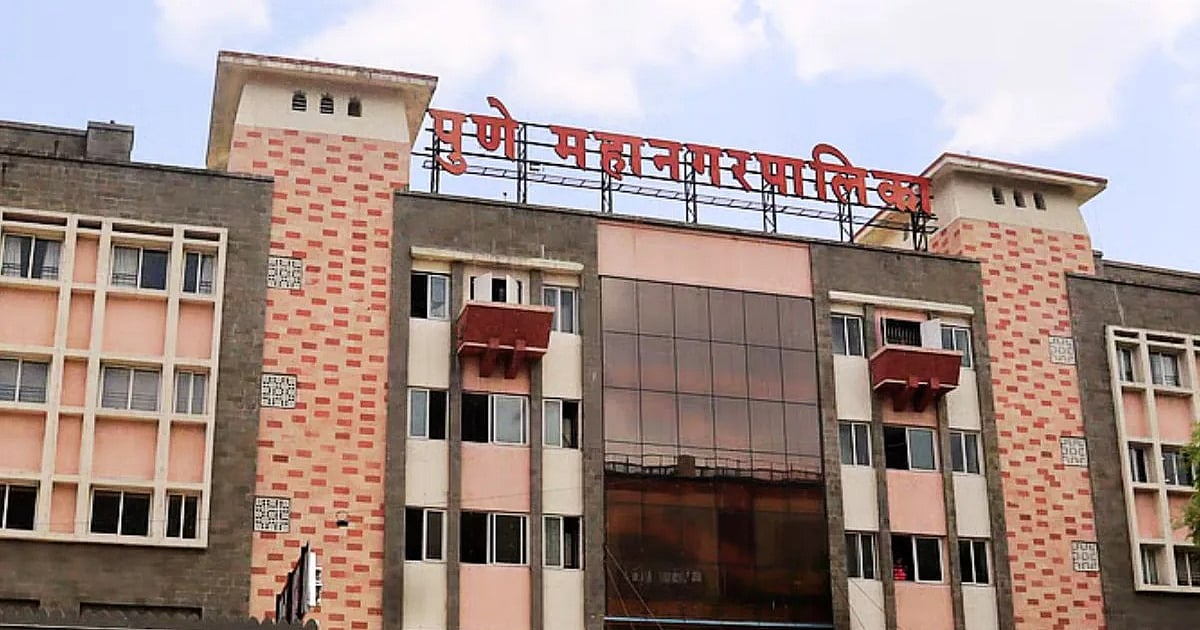
The reported closure of Pune Municipal Corporation’s historic Mamarao Date Printing Press has exposed a planning failure that extends beyond the fate of one civic facility. The press was moved from its original site on Ghole Road to a temporary location at a school premises in Vadgaon Budruk while the corporation pursued a City Library project. But the library’s construction plan reportedly made no provision for the press, and the temporary premises has now also been locked on the orders of Mayor Manjusha Nagpure. The result is an institution with a century-long municipal legacy but no confirmed permanent home.
According to a report by Pudhari, the original Ghole Road premises was selected for redevelopment into a City Library. The decision to demolish the old printing press building was accompanied by an assurance that the press would receive alternative accommodation. Initial discussions reportedly envisaged space for the press within the new library building. The press was therefore shifted temporarily to Vadgaon Budruk while the redevelopment moved forward.
That assurance appears not to have survived the transition from discussion to project design. The report states that the construction plan for the City Library did not include space for the printing press. A resolution accepted by ruling Bharatiya Janata Party members reportedly provided that an alternative site would be arranged, but the municipal administration did not finalise a permanent location. The institution’s return to Ghole Road consequently became impossible once the library plan proceeded without incorporating it.
This sequence is significant because it shows how a municipal project can separate physical redevelopment from the operational requirements of the institution being displaced. Relocation is not only a matter of moving machinery from one building to another. A printing press requires an appropriate premises, equipment space and continuity of operations. In this case, the reported absence of a confirmed permanent site meant that the temporary arrangement became the only functioning base, even though it was never presented as a final solution.
The immediate trigger for the latest uncertainty was the locking of the Vadgaon Budruk premises three days before the report was published. The mayor’s order has left the printing press facing another move, while the corporation’s Building Department has reportedly been asked to search for a new site in the city’s outskirts. The report does not establish how long this search will take, whether the new premises has been identified, or how the press’s work will continue during the transition.
The institutional history of the press adds weight to the issue. The facility is named after Mamarao Date, who is reported to have developed a mechanical system for modern printing of Marathi-language material about a century ago. The municipal corporation later named the press after him in recognition of that contribution. Its importance, therefore, is not limited to the building on Ghole Road. It represents a public printing function and a municipal record of technological and linguistic history.
The available account also places the dispute within a larger question about how civic bodies manage their own working assets. The printing press was not described as an abandoned or unused structure. It was an operating municipal facility that was shifted to make way for another public project. That distinction matters. When a functioning civic institution is displaced, the replacement plan must account for both the land and the service. The reported failure to secure permanent accommodation suggests that the redevelopment process treated the site as available space before resolving the institutional consequences of removing the press.
The City Library project itself has a substantial financial and implementation history. The report says that the project received Rs 4 crore from the Union government through former Member of Parliament Prakash Javadekar. Against that allocation, the Pune Municipal Corporation is expected to spend Rs 27 crore. Work on the project has reportedly continued for seven years, with Rs 12 crore spent so far. Around 60 per cent of the construction is said to be complete, while a further Rs 15 crore may be required for the remaining work.
These figures reveal an uneven project structure. The library has a defined site, an ongoing construction programme and a reported estimate of further expenditure. The printing press, by contrast, has lost its original premises and has not received an equivalent permanent plan. The contrast does not establish that the library itself is unnecessary or that its funding should not have been accepted. It does, however, show that the municipal corporation appears to have advanced the capital project without resolving the accommodation requirement of an existing civic operation.
The reported absence of a local demand for a City Library adds another layer to the planning question. Pudhari states that the project is being implemented despite there being no demand for such a facility in the area. The report does not provide a demand assessment, consultation record or official explanation for that claim, so the basis for it cannot be independently evaluated from the supplied material. But the claim is relevant to the larger governance issue: public construction decisions require a clear connection between project need, available funds, site use and the continuity of existing services.
Municipal redevelopment commonly involves competing objectives. A city may seek new public facilities while also preserving institutional functions, heritage and service capacity. The challenge is not simply to construct the new asset. It is to sequence decisions so that an old facility is not displaced before its replacement premises, budget and operating arrangements are secured. In the case of the Mamarao Date Printing Press, the reported order of events appears to have been reversed: the old premises was cleared, a temporary relocation was made, the new building plan excluded the press, and a permanent alternative remained unresolved.
This is also a question of accountability across municipal departments. The project involves at least the authority responsible for the library construction, the Building Department searching for a new site, the mayor’s office issuing the order affecting the temporary premises, and the municipal administration responsible for the press. The supplied report does not identify a single official project document setting out who was responsible for guaranteeing the press’s permanent relocation. That absence makes it difficult to determine whether the failure arose from a design decision, a budget omission, an administrative disagreement or a change in project scope.
The financial numbers make the omission more consequential. The corporation is reportedly facing a total City Library cost of Rs 27 crore, with Rs 12 crore already spent and another Rs 15 crore needed. Yet no permanent space has been secured for an institution displaced by the same project. If the corporation now has to identify and prepare another premises, that process could involve additional expenditure, operational disruption and another round of administrative decisions. The report does not state the cost of such a relocation, and no estimate should be assumed. The central point is that the relocation requirement appears to have been left outside the main project calculation.
The case also illustrates the difference between heritage recognition and heritage protection. Naming the press after a historically significant figure acknowledges its legacy, but recognition has limited value if the institution is not given a stable operating base. The report describes the press as having a tradition of around 100 years, while its future is now uncertain. Whether the original building itself had heritage protection is not established in the supplied material. What is clear from the report is that the municipal body’s own historical institution has not been integrated into the redevelopment plan in a way that guarantees continuity.
The immediate evidence confirms three points: the original Ghole Road site is being used for the City Library project; the library plan reportedly does not contain space for the press; and the temporary Vadgaon Budruk premises has been locked, leaving the corporation to search for another location. Several important details remain unresolved, including the formal status of the reported resolution promising alternative accommodation, the current condition of the press’s machinery, the effect of the closure on municipal printing work and the timeline for identifying a permanent site.
Those unresolved details are not peripheral. They will determine whether the present situation is a temporary administrative disruption or a permanent loss of institutional capacity. The next meaningful development will be the municipal administration’s decision on a new premises and the terms under which the printing press can resume operations. Until then, the Mamarao Date Printing Press remains a case study in how a city can fund and build a new public facility while failing to plan for the public institution displaced by it.

