


Pune’s municipal budget is facing a governance test as corporators have reportedly reallocated around Rs 100 crore for local works, many of them involving road repairs, footpaths and drainage infrastructure already handled through the municipal administration. The immediate concern is not only how quickly the money is spent, but whether two public agencies can end up recording and billing for the same work.
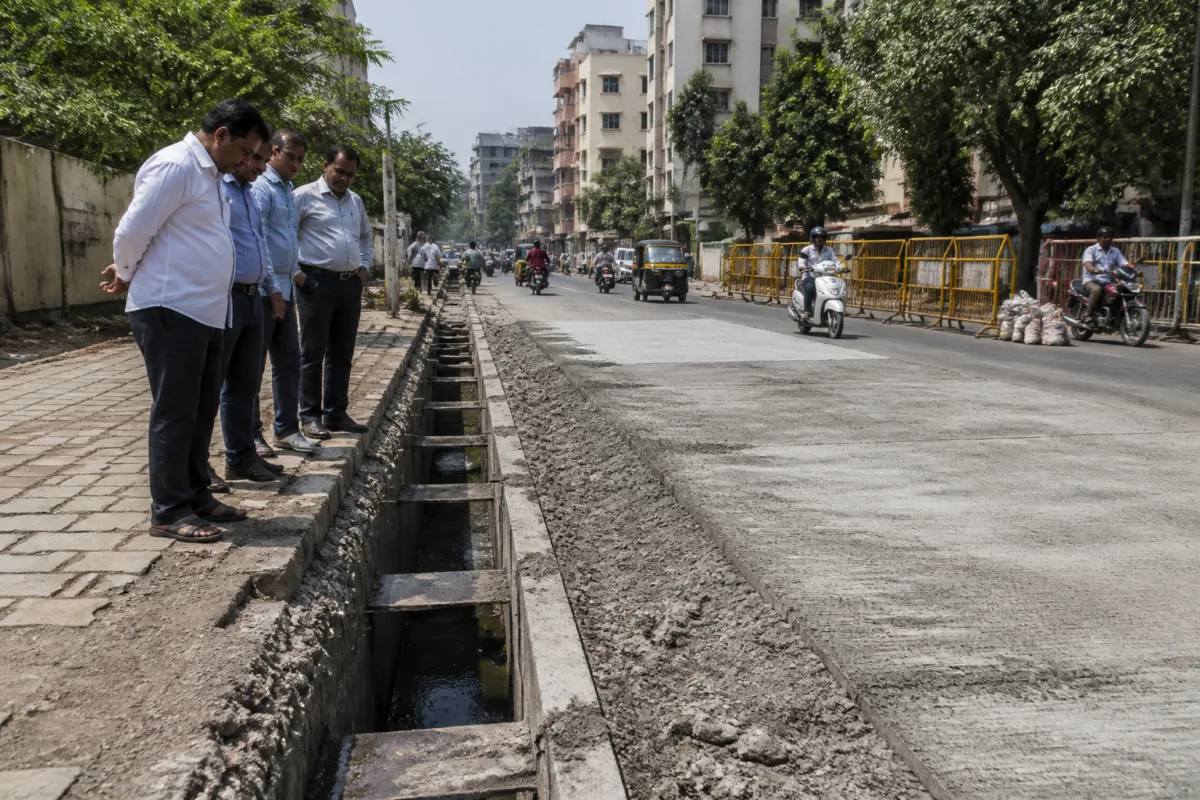
The issue has emerged from proposals approved or placed before the Pune Municipal Corporation’s standing committee during the past three months. According to a report by Sakal, corporators have shifted allocations originally identified for one purpose to other works ranging from Rs 5 lakh to Rs 5 crore. Much of the reallocated funding is expected to be used for drainage-line repairs, footpath repairs, pothole filling and concrete roads.
These are routine but essential urban functions. They are also areas in which the municipal administration, through its central departments and ward offices, separately makes financial provision for development and maintenance. When the elected-members’ allocation and the administration’s departmental allocation target similar locations or activities, the city’s accounting system must establish a clear distinction between the two. Without that distinction, the risk is not merely administrative duplication; it can affect the reliability of project records, contractor payments and claims about infrastructure delivered to residents.
The report’s central structural finding is that Pune’s system permits two parallel channels of municipal expenditure to operate in the same physical space. One channel is the administration’s regular budget for capital works and maintenance. The other is the allocation set aside for corporators through the budget’s separate ‘S’ list. The possibility of overlap is created when both channels identify works such as road construction, drainage repairs or footpath improvements.
The scale of the municipal budget makes this an important public-finance question. Pune’s 2026-27 budget is reported to be around Rs 16,500 crore, with expenditure planned for capital works, revenue-funded maintenance and repairs, and employee salaries. Within that larger framework, the ‘S’ list provides separate allocations for works proposed by corporators. The report says ruling-party corporators receive about Rs 7 crore each, opposition corporators about Rs 2 crore each, while party leaders, standing committee members and other office-bearers have access to a combined allocation of Rs 12 crore.
Such allocations are intended to respond to local priorities. The reported list of possible works includes repairs in municipal schools, construction of toilets, development of playgrounds, community halls, recreation centres, concrete roads, drainage lines and footpaths. These are visible, neighbourhood-level interventions, and they can address gaps that broader departmental programmes may not immediately cover.
The problem arises when a budget provision is treated as evidence that a work has been completed, even though the original provision may have been created before the work was technically ready or before its exact scope was established. Sakal reported that many of the works are not immediately executable, despite funds being earmarked for them. As the financial year advances, the pressure to use the unspent allocation can encourage reclassification of funds towards works that appear easier to approve and execute.
The timing described in the report is significant. Seven months of the current financial year had passed, while two periods of the model code of conduct, an SIR exercise and the census had affected the spending of corporators’ funds. With five months remaining, corporators were reportedly attempting to accelerate the use of the available allocation. The standing committee’s working papers over the previous three months contained proposals worth around Rs 100 crore, most of which were reportedly approved by the committee.
This creates a familiar administrative tension: a budget can be legally authorised but still be operationally difficult to execute with adequate scrutiny. When a large number of small works are approved in a compressed period, oversight has to track more than the sanctioned amount. It must verify the site, scope, contractor, work order, completion date, measurement record, payment and relationship with any parallel departmental project.
The reported duplicate-billing risk is especially serious because local infrastructure works are often difficult for residents to distinguish after completion. A repaired footpath, a filled pothole or a drainage-line repair may appear as a single physical intervention even if different files claim responsibility for it. If the same work is entered under separate schemes or allocations, the public record may show expenditure without showing whether the city received two distinct outputs.
Sakal also reported allegations that some works are shown as having been executed after the administration has already completed them, with bills then raised through the corporators’ allocation. The report further alleged that mobile-phone photographs used as supporting evidence could be manipulated by changing the date and retaining location coordinates, time and other image details. These are allegations reported by the source and are not independently established in the supplied material. They nevertheless identify the type of documentary control required when large volumes of small infrastructure works are processed quickly.
The standing committee chairperson, Shrinath Bhimale, rejected the suggestion that the administration’s allocation had been diverted. He said the funds being reclassified were corporators’ funds and were being used for drainage repairs, footpath repairs, cement roads and other works. That response addresses the ownership of the allocation, but it does not by itself resolve the question of whether the physical works overlap with projects already planned or executed by municipal departments.
That distinction matters. The issue is not necessarily whether corporators can propose or reclassify works from their allocation. The more important question is whether the municipal corporation has a single, reliable project register that records every work by location, scope, funding source, executing agency and status. Without such a system, the city can know that money was sanctioned without knowing with equal certainty whether a particular road, drain or footpath was counted once or more than once.
The institutional arrangement also creates accountability complications. The standing committee approves proposals, elected representatives identify local works, administrative departments execute projects and ward offices often manage ground-level maintenance. Each role can be legitimate on its own, but overlapping authority can make it difficult to identify who is responsible when a project is duplicated, delayed or poorly executed.
Pune’s budget process, as described in the report, therefore reveals a gap between allocation and delivery. A budget line is an intention to spend; it is not proof that the city has received a usable asset. The conversion of an allocation into a completed work requires technical estimates, administrative approval, tendering or procurement, site verification, measurement, quality checks and payment controls. The more rapidly these steps are compressed, the greater the need for auditable records.
The report does not establish how many individual works have actually been duplicated, the total value of any duplicate bills, or whether a formal audit has confirmed wrongdoing. Those facts remain to be determined. It does establish that the standing committee has dealt with around Rs 100 crore in reclassification proposals over three months and that a potential overlap exists between corporator-proposed works and administration-led projects.
The data also points to a broader planning challenge. Pune’s municipal spending is divided between long-term capital infrastructure, recurring maintenance and localised works. These categories serve different purposes, but they can converge at street level. A road may require a capital upgrade, routine patching and a separate local improvement proposal. If these interventions are not sequenced through a common plan, the city can spend repeatedly on visible repairs while leaving the underlying drainage, pavement or road-design problem unresolved.
For residents, the consequence is not limited to a disputed bill. Repeated or poorly coordinated works can mean roads are dug up several times, footpaths remain uneven despite successive repairs, and drainage interventions fail to address waterlogging or network capacity. The report’s reference to the deteriorating condition of city infrastructure, attributed to officials speaking privately, should be treated as a reported observation rather than an independently verified assessment. Still, it underlines the difference between expenditure volume and infrastructure performance.
The next administrative milestone is the processing of the proposals and the use of corporators’ allocations during the remaining five months of the financial year. That process will determine whether the municipality can distinguish new works from projects already funded through departments. The key records are likely to be the standing committee proceedings, work orders, measurement books, completion certificates, location-tagged photographs and payment files.
What the available evidence confirms is a rapid reallocation of approximately Rs 100 crore and a clear risk created by parallel funding channels. What it does not yet confirm is the extent of actual duplicate billing or whether any official inquiry has found financial irregularity. For Pune, the larger governance question is whether every rupee in the municipal budget can be matched to one clearly defined, physically verifiable and publicly traceable urban improvement.

