


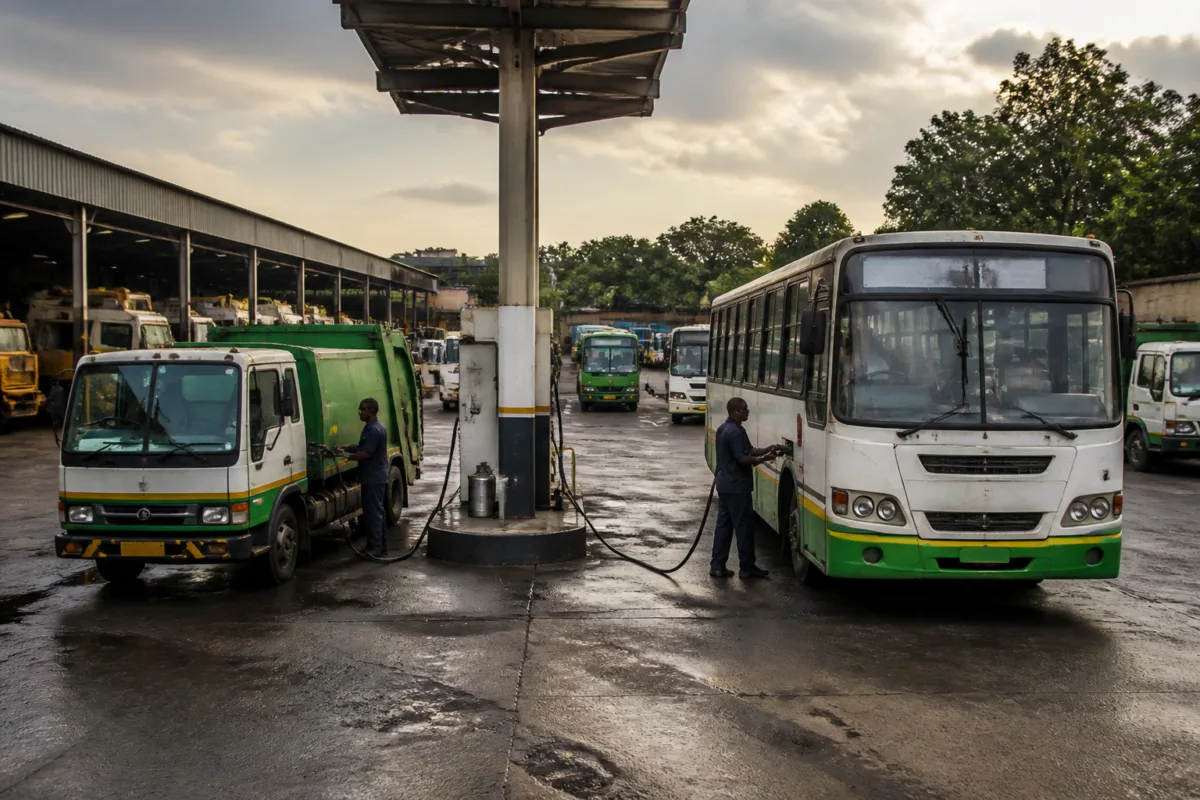
Pune Municipal Corporation (PMC) and Pune Mahanagar Parivahan Mahamandal Limited (PMPML) could be facing an additional annual diesel burden of nearly Rs. 15 crore, according to a proposal submitted by Congress corporator and group leader Ramchandra, popularly known as Chandusheth Kadam. The central price claims, however, have not been independently verified in the available report.
Kadam’s proposal, submitted to the PMC Standing Committee, calls for an examination of the diesel prices charged by Hindustan Petroleum Corporation Limited (HPCL) for vehicles operated by the civic body and PMPML. It also seeks state government intervention through the Municipal Commissioner so that the two public institutions can purchase diesel and petrol at what the proposal describes as market rates.
According to the proposal, diesel available in the market at Rs. 99 per litre is being purchased by the PMC at Rs. 159 per litre. The claimed difference is Rs. 60 per litre, although the proposal’s annual calculation uses a difference of Rs. 59 per litre. The report does not provide an HPCL invoice, procurement contract, government notification or District Collector’s order to independently establish either price.
The proposal states that the PMC’s motor vehicle department purchases about 8,000 litres of diesel a day. Based on 26 working days a month, this amounts to approximately 2.08 lakh litres monthly. Applying the claimed Rs. 59-per-litre difference produces an additional monthly expenditure of around Rs. 1.22 crore and an annual amount of approximately Rs. 14.73 crore.
The calculation relates to vehicles and machinery used across essential municipal operations. The proposal identifies waste transportation vehicles, fire engines, excavators, earth movers, generators and other equipment among the PMC’s diesel-consuming assets. PMPML separately requires fuel for diesel buses and other vehicles operating from its depots, although the supplied report does not provide a separate consumption or cost estimate for the transport undertaking.
The institutional question raised by the proposal is whether fuel pricing rules applied to commercial or private organisations are also being applied to the PMC and PMPML, and whether their public-service functions allow them to access different procurement terms. Kadam’s submission describes the PMC as a local self-government body and PMPML as a public passenger transport provider rather than a corporate or multinational entity.
The proposal further claims that an order issued by the District Collector is responsible for the additional financial burden. The report does not identify the order number, date, legal basis or specific pricing mechanism. Without those details, it is not possible to establish whether the alleged price difference results from a district-level direction, fuel classification, procurement arrangement, tax treatment, supply contract or another administrative rule.
Kadam also alleged that the PMC’s vehicle depot suffers from disorderly administration and questioned why the civic body was paying Rs. 159 per litre when the market price was stated to be Rs. 99. He said HPCL supplies diesel without subsidy to corporate companies, while the PMC uses tax revenue to provide civic services. He called for intervention at the Municipal Commissioner’s level and said the Congress party would approach the court on the issue.
The available report does not state whether the PMC, PMPML, HPCL, the District Collector or the Municipal Commissioner responded to the allegations. It also does not establish whether the Standing Committee has accepted the proposal, ordered an inquiry or sought procurement records. Those documents will be necessary to determine the actual price paid, the applicable contract terms, the fuel volumes purchased and the financial impact on civic operations.
The issue has significance beyond the claimed amount because fuel procurement affects the cost of waste collection, emergency response, road and excavation work, power backup and public transport operations. At the same time, the Rs. 15-crore figure remains an allegation based on the proposal’s assumptions until supported by official purchase records, invoices and the relevant administrative order. The next verifiable steps are the Standing Committee’s examination of the proposal and any response or inquiry initiated by the PMC, PMPML or the state government.

