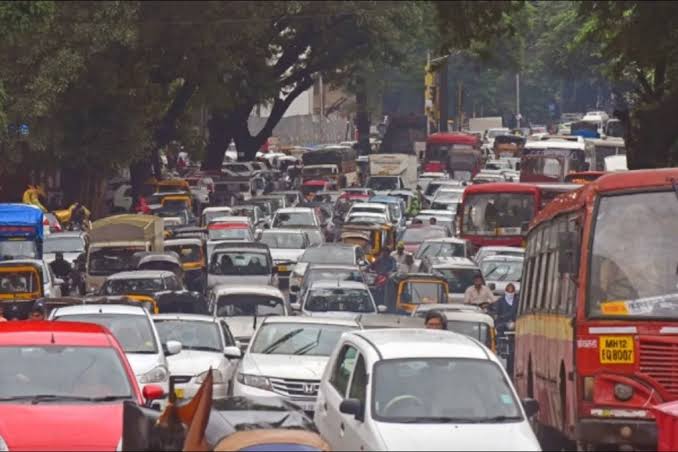
Pune’s proposed High-Capacity Mass Transit Route (HCMTR) is entering a crucial land-acquisition phase, with the district administration and Pune Municipal Corporation moving to clear private land requirements and unresolved property cases. Around 30 hectares of privately owned land must be secured, making land availability one of the most important hurdles before the expanded corridor can advance.
The Pune HCMTR was originally planned as a 35.96-km elevated ring corridor under the city’s development plan. Following an alignment revision approved in 2024, the proposed network now stretches to roughly 43 km and incorporates the previously missing Vishrantwadi-Bopodi connection. The revised corridor is planned as a 24-metre-wide elevated semi-ring route linking Bopodi, Aundh, Shivajinagar, Kothrud, Erandawane, Wanowrie, Hadapsar, Mundhwa and Vishrantwadi. The intended network could provide an alternative movement spine around several of Pune’s heavily trafficked areas. At a review meeting held at the district collector’s office, civic and revenue officials examined land already identified for acquisition, government-owned parcels, pending cases, property measurements and documentation gaps. The administration has directed departments to examine individual cases and address issues within defined timelines. The scale of private acquisition is significant. The municipal corporation estimates that privately owned land accounts for about 20% of the total requirement, or approximately 30 hectares. The civic body is also working to mobilise the funds needed for acquisition.
For affected landowners, the process will be closely watched. Large transport projects can create substantial changes in land values and development patterns. Clear valuation methods, timely compensation and transparent procedures will therefore be important as acquisition moves forward. Delays can increase project costs, while poorly managed acquisition can create prolonged disputes. The Pune HCMTR also needs to be viewed alongside the city’s wider transport transition. An elevated corridor may improve road connectivity, but its effectiveness will depend on how it integrates with buses, metro stations, pedestrian routes and other forms of public transport. Without convenient connections at ground level, infrastructure designed primarily for through-movement may deliver fewer benefits to residents than its scale suggests.
Officials are simultaneously examining incomplete road links, or “missing roads”, where gaps in the existing network restrict connectivity. Resolving these smaller bottlenecks could provide near-term mobility benefits while the larger HCMTR progresses. The immediate priority is therefore not simply to acquire land quickly. Pune must ensure that acquisition, compensation, construction planning and multimodal integration move together. That approach can help the city expand transport capacity while limiting avoidable disruption and ensuring that major infrastructure serves everyday mobility as effectively as it serves regional connectivity.