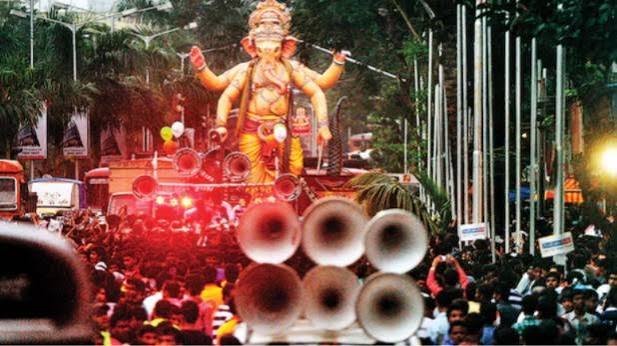
Pune Ganeshotsav Noise Row Raises Civic Safety Questions
Pune: A dispute over noise levels during Ganeshotsav took a violent turn on Thursday after a 37-year-old civic campaigner was allegedly assaulted while speaking to the media on Tilak Road. Pune Police arrested a man identified as a former Ganesh mandal office-bearer after the incident, shifting the focus from festival sound levels to the wider question of how cities manage competing rights in crowded public spaces.
The activist has been campaigning against high-decibel DJs and loudspeakers at public celebrations, arguing that religious festivities should not create excessive noise, obstruct traffic or compromise residents’ wellbeing. His position has faced opposition from sections of Ganesh mandals, turning what would ordinarily be a civic discussion into a contentious public dispute. Police said CCTV footage was examined and the involvement of one person has so far been established. The accused was arrested and his statement is being recorded. Police have also registered a case under provisions of the Bharatiya Nyaya Sanhita relating to assault, intimidation, obstruction and acts that could contribute to tensions between groups. Further investigation will determine whether others were involved. The episode has also brought renewed attention to Pune’s approach to festival-related noise. India’s Noise Pollution Rules require written permission for loudspeakers and public-address systems and generally prohibit their use between 10pm and 6am, subject to limited exemptions that states may permit for specified cultural or religious occasions.
Maharashtra Pollution Control Board records show that noise monitoring during the Ganesh festival is an established part of the state’s environmental oversight. The board publishes festival noise reports alongside information on noise regulations and enforcement. That regulatory framework matters because noise pollution is not simply a question of competing festival preferences. In dense neighbourhoods, amplified sound intersects with homes, hospitals, schools, workplaces, older residents and people working irregular hours. Enforcement therefore requires measurable limits, monitoring and predictable procedures rather than decisions based solely on confrontation or complaints.
The assault has drawn condemnation from political leaders and civic groups, while police have indicated that protection has been provided to the campaigner following the incident. Separately, a complaint has reportedly been filed against him, underscoring how sharply the disagreement has escalated. For Pune, the immediate issue is the criminal investigation. The larger civic challenge is ensuring that Ganeshotsav remains accessible and culturally significant without shifting the environmental and social costs of celebration onto surrounding communities. Transparent noise monitoring, clear permissions and consistent enforcement could help keep that balance within the rule of law.