


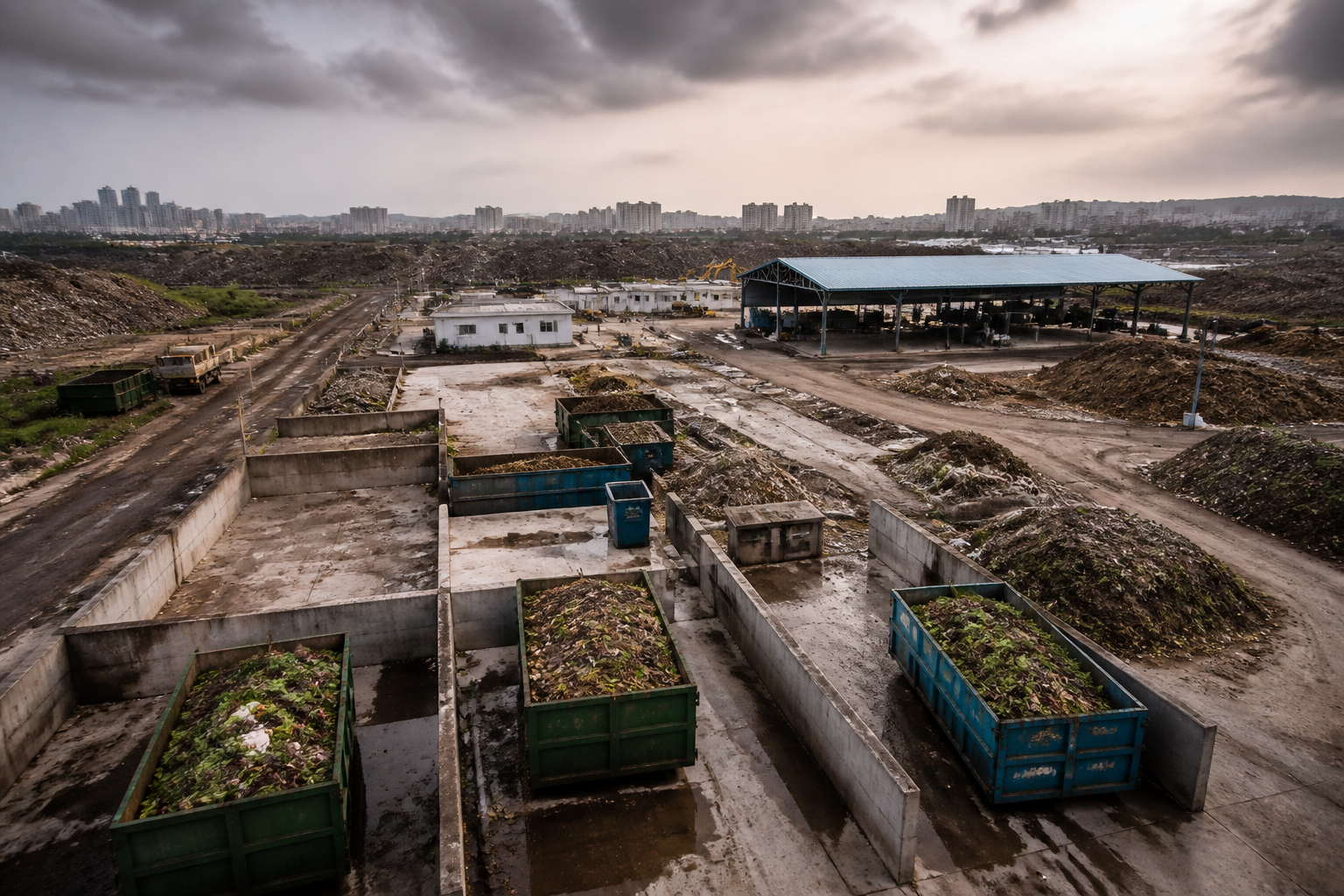
Pune Municipal Corporation’s standing committee has approved a proposal to allocate 12 acres at the Uruli Devachi waste depot to Bharat Petroleum Corporation Limited (BPCL) for a bio-CNG plant processing 300 tonnes of wet waste every day.
The land will be provided for the construction, operation and maintenance of the project. The proposal had been placed before the standing committee by the municipal administration last month, but a decision was delayed for about a month before approval was granted.
The proposed facility is intended to address the gap between the quantity of wet waste generated in Pune and the municipal corporation’s available processing capacity. The plant will use wet waste to produce biogas and bio-CNG at the waste depot premises in the Fursungi-Uruli Devachi area.
According to the proposal, BPCL will bear the complete cost of constructing, operating and maintaining the plant. The municipal corporation will not provide financial assistance for the project. Its responsibilities will include making the land available, supplying segregated wet waste to the facility and providing basic infrastructure such as roads, water, electricity, a sewer connection and a compound wall.
The proposal provides for the 12 acres to be leased at a nominal rate of ₹1 per acre per year. The arrangement covers a two-year construction period and a further 25-year operating and maintenance period, making the total proposed tenure 27 years.
The municipal corporation will also not be responsible for the plant’s monthly electricity and water bills. Those payments will be made by BPCL, according to the reported terms of the proposal. The company will retain ownership of the products generated by the project, along with the rights to sell them or dispose of them through scientifically approved methods.
The project places the municipal corporation’s role primarily around land access, waste supply and basic civic connectivity, while BPCL will be responsible for the facility’s capital and operating costs. Its implementation will depend on the construction of the plant, the regular supply of segregated wet waste and the provision of the promised infrastructure at the depot site.

