


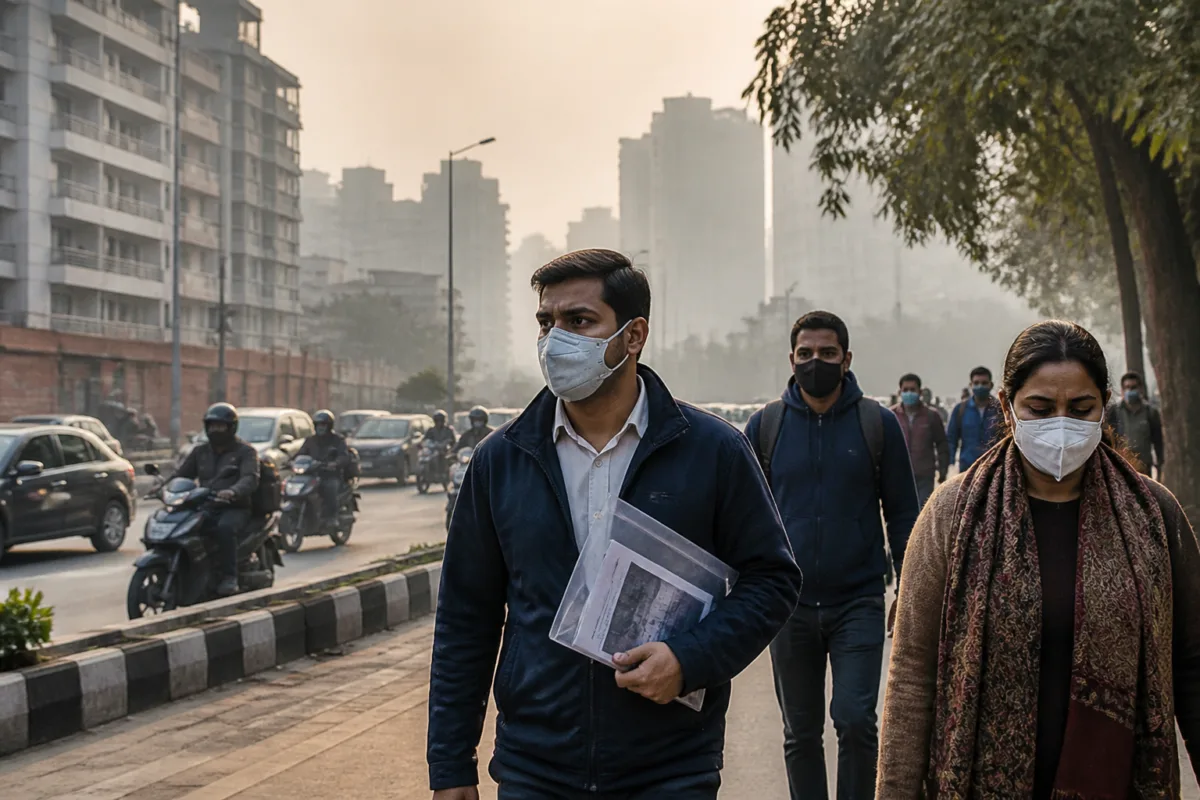
Pollution-linked health claims nearly doubled as a share of overall health insurance claims to 12–13 per cent in 2025-26, up from 6–7 per cent in 2023-24, according to data shared by Policybazaar and reported by Business Standard. The volume of such claims increased 4.3 times during the two-year period, pointing to a rapidly rising health burden associated with pollution.
The data indicates that pollution-associated illnesses accounted for a significantly larger proportion of health insurance claims in FY26 than they did in FY24. Respiratory and cardiovascular conditions were identified as the main illnesses driving the increase.
While the number of claims rose sharply, the average claim size increased only marginally. The average claim value stood at around ₹62,662 in FY26, compared with roughly ₹60,000 in FY24. This suggests that the expanding claims burden was driven primarily by more people seeking treatment or filing claims, rather than by a steep rise in the average cost of each treatment.
The figures offer an insurance-sector view of how pollution-related health risks are translating into medical expenses. A rise in claim volumes can reflect a higher incidence of illness, greater awareness and diagnosis, increased access to insurance, or a combination of these factors. The data shared by Policybazaar does not, in the supplied report, separate these possible contributors.
Respiratory and cardiovascular illnesses are particularly significant in the context of urban health because they can require repeated consultations, diagnostic testing, hospitalisation and long-term treatment. However, the available data does not provide a city-wise breakdown, identify specific pollutants or establish a direct causal link between individual claims and measured pollution exposure.
The increase also places attention on the relationship between environmental conditions and financial protection. Health insurance claims record the point at which illness results in treatment and expenditure; they do not capture people who remain untreated, use public facilities without making an insurance claim, or experience symptoms that do not lead to hospitalisation.
For households, the relatively stable average claim size does not remove the significance of the trend. A larger number of claims can increase the overall financial and administrative burden on insurers and policyholders even when the typical cost of an individual claim changes only slightly. The data does not state whether premiums, coverage conditions or claim settlement patterns changed during the period.
The figures come as pollution remains a central urban health concern, particularly for residents exposed to poor air quality over extended periods. They also underscore the need to distinguish between the medical cost of pollution-associated illness and the wider health effects that may not appear in insurance records.
Policybazaar shared the data cited in the report. The next step for understanding the trend would be more detailed information on locations, diagnoses, exposure levels, hospitalisation patterns and the share of claims linked to new versus recurring conditions. Those details would help establish how much of the increase reflects changing pollution-related illness, insurance coverage and healthcare-seeking behaviour.

