


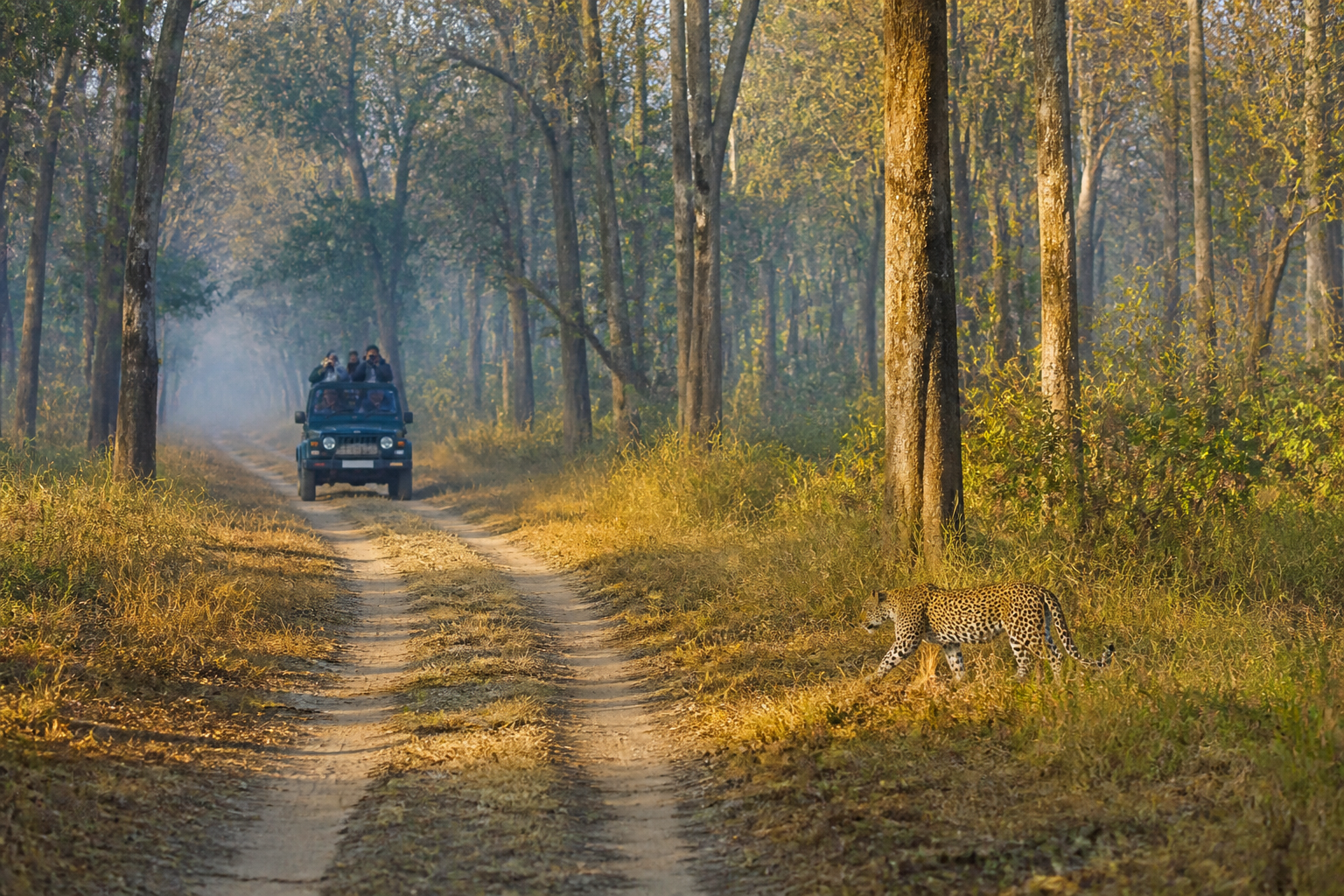
The Uttar Pradesh government has released an initial Rs 1 crore for a proposed leopard safari in Pilibhit district, where forest officials say a rising tiger population is pushing leopards towards nearby forests and inhabited areas in search of new habitat.
The proposed Pilibhit leopard safari is planned in the Gopalpur forest area and is intended to provide leopards with a larger natural territory while reducing their movement into rural settlements. Officials said the project marks the first financial step towards a safari estimated to cost around Rs 49 crore.
PP Singh, Bareilly Chief Conservator of Forests, said the increasing tiger population in the Pilibhit Tiger Reserve was contributing to pressure on available habitats for leopards. The resulting movement of leopards towards villages and other inhabited areas was increasing risks for both residents and the animals, he said.
“It is not possible to confine leopards to a single spot. It is essential to provide them adequate natural territory suited to their nature,” Singh said, according to officials quoted in the report.
The forest department has identified social forestry areas in the Deoria range of Pilibhit and the Khutar range in neighbouring Shahjahanpur as suitable locations for the project. The proposed safari would cover around 1,700 hectares of forest land and include a safari route of roughly 30 kilometres, Bharat Kumar DK, Divisional Forest Officer of the Social Forestry Department, said.
Under the plan, leopards would move freely through their natural forest habitat while visitors would be taken through the area in secure, cage-like vehicles. The project is therefore being positioned as both a tourism facility and a habitat-management intervention, although the initial release represents only a part of the estimated project cost.
The proposal comes as forest authorities face the challenge of managing wildlife movement across forest edges and inhabited areas. In this case, officials have linked the need for a separate leopard habitat to changes in the distribution of large carnivores around the Pilibhit Tiger Reserve.
The forest department said the safari is expected to offer leopards a safer natural habitat and help reduce their movement into rural areas. Officials also said the project could help mitigate human-wildlife conflict by creating a managed forest space in which the animals can remain free while tourist movement is controlled.
The initial Rs 1 crore allocation begins a project whose proposed development cost is around Rs 49 crore. Further planning and implementation will determine how the identified forest areas are developed and how the proposed safari route and visitor-safety arrangements are established.
