


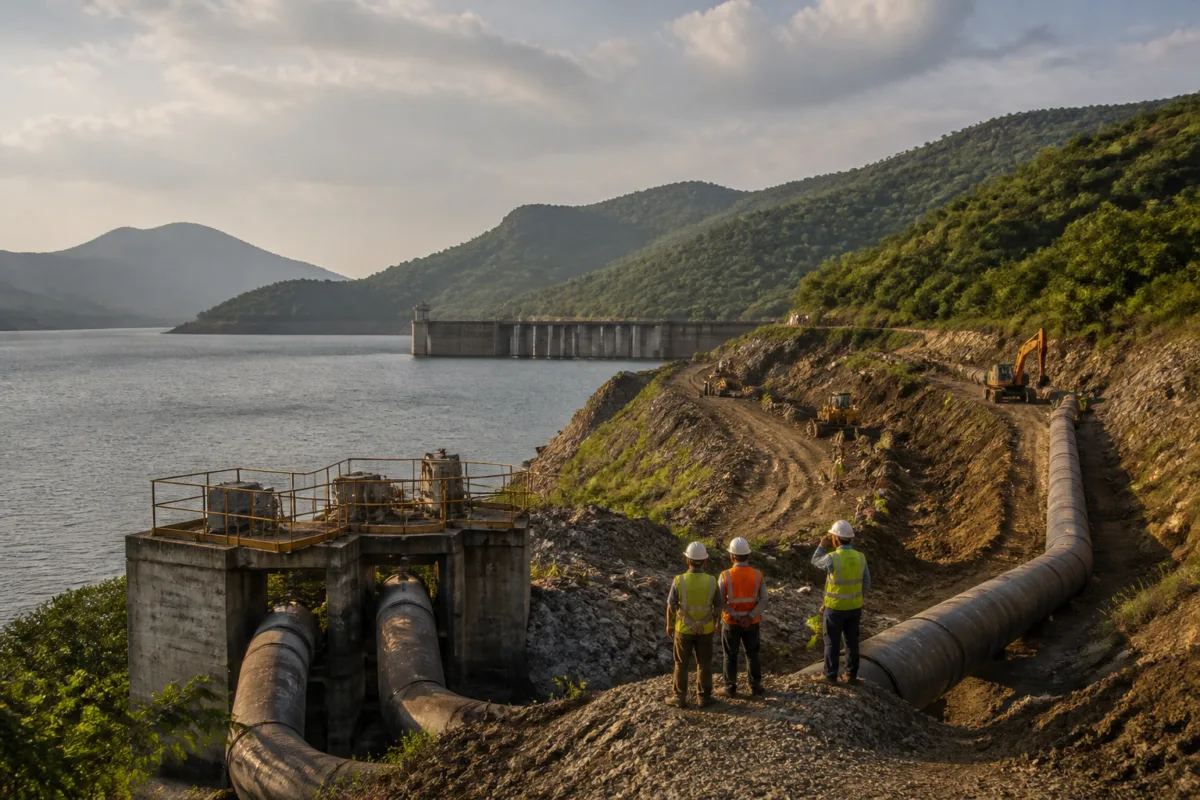
The Pavana closed pipeline project in Pimpri-Chinchwad is moving towards a fresh implementation attempt after remaining stalled for 15 years, but the municipal decision to increase its budget provision also exposes how prolonged delays can reshape the finances and execution of urban water infrastructure. The project, initially estimated at about Rs 400 crore, is now reported to involve costs of Rs 1,200 crore, while a revised estimate of Rs 1,500 crore was approved at a municipal meeting in May.
The Pimpri-Chinchwad Municipal Corporation’s standing committee has approved an additional provision of Rs 121.15 crore in the budget for the project. According to the report by Lokmat – Pune, the funding is intended to support preparatory and construction-related works required before the project can move towards tendering. The project is expected to be implemented in three phases, with separate tenders and contractors for each phase.
The immediate issue is not only the size of the revised estimate. It is also the way the corporation must arrange sufficient funds in the relevant account before it can invite bids. The report states that Rs 516.31 crore is deposited under the Jawaharlal Nehru National Urban Renewal Mission water-supply Phase I account for the Pavana project, excluding expenditure already incurred. The original budget provision is Rs 124.55 crore, leaving Rs 391.76 crore available in that account, according to the municipal figures cited.
The corporation needs 25 per cent of the estimated project amount, or approximately Rs 375 crore, to be available in the current financial year before the tender can be published. However, the revised budget provision was insufficient to meet that requirement. The standing committee has therefore approved the transfer of funds from the water-supply special scheme head to the JNNURM water-supply Phase I account. The stated purpose is to increase the provision available for the Pavana project and make tendering possible.
This funding arrangement illustrates a recurring administrative challenge in large civic projects. A project may have a broad approval, an identified account and an estimated cost, yet still remain unable to proceed if the money is not available under the correct budget head at the moment when a tender must be issued. In this case, the municipal corporation is not simply announcing a construction programme. It is attempting to align the project estimate, the annual budget, the account in which funds are held and the minimum financial requirement for tendering.
The project’s long delay has also changed the scale of the financial question. The original cost was reported at Rs 400 crore, while the current cost is described as Rs 1,200 crore. At the same time, the corporation has approved a revised estimate of Rs 1,500 crore in connection with the project. The supplied report does not provide a detailed cost audit explaining the difference between these figures, nor does it break down how much has already been spent or identify the precise reasons for the increase. Those details will be important for assessing the project’s final financial exposure.
The proposed three-phase structure is intended to address execution and scheduling. Standing committee chairman Abhishek Barane said the work would be divided into three parts and that three different contractors would be appointed so that the project could be completed within the planned period. The report also states that farmers would be taken into confidence before work begins, indicating that land, access or local consent issues remain part of the implementation process.
The three proposed components provide a clearer picture of what the new provision is meant to fund. The first is the appointment of a technical consultant to prepare a revised plan, for which Rs 1.15 crore has been provided. The second covers a jackwell, rising main, breakpoint tank and pumping station at Pavana Dam, with a provision of Rs 20 crore. The third involves laying a parallel water pipeline from Pavana Dam, with Rs 40 crore allocated. A further Rs 60 crore is planned for a parallel pipeline from the Pune-Mumbai Expressway to Sector 23 in Nigdi. Together, these items account for the total additional provision of Rs 121.15 crore.
The structure also shows that the project is being treated as a linked system rather than as a single pipeline contract. Water extraction and pumping infrastructure at the dam, the parallel pipeline and the connection towards Nigdi are being placed within the same implementation framework. The technical consultant’s role is to prepare a revised plan, suggesting that the earlier project design requires updating before construction can be divided into tenders.
The report says funding is expected to be available through the Centre’s Urban Challenge Fund. It does not specify the amount expected from that fund, the conditions attached to it, the date of release or the share to be financed by the municipal corporation. Those funding details remain important because the project’s ability to proceed will depend not only on a municipal budget provision but also on the timing and structure of external support.
The use of separate tenders may help the corporation manage a long and technically diverse project, but it also creates a need for coordination between contracts. The dam-side works, pumping facilities and pipeline sections must ultimately operate as one water-supply system. The supplied material does not state how the corporation will coordinate the contractors, allocate responsibility for delays between packages or manage interface risks. The revised technical plan and tender documents are therefore likely to determine how clearly those responsibilities are defined.
The project’s stalled history makes this institutional sequencing especially significant. The corporation says preparations have been completed and that the work will begin after a final solution is reached. It also says farmers will be consulted before implementation. Yet the report does not state the exact date for tender publication, the construction completion deadline, the number of properties or residents expected to receive water, or the quantity of water the project is designed to transmit. Without those details, the project’s direct impact on supply reliability cannot be measured from the available information.
What can be established is that the municipal corporation has taken a budgetary step intended to remove one immediate barrier to tendering. It has also selected a phased execution model and identified four major allocations: technical planning, dam-side infrastructure, the parallel pipeline from Pavana Dam and the pipeline connection towards Nigdi. These decisions move the project from a broad, long-pending proposal towards a more segmented procurement structure.
The larger urban question is whether a city can sustain reliable water infrastructure when projects remain unresolved for years and their financial assumptions change substantially during the delay. The Pavana project’s reported movement from Rs 400 crore to Rs 1,200 crore, alongside a revised approval of Rs 1,500 crore, makes cost control and transparent project accounting central to the next stage. It also shows why annual budget provisions and tender-readiness are not merely procedural matters: they determine whether an approved infrastructure plan can become physical infrastructure.
The next milestones are the transfer of funds into the relevant account, preparation of the revised technical plan, consultation with affected farmers and publication of separate tenders for the three phases. The supplied report does not establish when these steps will be completed. Until they occur, the Pavana closed pipeline project remains a financially restructured and administratively revived plan rather than an operating water-supply asset.

