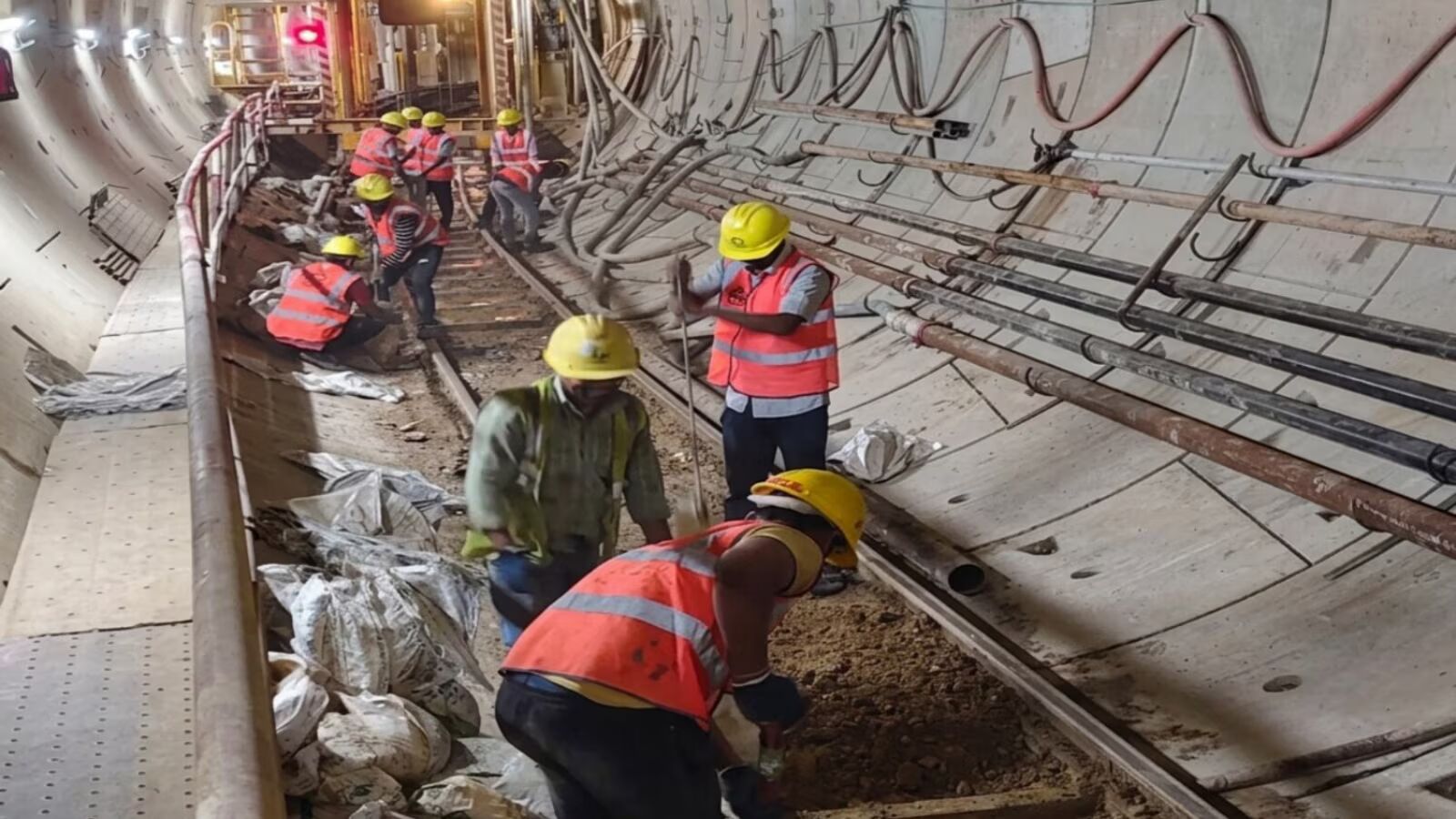
Patna Underground Metro Work Accelerates Beneath City
Patna’s underground metro construction has entered a critical phase, with tunnelling work along Corridor Two advancing beneath some of the city’s most densely populated and infrastructure-sensitive zones. The progress, particularly on key stretches linking central neighbourhoods, signals a shift in how the state capital is approaching long-term mobility, even as it navigates the complexities of building below an already strained urban fabric.
Officials overseeing the project indicate that underground excavation is now moving steadily across multiple segments, including sections beneath busy transport corridors and residential clusters. This includes technically challenging stretches where metro tunnels are being constructed under active railway lines and crowded settlements without disrupting surface activity. Corridor Two, a 14-kilometre spine connecting Patna Junction to the inter-state bus terminal, is central to the city’s mass transit ambitions. A significant portion—nearly 7.9 kilometres—runs underground and is expected to house several key stations that will serve high-density commercial and institutional areas. The underground alignment is designed to ease congestion along arterial routes such as Ashok Rajpath, where traffic bottlenecks have long constrained mobility and economic activity. Engineering teams are deploying tunnel boring machines to construct twin tunnels, with a substantial share of excavation already completed and only limited sections remaining. The approach reflects a broader shift towards mechanised, precision-driven infrastructure delivery, reducing surface disruption—a critical requirement in older Indian cities where land acquisition and relocation challenges often delay projects.
However, the rapid pace of underground work has also raised urban risk concerns. Reports of structural stress in some buildings along tunnelling routes have prompted authorities to initiate technical assessments. This underscores the delicate balance between infrastructure expansion and safeguarding existing urban ecosystems, particularly in heritage and high-density zones. From a planning perspective, the metro’s underground expansion represents more than a transport upgrade. It is likely to influence land use patterns, real estate demand, and economic clustering across Patna. Areas around proposed stations are already witnessing increased interest, suggesting a shift towards transit-oriented development—where housing, commerce, and mobility are integrated more efficiently. Yet, urban experts caution that infrastructure alone cannot deliver sustainable mobility outcomes. Without complementary investments in last-mile connectivity, pedestrian infrastructure, and non-motorised transport, the full benefits of the metro system may remain underutilised.
Integrating these elements will be essential to ensuring that the project aligns with broader goals of low-emission, inclusive urban growth. With the underground section targeted for completion by the end of 2026, Patna’s metro project is moving from a construction milestone to a defining moment in the city’s urban transition. The coming months will test not just engineering timelines, but also how effectively the city can integrate this high-capacity system into a more resilient and people-focused transport network.