


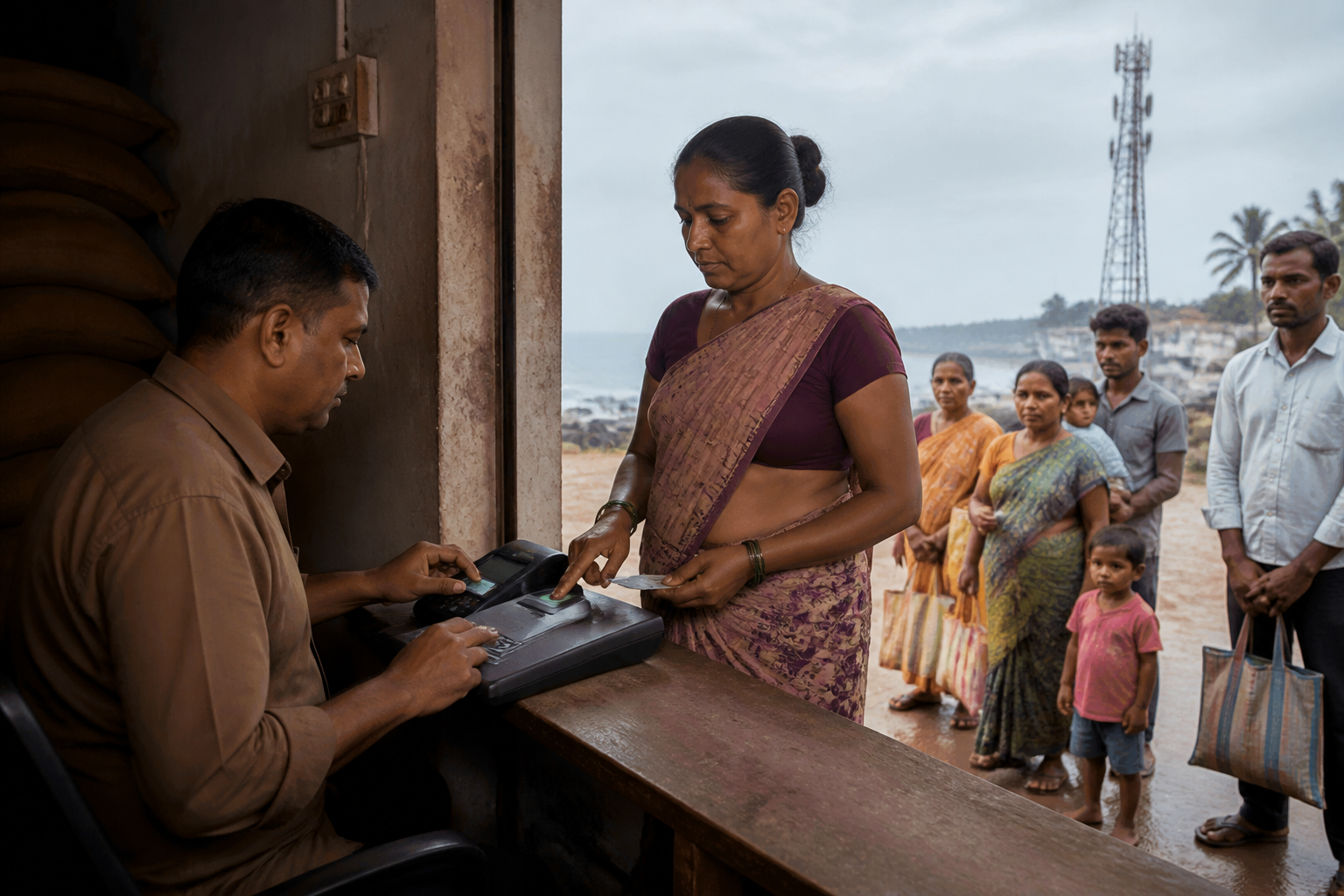
Palghar district has 375,965 ration card beneficiaries whose e-KYC remains pending even after the 30 September deadline set by the Centre and Maharashtra government, according to an official report cited by Loksatta. The shortfall leaves around 21% of the district’s beneficiaries yet to complete the verification process and raises concerns about continued access to subsidised foodgrain for affected families.
The e-KYC exercise was introduced to improve transparency in the public distribution system and curb bogus beneficiaries. By 1 October, 1,413,243 beneficiaries in Palghar had successfully completed the process. However, the number still pending remained substantial despite a special campaign conducted by the district administration between 16 September and 1 October.
During that campaign, e-KYC was completed for 39,514 additional beneficiaries. The progress was not enough to close the gap before the deadline. The official figures show that the pending cases are distributed across both urban and rural areas, with different operational problems affecting each region.
Vasai has the highest number of pending beneficiaries in the district, at 105,957. More than 25,000 residents in the taluka completed e-KYC during the 15-day campaign, but the remaining backlog continues to be large. The report attributes part of the difficulty in the urban area to migrant workers and residents who could not complete the process because of limited time.
The situation is different in remote and predominantly tribal areas, including Dahanu, Palghar and Jawhar-Mokhada. Network problems, technical difficulties with electronic point-of-sale machines and biometric fingerprints failing to match have slowed the process in these areas, according to the report. These obstacles show how a digital verification requirement can depend on the reliability of local connectivity, equipment and biometric authentication.
Dahanu, Palghar and Jawhar-Mokhada therefore face a service-delivery challenge that is not limited to awareness or willingness among beneficiaries. Where connectivity is weak or e-PoS equipment does not function properly, residents may be unable to complete verification even when they approach the distribution system. Biometric mismatches create another barrier for people whose fingerprints are not successfully authenticated by the system.
For households dependent on the public distribution system, the unresolved backlog has direct implications. The report says thousands of families could be deprived of ration grain after the deadline, although it does not specify whether all beneficiaries with pending e-KYC will automatically lose access or whether the administration has announced a separate extension or alternative verification arrangement.
The figures also underline the scale of the administrative task facing Palghar. Of the beneficiaries already covered, 39,514 were added during the special drive, but the remaining 375,965 cases are nearly ten times that campaign’s additional achievement. The district’s response will need to address both the high-volume backlog in Vasai and the connectivity, equipment and biometric problems reported in remote areas.
The report does not mention a further deadline, a district-wide extension or specific instructions for beneficiaries whose e-KYC remains pending. The next official communication from the district administration and the public distribution authorities will determine how these cases are handled and whether affected households can continue receiving ration grain while verification is completed.
