


Subheadline: Renewed disruption around the Strait of Hormuz is exposing how quickly geopolitical risk can move through fuel markets and into the cost of urban life.
Standfirst: Brent crude has moved back above $100 a barrel as attacks involving Iran, the United States and shipping near the Strait of Hormuz intensify concerns about Middle East supply. The immediate market reaction is clear: benchmark crude prices have risen, refined fuels remain expensive and investors are reassessing the outlook for inflation. For cities, however, the significance extends beyond the oil market. Road transport, aviation, logistics, construction activity and household budgets all depend on the cost and availability of fuel. This analysis examines what the reported price movements reveal about the vulnerability of urban economies to disruptions far beyond their administrative boundaries, while separating the established market evidence from issues that remain uncertain.
The latest rise in oil prices follows a renewed escalation around one of the world’s most important energy routes. According to the report, Iran said it had attacked 10 ships near the Strait of Hormuz, while the United States sank five Iranian oil tankers. Iran’s Revolutionary Guard Corps also warned that it would intensify its response to further attacks. These developments have increased concern that disruption could spread beyond individual incidents and affect the movement of crude and refined products through the region.
Brent crude futures rose 0.1% to $101.34 a barrel by 0107 GMT, while US West Texas Intermediate gained 0.5% to $96.55. In the previous session, Brent settled $3.29, or 3.4%, higher at $101.21, after reaching $101.58. WTI rose $3.02, or 3.25%, to $96.05. Both benchmarks closed at their highest levels since May 22, according to the supplied report.
The numbers matter because oil is not only a traded commodity. It is also an input into the systems that allow cities to function: buses and trucks, delivery networks, construction equipment, aviation, emergency services and private vehicles. A change in the cost of crude does not translate mechanically into an identical increase in every fuel market, but sustained disruption can raise the cost of moving people and goods across metropolitan regions.
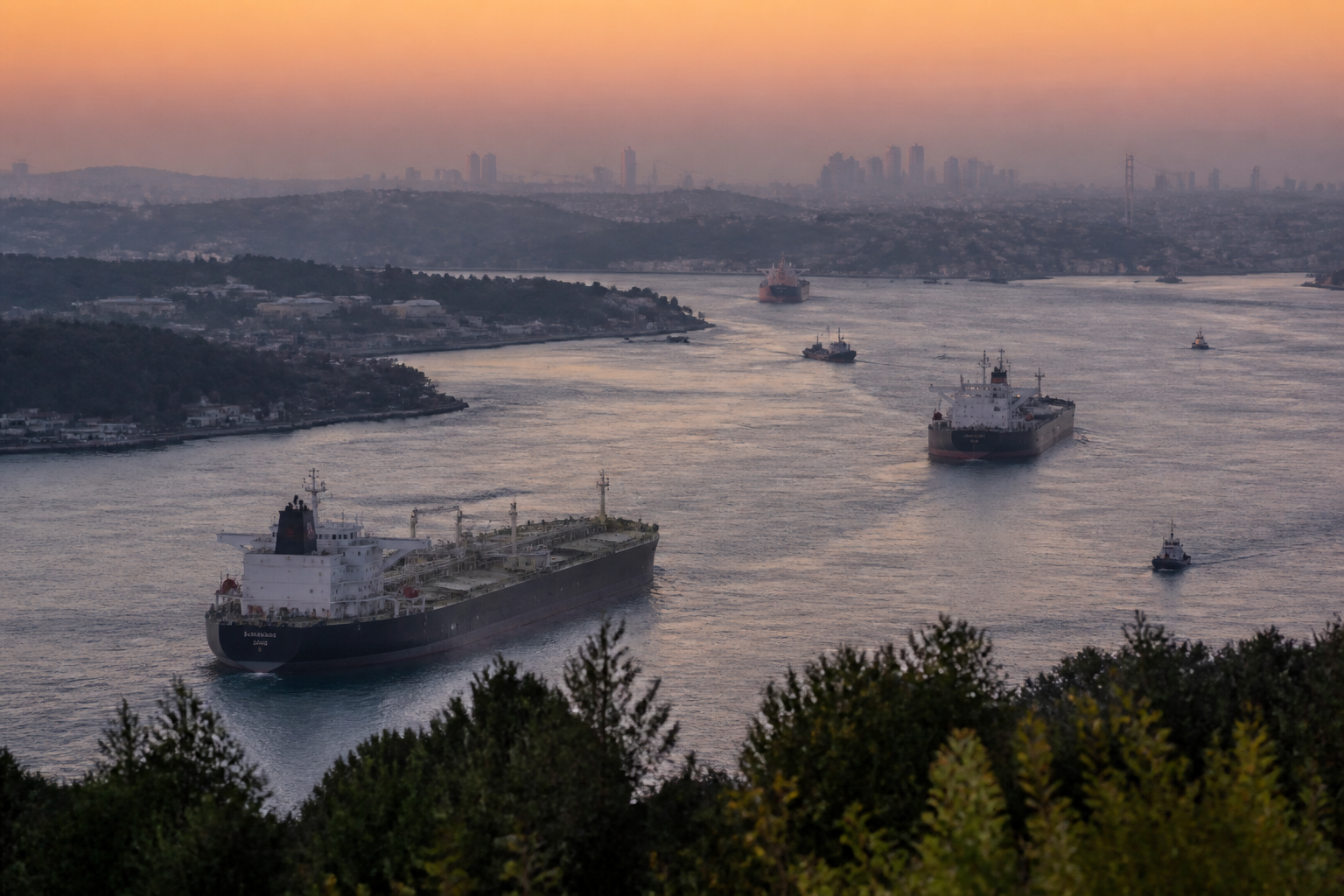
The Strait of Hormuz is central to this risk. Nearly one-fifth of the world’s oil supply passed through the waterway before the war, although oil and gas flows have since remained well below pre-war levels. The reported reduction in flows means the market is responding not only to the possibility of future disruption but also to an existing constraint on one of the world’s major energy corridors.
That distinction is important. Oil prices had stayed below $100 for much of the period since late May, as traders expected the conflict to remain contained. Prices also eased after the United States and Iran reached a temporary agreement to halt attacks in June. The report notes that no permanent peace agreement followed. When markets treat a temporary pause as fragile, prices can remain highly sensitive to every new attack, warning or shipping incident.
The price history described in the report shows how quickly expectations can change. Brent reached as high as $126.41 a barrel after the war began on February 28, touching that level on April 30. It briefly crossed $100 again in late July before falling back. The latest move above the threshold therefore represents a renewed phase of market pressure rather than a first-time reaction to the conflict.
For urban economies, the difference between a temporary price spike and a prolonged period above $100 is significant. A brief increase may be absorbed by traders, transport operators or households. A sustained increase can become embedded in freight contracts, bus operating costs, airline fares, construction budgets and the price of goods delivered into cities. The supplied material does not establish the scale of these pass-through effects in India or any particular Indian city, but it identifies the channels through which they could occur.
The physical crude market is already signalling that the disruption is not confined to futures trading. Dated Brent, a benchmark used to price around two-thirds of global oil supplies, has remained above $100 a barrel since September 3, according to LSEG data cited in the report. That indicates that the market for actual near-term crude deliveries is also under pressure. For cities and businesses, physical-market tightness can be more consequential than a short-lived movement in financial contracts because it bears directly on the cost of obtaining fuel.
Refined products show another layer of exposure. US gasoline prices are averaging about $4.22 a gallon, while diesel prices are at record levels and approaching $6 a gallon, the report says. Gasoline affects private mobility, but diesel is especially important for freight, construction equipment, buses and backup power systems in many urban settings. Jet fuel prices also influence air travel and air cargo, connecting energy-market disruption to both passenger movement and supply chains.
Higher fuel costs can therefore move through cities in several directions at once. Delivery companies may face higher operating expenses. Road freight can become more expensive, affecting the cost of food, building materials and consumer goods. Airlines may raise fares or impose surcharges. Construction firms may face higher costs for transporting aggregates, cement, steel and equipment. Households may reduce discretionary travel as commuting and mobility become more expensive.
The effect is not uniform. Cities with extensive public transport, shorter travel distances or more diversified logistics networks may experience different pressures from car-dependent urban regions. Likewise, the impact on households depends on income, commuting patterns and access to alternatives. The supplied report does not provide comparative city-level data, so it cannot establish which urban populations are most exposed. It does, however, make clear that fuel markets are connected to everyday urban costs through transport and trade.
The International Energy Agency has forecast global oil supply to fall by 4.3 million barrels per day this year, or about 4%, according to the report. That estimate adds a supply-side dimension to the price increase. If demand remains present while available supply contracts, markets can tighten even before a complete physical shutdown of the Strait of Hormuz. The figure also helps explain why relatively limited changes in shipping flows can produce a substantial response in prices.
At the same time, the available evidence does not prove that every future price increase will continue, or that all current market movements are caused by the latest attacks alone. Oil prices reflect expectations, inventories, production decisions, shipping risk and anticipated demand. The report establishes the relationship between the new attacks, concerns about disruption and the immediate rise in benchmark prices, but it does not provide a full breakdown of the contribution made by each factor.
This uncertainty matters for public authorities and urban operators. Fuel-price pressure can affect municipal transport budgets, road-based service delivery and the cost of infrastructure projects, but the supplied material does not identify specific government responses, subsidy decisions or fare changes. Nor does it establish whether Indian cities are facing immediate shortages. Those questions require separate confirmation from transport agencies, fuel companies, municipal bodies and national energy authorities.
The larger urban question is whether cities are prepared for energy shocks that originate outside their boundaries. Modern urban economies rely on long supply chains and high-frequency movement. That model creates efficiency during stable periods but also exposes cities to disruption in distant maritime corridors. The Strait of Hormuz is thousands of kilometres from most Indian urban centres, yet a prolonged reduction in energy flows could still affect transport and the price of goods consumed in those centres.
What the evidence confirms is a renewed connection between geopolitical risk and urban operating costs. Brent has returned above $100, physical crude prices have remained elevated, refined fuels are expensive and the IEA expects a significant decline in global supply this year. What remains uncertain is the duration of the disruption, the extent of future shipping interruptions and the eventual effect on Indian fuel prices, public transport systems and household expenses. Those are the developments that urban policymakers, operators and residents will need to monitor as the situation around the Strait of Hormuz evolves.
