


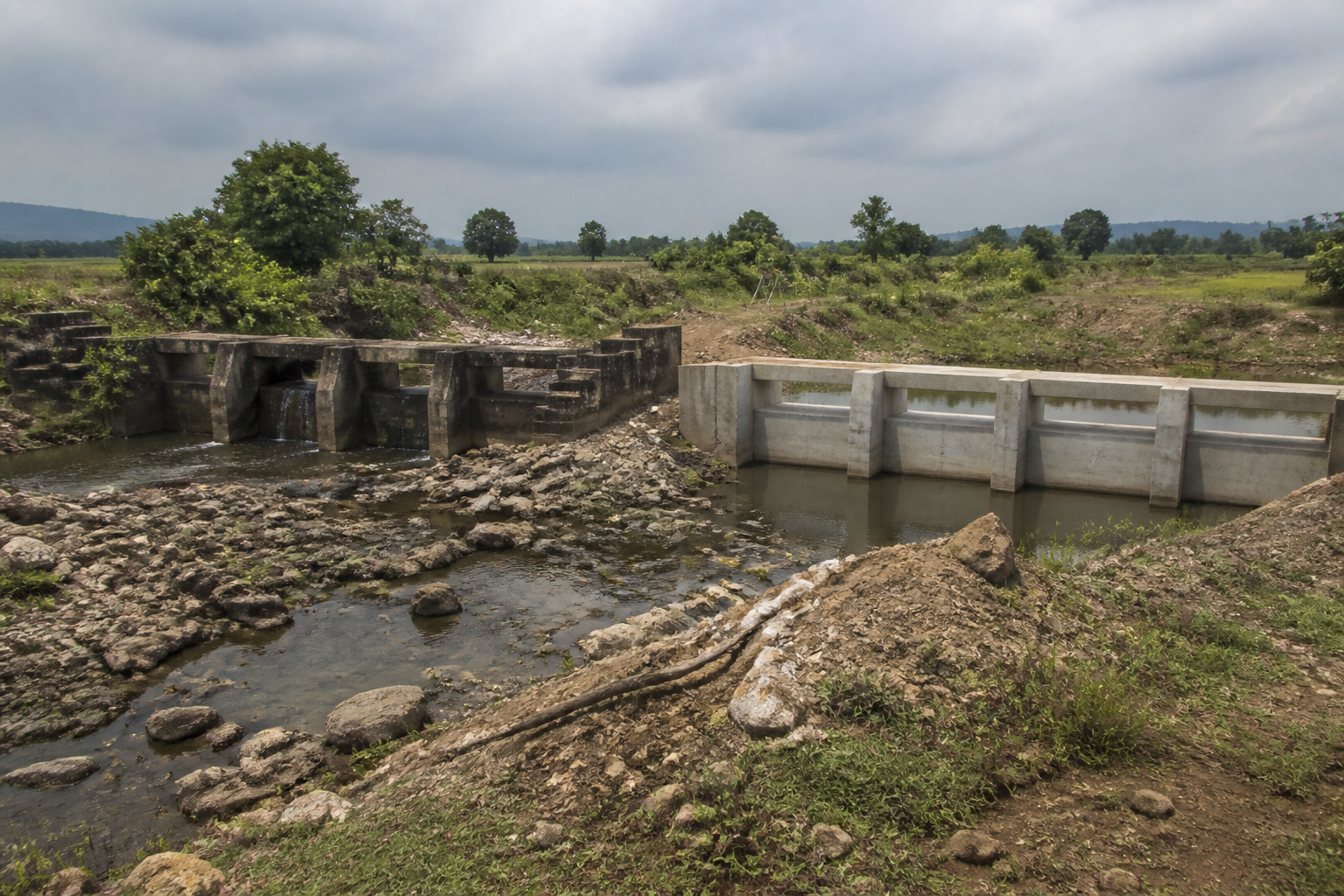
The Comptroller and Auditor General has flagged the possibility of fraudulent payments after finding that Rs 4.26 crore was spent on seven check dams in Odisha at locations where structures may have already existed. The findings relate to projects taken up under the Mukhyamantri Adibandha Tiari Yojana, a state scheme intended to improve irrigation and groundwater recharge.
The findings were included in the CAG’s compliance audit report for the year ended March 2024, which was tabled in the Odisha assembly on Monday. The audit examined geo-tagged data and satellite imagery for check dams constructed under the scheme and identified possible duplication in four minor irrigation divisions.
The audit scrutinised 331 of 481 check dams constructed in 12 sampled minor irrigation divisions. Their locations were cross-checked using Google Earth Pro and geo-tag credentials supplied by the water resources divisions. The exercise found that seven check dams were already in existence when fresh construction agreements were awarded, according to the report.
The expenditure on the seven structures was incurred between April 2023 and January 2025. The CAG said that spending on check dams that may have already existed indicated a possibility of fraudulent payments and required investigation by the appropriate authorities.
The state government disputed parts of the audit finding. It said five of the check dams—Dalak, Hiraposi II, Kantisahi, Hatichad and Chandanpur II—had been constructed during 2017 and 2018, but appeared in Google images later in 2018 and 2022. In one case, the government said the structure visible in satellite imagery was an earthen bund built by local people. The government also disputed one of the locations identified by the audit.
The CAG rejected the explanations, noting that the concerned superintending engineers had executed fresh agreements for the works. It also said the project estimates did not mention that older structures were being replaced. The audit further pointed out that the geo-tag coordinates used to verify the locations had been supplied by the department itself.
The possible duplication is significant because the water resources department had directed officials to geo-tag check dams in 2022 specifically to identify existing structures and prevent overlapping works. The audit’s findings indicate that the safeguard did not prevent fresh agreements and payments from being processed in the cases examined.
MATY check dams are intended to support irrigation facilities and groundwater recharge. The report has not established final liability or confirmed that the payments were fraudulent; it has called for the possibility to be investigated by the appropriate authorities. The CAG’s observations now place the department’s contract approvals, site verification and use of geo-tagged records under scrutiny.
