


A reported business link between a company owned by the family of Tata Sons chairman N. Chandrasekaran and TVS Motor Co. is raising a question that extends beyond a corporate relationship: how should industrial land, public approvals and board-level disclosures be handled when business interests overlap with institutional decision-making?
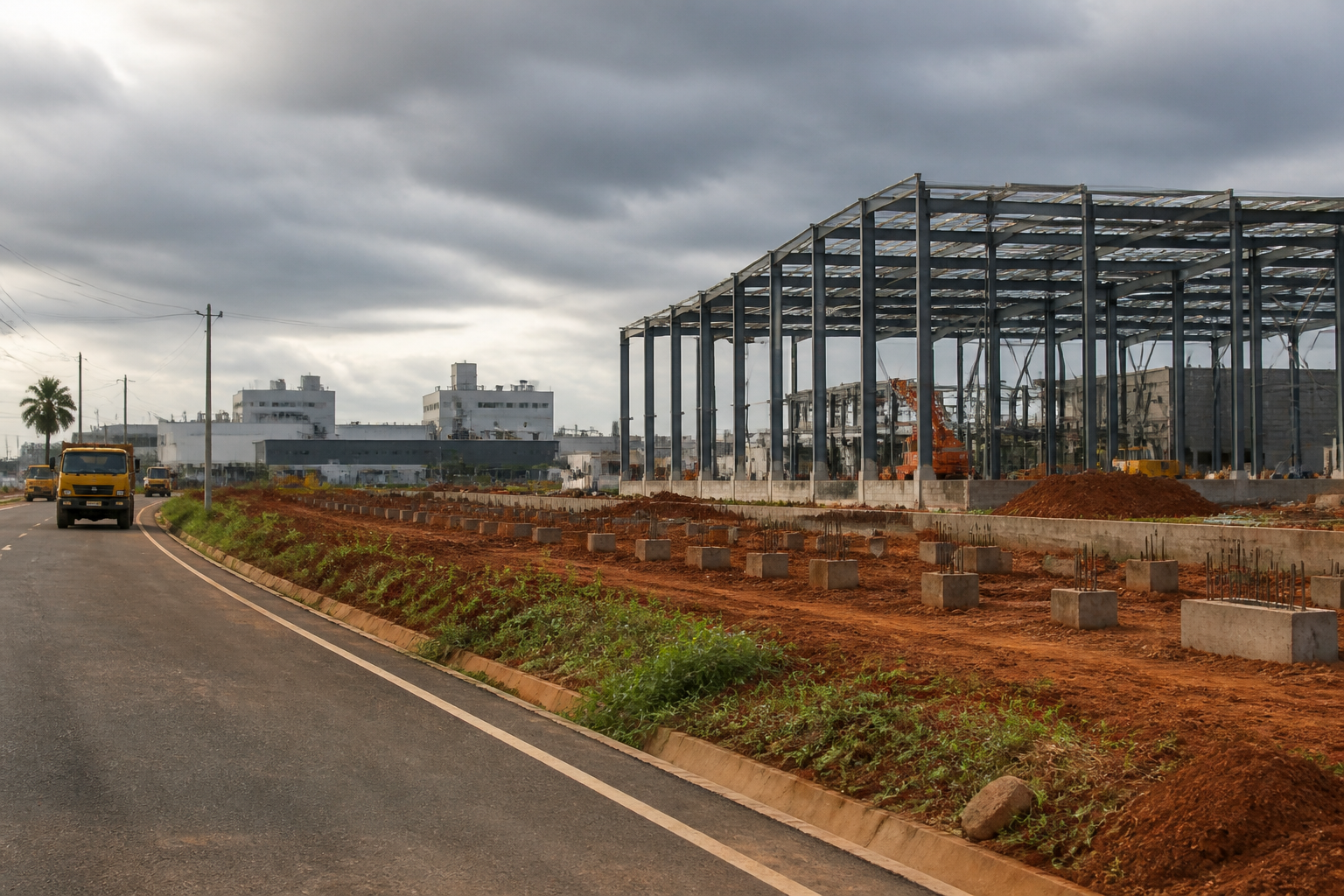
Hindustan Times, citing Karnataka government records, company financial statements and a financing term sheet, reported that Hanno One Warehousing Pvt. Ltd. is pursuing a ₹330-crore industrial park at Immavu, around 10 km from TVS Motor’s factory at Kadakola near Mysuru. Hanno is owned by Chandrasekaran’s wife Lalitha and son Pranav. The proposed facility is described in the minutes of Karnataka’s Land Audit Committee as an industrial park for auto-component manufacturing and supply to TVS Motor and its tier-1 suppliers.
The report also links Hanno to an earlier project in Tamil Nadu. In June 2025, around three months after Hanno was incorporated, the company leased about 17 acres of farmland in Uddanapalli, in Krishnagiri district, near TVS Motor’s Hosur plant. A term sheet from HDFC Bank described the proposed 3.3 lakh sq. ft facility as the “TVS Motors Warehouse Project”. The building is estimated to cost ₹106.3 crore and is due by March 2027, according to the report.
Together, the two projects give Hanno proposed investments of about ₹436 crore within 18 months of its creation. The scale and location of the projects are important because they show how industrial supply chains are increasingly organised around dedicated facilities near major manufacturing plants. They also show how industrial development depends on a chain of public and private decisions: land identification, state-level approval, financing, construction and eventual use by an anchor manufacturer.
The Karnataka project illustrates this process. The Land Audit Committee’s minutes dated 6 November 2025 recorded that a company representative sought 35 acres at the Immavu Industrial Area in Mysuru district. The representative told the committee that Hanno had been incorporated in Mumbai in March 2025 and was working on a light manufacturing facility in Hosur while having an agreement with TVS Motor, according to the minutes cited by Hindustan Times.
The committee recommended the full 35 acres and forwarded the proposal to the State Level Single Window Clearance Committee. The Karnataka Industrial Areas Development Board, or KIADB, subsequently allotted the land to Hanno, although the report said the date of allotment could not be established. Hanno’s financial statements showed that KIADB had allotted the land for about ₹27 crore, of which ₹7.91 crore had been paid in financial year 2025-26.
KIADB is the state agency responsible for acquiring and developing industrial land. Its role places the project within a wider urban and regional development system rather than treating it as a private real-estate transaction alone. Industrial land allocation determines where factories, warehouses, suppliers, roads and other supporting infrastructure will be built. It also commits public authorities to service and manage land within an industrial area, even when the eventual facilities are privately owned.
The available records, however, do not establish the final operating arrangement for the Mysuru site. Hindustan Times reported that it could not establish whether TVS Motor had agreed to use the Immavu industrial park. Emails sent to KIADB, TVS Motor and Hanno One seeking comment went unanswered, while Tata Sons and Tata Trusts also did not reply.
That distinction matters. A proposal recorded in a government committee’s minutes is evidence of an application and the stated purpose of a project. It is not, by itself, proof that the proposed customer relationship has been finalised, that the facility is operational or that the project will deliver the stated manufacturing capacity. In the Tamil Nadu case, the reported term sheet provides a stronger documentary link between Hanno and TVS Motor’s proposed warehouse, but it still describes a planned facility rather than a completed asset.
The governance question arises because the reported business relationship involves people who occupy important positions in the Tata group’s oversight structure. Venu Srinivasan, chairman-emeritus of TVS Motor, is a Tata Trusts nominee on the Tata Sons board and a member of the nomination and remuneration committee that evaluates Chandrasekaran’s performance and pay, according to the report.
Hindustan Times reported that neither Chandrasekaran nor Srinivasan informed the Tata Sons board about the business relationship. It also cited an earlier statement from Tata Trusts that Srinivasan had not informed Tata Sons or the trusts. Tata Sons had previously said the transactions did not need to be placed before its board, according to the report.
Under Indian law, Hanno is not treated as a related party of TVS Motor because Chandrasekaran is not a director of TVS Motor. That legal position affects whether the transactions appear in TVS Motor’s related-party disclosures. The report said the disclosure responsibility therefore rests with the Tata Sons and Tata Trusts boards in relation to their own governance frameworks.
The distinction between legal related-party status and broader conflict-of-interest duties is central to the dispute. A transaction may not meet the statutory definition of a related-party transaction while still raising questions about whether individuals involved in institutional decisions should disclose a personal or family-linked interest. The Tata Code of Conduct, as quoted in the report, states that a conflict can arise when an employee can obtain an unfair benefit for themselves, a family member or someone close by making or influencing decisions about a deal. It requires executive directors to disclose real or potential conflicts.
The issue is particularly sensitive because Srinivasan’s vote on 17 September helped Chandrasekaran secure a third five-year term as chairman of Tata Sons, beginning in February. Tata Trusts disputed that vote and described it as a “legal nullity”, according to the report. The reported business relationship therefore sits alongside an institutional disagreement over the process used to determine Tata Sons’ leadership.
The case demonstrates how governance decisions and built-environment decisions can intersect. The underlying assets are industrial plots and large facilities, but the public-interest issue is not limited to corporate disclosure. Karnataka’s industrial land system involves a state land agency, a committee that assesses major land requests and a single-window approval process. When the applicant’s stated purpose is to supply a major manufacturer, the strength of that commercial connection can affect how the project is understood by authorities and the public.
The records cited in the report also raise a question about project capacity. At the time of the Karnataka land hearing, Pranav’s net worth was listed at ₹11.26 crore, roughly 3% of the proposed ₹330-crore project cost. The figure does not by itself establish whether the project is financially viable or how it would be funded, because industrial projects can rely on debt, leases, investors, customer commitments and other forms of financing. It does, however, show why the financing structure and the identity of the eventual project users are material to assessing the proposal.
The Tamil Nadu project provides one documented indication of that financing structure. HDFC Bank offered Hanno a ₹60-crore construction loan secured by its lease rights and the building to be constructed there. The term sheet estimated the facility’s cost at ₹106.3 crore. These figures show a proposed capital structure, but they do not establish completion, occupancy or the final commercial terms between Hanno and TVS Motor.
For cities and industrial regions, the broader lesson is that manufacturing growth is increasingly distributed across networks of factories, component suppliers, warehouses and logistics facilities. A plant’s location can generate demand for nearby land and infrastructure even when the facilities are owned by separate companies. That makes transparency around land allocation, project purpose and customer agreements relevant to local authorities, competing applicants and communities affected by industrial development.
The present evidence confirms that Hanno has pursued two sizeable facilities near TVS Motor locations, that Karnataka records describe the Mysuru project as serving TVS Motor and its tier-1 suppliers, and that the family connection to Chandrasekaran is documented in the report. It does not establish whether the Karnataka facility has a finalised TVS commitment, whether either project has been completed or whether any board or code-of-conduct breach has been formally determined. Those questions will depend on responses from the companies and trusts, formal corporate records and further details of the approvals and agreements.

