


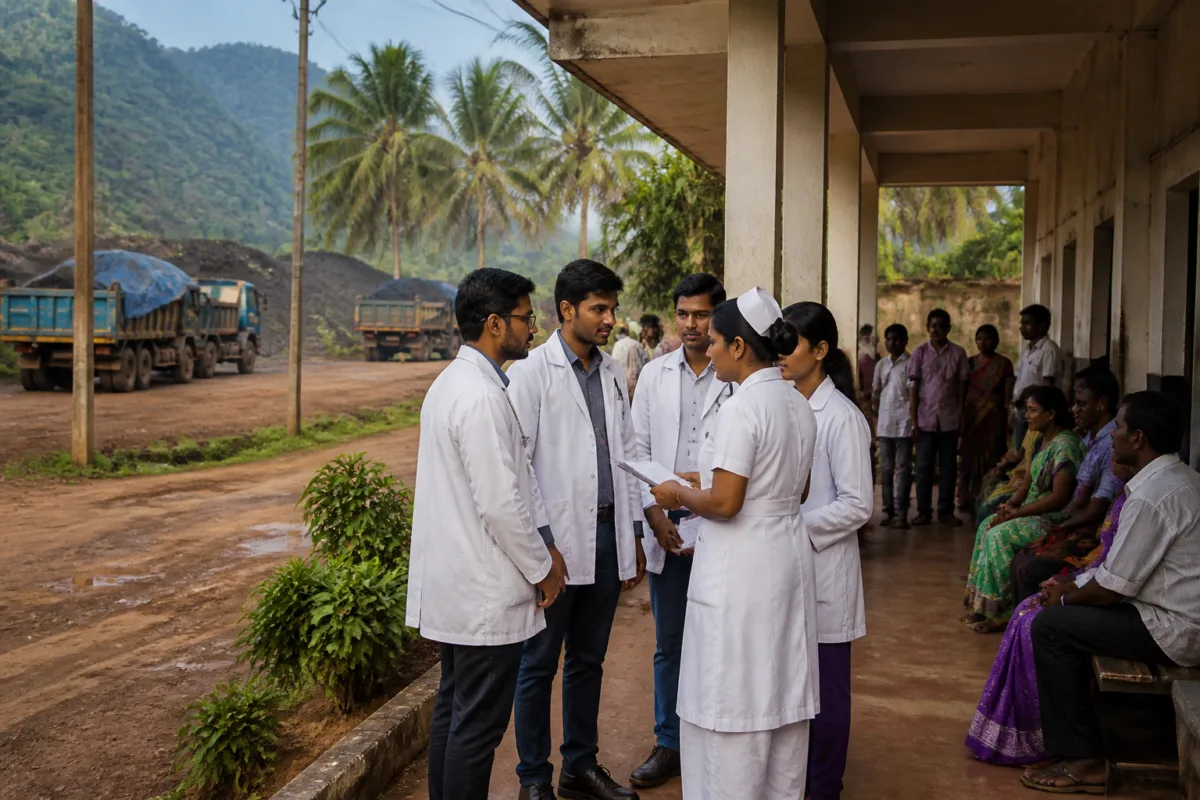
Odisha has 3,464 vacant doctor posts across its health system, while only 111 doctors have been appointed through District Mineral Foundation (DMF) funds in six districts, according to figures cited by Sambad from a response by Health Minister Mukesh Mahaling to Devgarh MLA Romanch Ranjan Biswal.
The figures indicate that 12,329 doctors are in position against a sanctioned strength of 15,793 posts. The report also said that 68 of the 10,574 regular doctors had been relieved but had not joined their new assignments, while 168 were on unauthorised leave.
Doctor vacancies are particularly high in several districts with mining and industrial activity. Boudh reportedly has the highest vacancy rate at 73%, followed by Devgarh at 70%, Sundargarh at 67%, Sambalpur at 64% and Malkangiri at 62%. The report said vacancies exceed 70% in two districts, range between 60% and 69% in 12 districts, and stand between 50% and 59% in seven districts. Capital Hospital in Bhubaneswar has the lowest reported vacancy rate, at 13%.
The staffing figures cover multiple categories. Medical colleges have 4,937 postgraduate, senior resident, tutor and assistant professor positions, while 19 doctors are listed as ad hoc staff and 1,622 as contract doctors, the report said. These categories indicate the scale of the state’s medical workforce, but the report does not establish how many doctors are available at each facility or how staffing is distributed between urban and rural hospitals.
The DMF appointments are concentrated in six districts and at Rourkela Government Hospital. The report listed 29 doctors appointed in Angul, 33 in Jajpur, three in Jharsuguda, 23 in Keonjhar, 11 in Sundargarh and 12 at RGH Rourkela. DMF funds are intended to support communities affected by mining, making the distribution of medical staff a significant question for districts where extraction, processing and industrial transport are major activities.
Sambalpur, Sundargarh, Angul, Jharsuguda, Jajpur, Keonjhar, Koraput, Rayagada, Mayurbhanj and Dhenkanal are among the districts identified in the report as having mineral resources or mining operations. The report argued that the health effects of industrial dust and pollution extend beyond the immediate mining areas. It specifically said ash from Jharsuguda is also disposed of in Sambalpur, Bargarh and Subarnapur.
The source report linked mining and industrial pollution with rising cases of tuberculosis, kidney and respiratory diseases, cancer, skin ailments and silicosis, citing government reports. It also referred to separate reports by Sambalpur University and IIT Kharagpur that identified arsenic, lead, mercury and chromium in Mahanadi water and said the findings could affect the health of local residents. The available report does not provide the dates, sampling locations, measured concentrations or methodology of those studies, so the claims require careful reading alongside the original documents.
The staffing gap also has implications for emergency response in industrial corridors. Sambalpur Superintendent of Police Mukesh Bhamu was quoted as saying that a trauma-care centre should be established at the Talabira coal mine, amid concerns over accidents involving heavy vehicles linked to factories. This is a recommendation attributed to the police chief, not a confirmed government decision or funded project.
The central issue raised by the figures is whether DMF spending is being aligned with the health burden and service shortages in mining-affected areas. The report said citizens have questioned why district administrations have not given greater priority to doctor appointments through DMF funds. The data establishes the staffing shortfall and the current number of DMF-funded appointments; it does not, by itself, assess the quality of care, pollution exposure or the effectiveness of individual DMF projects.

